
Santa Barbara staff outline plan to streamline single‑family design reviews; HLC offers guidance
Get AI-powered insights, summaries, and transcripts
Subscribe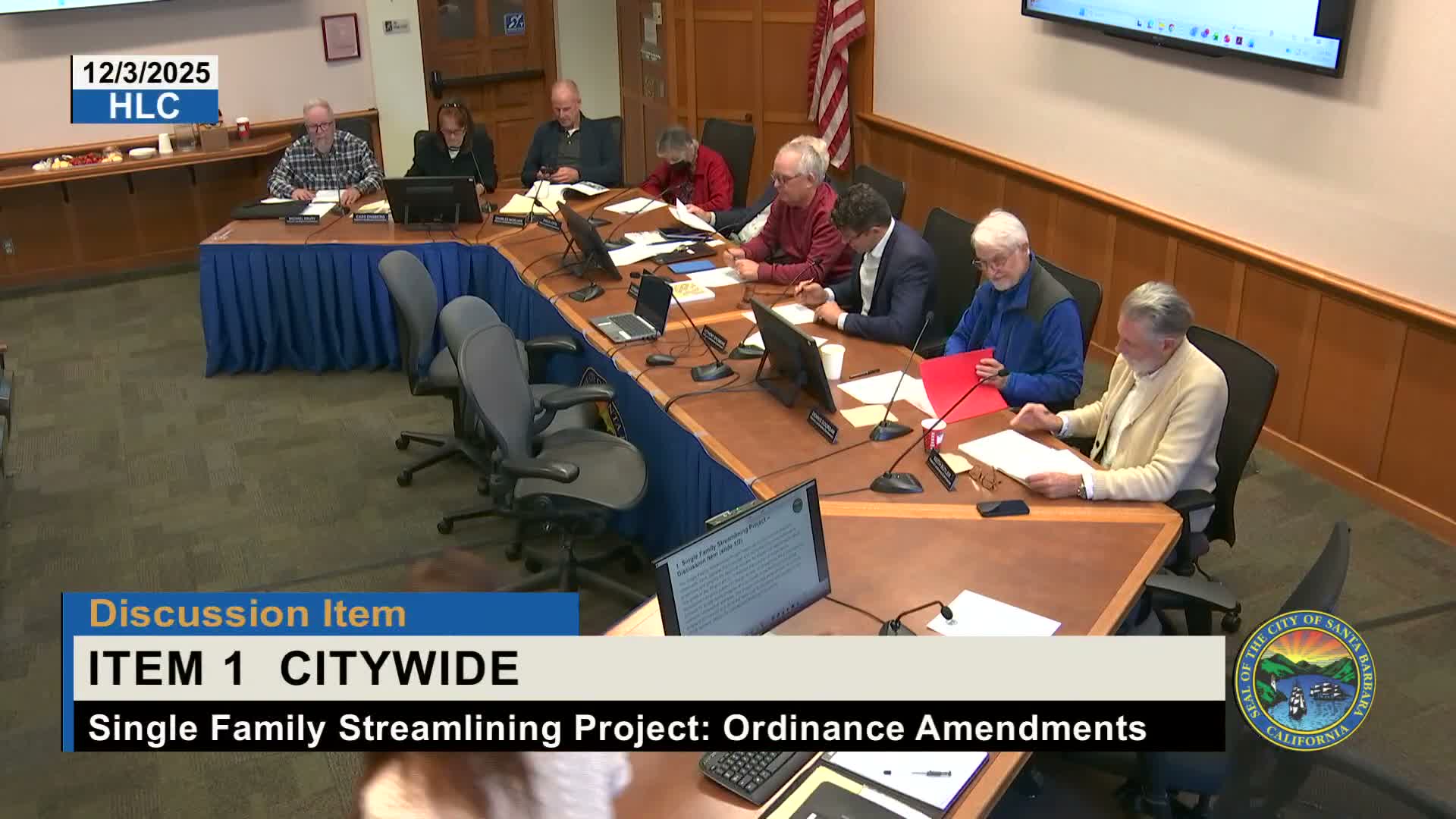
Summary
City staff presented a package of code and guideline changes to reduce single‑family design‑review caseloads, move some review authority to staff in limited El Pueblo Viejo cases, and shift certain FAR exceptions to design review. The Historic Landmarks Commission endorsed the goals and asked for clearer public‑notice language, safeguards for neighbors and EPV visibility, and standard detail sheets for applicants.
City staff on Dec. 3 presented a single‑family streamlining project that would move the single‑family design board and architectural board of review chapters into the Historic Landmarks Commission chapter (Title 30), raise several notice thresholds and authorize narrowly defined administrative approvals in the El Pueblo Viejo (EPV) Landmark District.
Ted Hamilton, acting design‑review supervisor, told the commission the package is meant to reduce the number of projects requiring discretionary review, create clear standards homeowners can use to qualify for administrative approval, and reassign review of floor‑area‑ratio exceptions (now termed FAR exceptions) to design review bodies rather than Planning Commission. Staff proposed raising the mailed‑notice threshold for first‑story additions from 500 to 800 square feet, increasing upper‑story mail‑notice thresholds, removing a requirement that all single‑family parking spaces be covered, and reducing minimum open‑yard area for very small lots.
Commissioners pressed staff to make the appeals process and timeline clearer in public materials, noting the change that would make final‑approval appeals allowable only by project applicants (a step intended to comply with the Housing Crisis Act five‑hearing limit). Commissioners also asked staff to clarify who would make administrative determinations in EPV, to expand applicant handouts and online guidance, and to develop a short set of standard construction details the city architect could maintain to speed review and reduce repetitive errors.
Hamilton said the single‑family design board, Planning Commission and City Council have supported shifting FAR exception decisions to design review because the findings are primarily aesthetic and site‑specific. He estimated a conservative 21% reduction in SFDB caseload under the new triggers, with a possible upper range near 35%, while promising additional training and website updates for applicants and staff.
The commission did not vote to block the package; commissioners asked staff to forward HLC’s comments to Planning Commission and to provide clearer language on public notices, appeal timelines and the scope of administrative approvals in EPV as the ordinance moves forward.