
Commission renews $15.86M behavioral‑health network contracts; staff report expanded services and school‑based coverage
Get AI-powered insights, summaries, and transcripts
Subscribe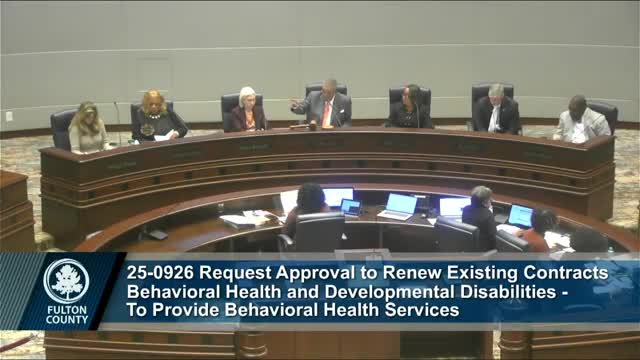
Summary
The Board approved renewal of the Fulton County Behavioral Health Network contracts totaling up to $15.86 million, covering child/adolescent and adult providers, school‑based mental health in 66 schools, and permanent supportive housing services; commissioners pressed for clearer outcome metrics.
Fulton County approved renewal of a suite of behavioral‑health contracts that together form the Fulton County Behavioral Health Network, with a total annual not‑to‑exceed amount of about $15.86 million. Department staff summarized performance: Chris180 (child and adolescent services) has exceeded an annual target of 1,200 unique individuals served; Georgia Hope serves Oak Hill child and adolescent facility but is not meeting its 800‑person target and will receive a six‑month contract extension to manage a transition; Grady, RiverEdge, and other providers deliver adult outpatient and medication management services across service centers and permanent supportive housing units.
Latrina Foster, who leads behavioral health, said the network now serves several thousand unique individuals (more than 7,000 individuals across programs, as of Oct. 31, 2025), operates school‑based services in 66 Fulton County schools via Summit and Chris180, and provides specialized reentry and jail screening services. Commissioners pressed staff on how the department measures effectiveness beyond headcounts; Foster described a multi‑metric approach including unique individuals served, return visits, engagement in three or more services, and clinical assessment score tracking at 90‑day, 6‑month and 12‑month intervals.
The board adopted the renewals unanimously.
What it means: The renewals preserve ongoing community access to outpatient, school‑based, and reentry behavioral health services and keep medication management and supportive housing linkages operating. Commissioners asked staff to provide clearer reporting to tie spending to measurable outcomes.