Bangor infrastructure committee reviews DOT plan to replace two aging bridges
Loading...
Summary
At its Nov. 17 meeting, the Bangor City Infrastructure Committee heard an overview from city engineers of two Maine Department of Transportation bridge replacement projects — Stillwater Avenue (about $42 million) and the Kanduske/Condescate area bridge (about $14 million) — including multi-year schedules, detour plans and pedestrian impacts.
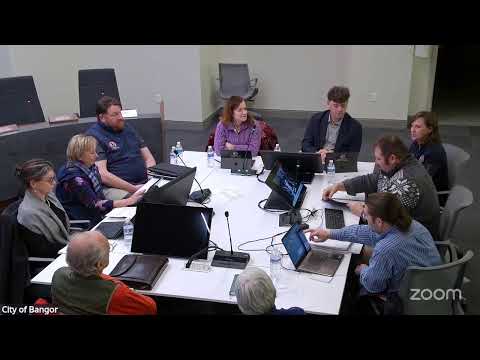
On Nov. 17, 2025, the Bangor City Infrastructure Committee reviewed a Department of Transportation bridge-replacement plan affecting Stillwater Avenue and the Kanduske/Condescate Avenue corridor, including cost estimates, construction staging and potential traffic and pedestrian impacts.
Jeff Davis, director of engineering for Bangor City, presented the projects to the committee after DOT staff were unable to attend. “Stillwater totals will be a little over 42,000,000. In Kanduske, it’s just about 14,000,000,” Davis said while describing the project phases, which include preliminary engineering, a right-of-way process and construction with third-party construction engineering oversight.
The projects replace aging multi-span bridges with longer single-span structures to reduce joints and long-term maintenance. Davis said the DOT’s stated project goal is to design and construct safe, durable and low‑maintenance bridges fitted to their surroundings while minimizing traffic and neighborhood impacts. The Kanduske/Condescate replacement will add a new 6-foot sidewalk on the north side where no continuous sidewalk exists today, opening the possibility for future city sidewalk connections.
Davis described traffic staging measures intended to limit disruption: Stillwater’s replacement is being staged so it should not require a temporary bridge, and northbound/southbound traffic will be maintained through phased work. For the Kanduske/Condescate location, Davis said the demolition and rebuild will require a substantial detour, approximately eight months of full closure for the immediate work zone with detours routing traffic out to O’Hog Street, and some permanent intersection improvements along the detour to help traffic and pedestrian safety. When asked about pedestrian access during construction, Davis said, “The intent is to have pedestrian access, throughout the whole project,” while acknowledging there may be short closures of about a week for specific tasks.
Councilors asked about coordination with emergency services and other city departments on detour routing; Davis said the city will forward recommendations but that DOT makes final detour decisions, and staff will follow up with police, fire and other departments. Committee members also asked whether the bridges would include bike lanes; Davis said dedicated bike lanes across the Stillwater span are unlikely but the approaches may provide shared lanes and the new sidewalk will improve pedestrian connectivity.
Davis listed project estimates and multi-year schedule markers provided in DOT materials: initial mobilization for Stillwater is expected in January 2026, staged closures to follow, and phased openings and final completions shown on DOT slides that spanned through mid‑late 2027 into 2029. Committee members noted multiple overlapping bridge projects in the region (Broadway, Edward and Diamond/Hogan Road, Chase Road) and asked how the timing would affect local traffic; Davis said funding schedules largely drive the timing and multiple projects may occur concurrently.
The presentation named Chen Pro as the DOT-selected contractor for both projects with designers including Moncom and Adrian Ballard. Davis said newer bridge designs aim for substantially longer lifespans than the originals — the presentation cited target lives in the 75–100 year range versus the older bridges’ 50–60 year service life.
Next steps: DOT and the city will circulate clearer graphics and detailed construction plans to the public via city and DOT channels; staff said they will update the committee as DOT provides construction plans and timing refinements. The committee did not take a formal vote on any funding or contract award during the meeting; the presentation served as an informational review and staff follow-up was requested.
Note on transcript variants: place names and spellings in the meeting transcript appear inconsistently (e.g., Kanduske/Condescate/Konduskige); this article uses the spelling "Kanduske/Condescate corridor" to reflect the project area described in the presentation and flags the transcript inconsistency for official records.