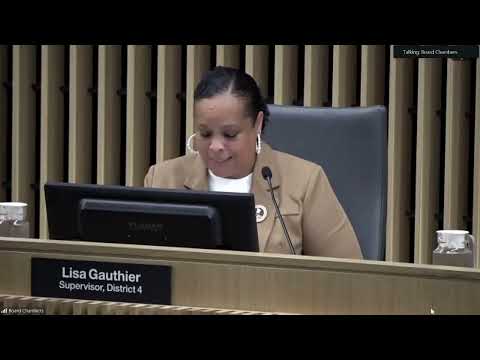
Board continues charter review committee item after debate on membership and timeline
Loading...
Summary
Supervisors reviewed a proposal to convene a 15‑member charter review committee required every eight years, debated naming specific organizations versus category‑based slots and extended the item for staff to return with refined options and timelines.
The board considered creation of a 15‑member Charter Review Committee — required by section 8.01 of the county charter — with staff and the county attorney outlining an aggressive timeline (appointments Jan. 13, committee meetings Jan–April, report due May 5 for possible November ballot action).
Deputy County Attorney Brian Pettit explained the committee would meet under the Brown Act, likely twice monthly, and would return recommendations for potential charter amendments. Pettit said an affirmative recommendation from eight members would be required for any proposed amendment to go back to the board.
Debate over composition and process Supervisors discussed whether to specify particular organizations (the draft list included city council associations, school boards, League of Women Voters, labor and community groups) or to use broader categories so more organizations could apply. Several supervisors urged inclusion of LGBTQIA+ representation and asked for seats to be open to public applicants; others noted the tight timeline and the logistical burden of a fully open application process.
Board action After discussion, the board voted to continue the item to the next meeting, directing staff to return with a categories‑based approach and clearer application mechanics while preserving the overall timeline constraints for a May report back.
Why it matters Charter amendments require public hearings and potential voter approval; composition and transparency of the review committee shape which issues get examined and how the public is represented in recommendations.