
Homeland Security asks for critical‑infrastructure software, a statewide RAVE alert system and cyber match funds
Get AI-powered insights, summaries, and transcripts
Subscribe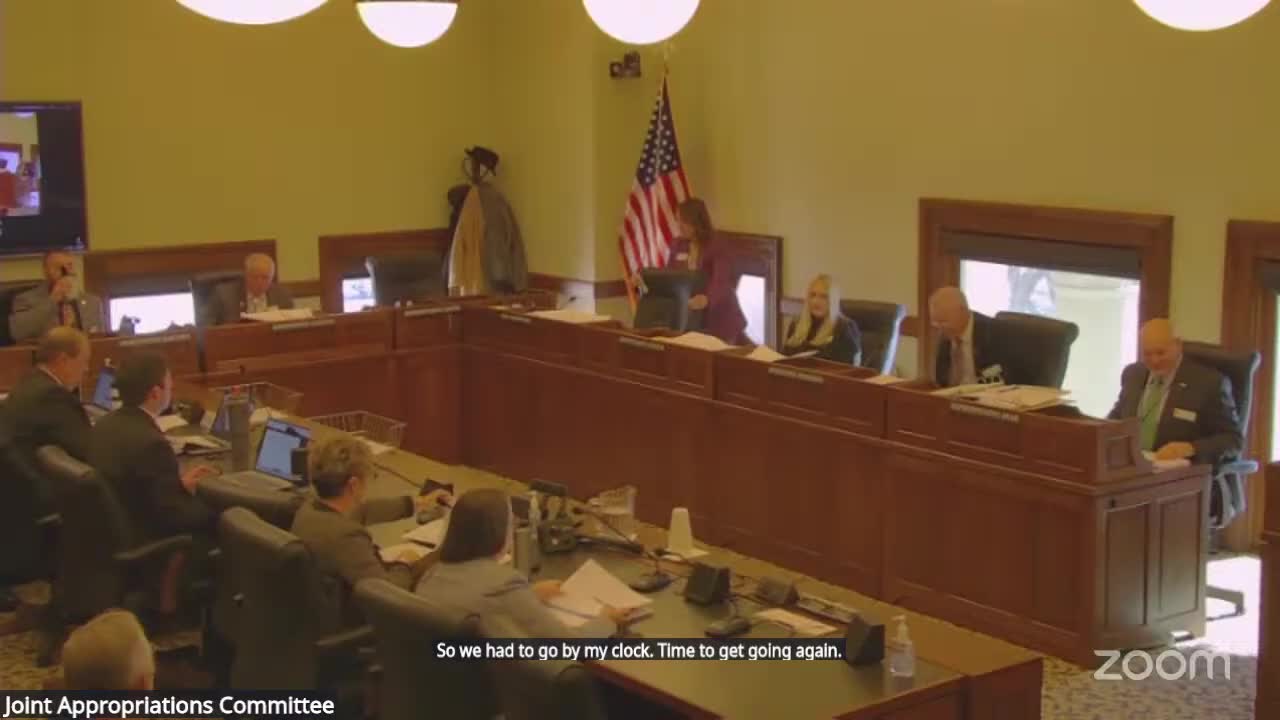
Summary
The Wyoming Office of Homeland Security requested $3 million for critical‑infrastructure mapping software, $2.5 million (5‑year) for a statewide RAVE emergency alerting system, and $108,000 in state match for federal cybersecurity grants; staff warned federal grant timing is volatile.
Director of the Wyoming Office of Homeland Security told the committee the agency’s biggest near‑term challenge is instability and delay in DHS/FEMA grant awards, including a shift to one‑year performance periods that complicates local spending. The director said approximately 90% of the division’s funding is federal or other revenue and that changes at the federal level place pressure on the state and counties.
The office’s highest exception request is a software contract to support the critical infrastructure zones program. Staff said they have mapped 1,567 points and developed 602 zones covering about 1,900 square miles (roughly 2% of the state) and requested roughly $3,000,000 in RFP bids to automate the comparison between county conveyances and the mapped zones and to support follow‑on investigations where ownership raises national security concerns.
The agency also proposed a statewide emergency alerting solution (RAVE) with a five‑year bid estimate of about $2,500,000. Director Budd framed the system as a tool to target geo‑fenced notifications to employees and buildings, allow panic‑button silent active‑shooter notifications to law enforcement, and replace disparate systems currently paid for separately by counties and state agencies. The director estimated statewide adoption could save local jurisdictions about $187,000 per year by consolidating subscriptions. Committee members pushed back to ask about lower‑cost alternatives and whether private messaging apps or existing county systems could be leveraged; the director said RAVE is widely used, geo‑fenced and provides state‑level reliability needed for coordinated response.
Other requests included modest state match ($108,000) to secure federal State and Local Cybersecurity Grant Program funds, hazard mitigation plan updates for counties (consultant economies of scale), and a $400,000 backstop for the search‑and‑rescue reimbursement fund. Director Budd said homeland security would need roughly $4.9M in a supplemental if federal grants do not materialize in FY26 funding cycles and that about 22 of the division’s 23 employees are funded by grants or special revenue at present.
Ending: The committee asked multiple follow‑ups (county training, flood insurance participants, licensing costs) and asked Homeland Security to return with granular cost allocations and options for cost‑sharing; Director Budd and staff agreed to provide the requested details.