
State Water Board authorizes SEP funds to expand Santa Ana regional monitoring
Get AI-powered insights, summaries, and transcripts
Subscribe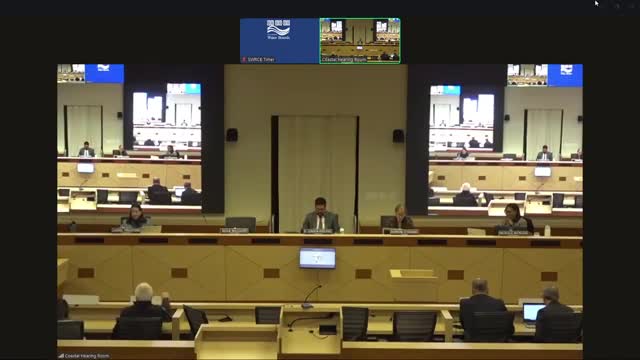
Summary
The board unanimously adopted a resolution allowing supplemental environmental project (SEP) funds to be deposited to a third-party program administered by the Southern California Coastal Water Research Project to support two regional monitoring programs in the Santa Ana region; the resolution allows aggregation of smaller penalties to support viable regional projects.
The State Water Resources Control Board voted to adopt a resolution authorizing use of supplemental environmental project (SEP) funds to support regional monitoring programs in the Santa Ana region.
Santa Ana regional staff and State Water Board enforcement attorneys presented the proposal, which would authorize the Santa Ana Regional Water Board to deposit SEP funds with a third-party administrator — the Southern California Coastal Water Research Project (SCCWRP) — to support two ongoing regional monitoring efforts (the Bight/nearshore marine monitoring collaboration and an inland watershed monitoring program). Staff said the approach reduces staff oversight burden, leverages established regional expertise and permits aggregation of mandatory minimum penalties (MMPs) and smaller discretionary liabilities to reach viable project funding levels.
Chuck Griffin, senior water resources control engineer for the Santa Ana Water Board, said the region collects roughly $770,000 annually in penalties and that most enforcement settlements in the region are stormwater MMPs; the resolution would allow these smaller penalty amounts to aggregate into a fund for meaningful regional monitoring projects. Santa Ana staff noted no public comments were received during the rule—s posting period and that Orange and San Bernardino counties had expressed support for the concept.
Board members praised the approach as a way to fund chronically underfunded ambient monitoring and asked staff to ensure regional coordination and accountability. The board adopted the resolution by roll-call vote with all members present voting aye.
The resolution authorizes limited exceptions to SEP policy when funds go to the approved regional monitoring program, requires projects to be completed within 36 months or returned to the statutory account, and directs the Santa Ana board to continue soliciting SEP proposals that further the human right to water, environmental justice, and climate resilience.