
Residents and recovery workers urge commissioners to keep independent drug-and-alcohol authority; county votes to send letter of intent for state review
Get AI-powered insights, summaries, and transcripts
Subscribe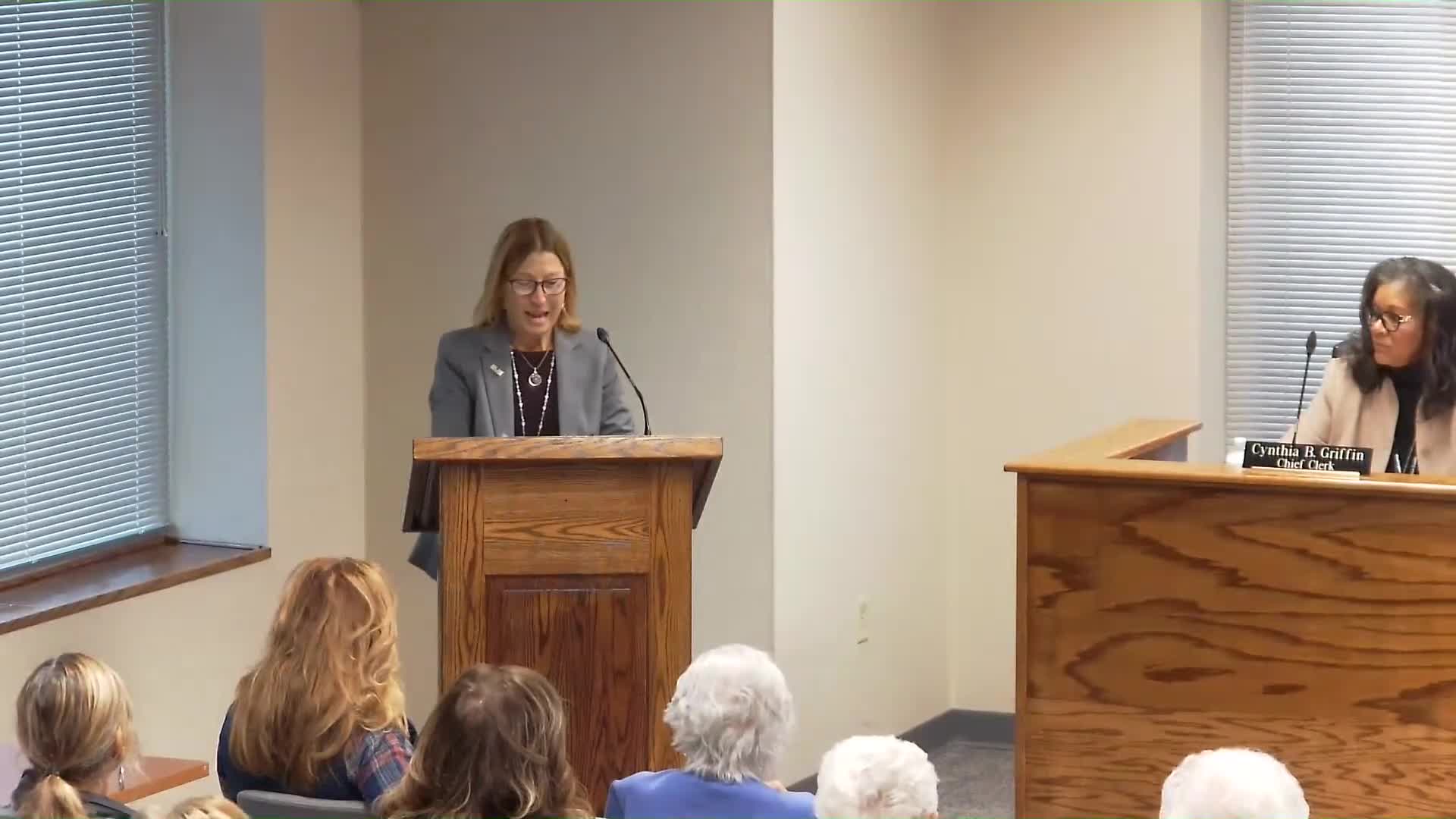
Summary
Dozens of residents, WDAC staff and local officials urged Washington County commissioners to reject a proposed county takeover of the Washington Drug and Alcohol Commission and to allocate opioid settlement funds to the nonprofit; commissioners voted to submit a letter of intent to the state for review of a possible return of the single‑county‑authority designation.
Dozens of residents, recovery workers and local officials urged Washington County commissioners at a public meeting to keep the independent Washington Drug and Alcohol Commission (WDAC) in charge of local substance‑use services and opioid‑settlement spending, saying a county takeover would risk access and trust.
Cheryl Andrews, executive director of WDAC, told commissioners: "I am respectfully requesting that the commissioners vote no to the agenda item letter n under new business, letter of intent, human services." Andrews said WDAC has "decades of strong outcomes and community trust" and called the proposed takeover "about power and control." She said the county should instead "talk reconciliation to reduce duplication and unlock opportunities for coordinated planning and funding." Andrews also said that "since 2022, roughly $5,500,000 have been allocated in our own county" from settlement funds and urged those dollars be steered to WDAC.
Other speakers echoed that message. David Roe, a member of the Washington County opioid overdose coalition, said WDAC’s consistency and partnerships have "kept the system connected, coordinated, and focused on the people who need us most" and that "now is not the moment to disrupt what is working." Tammy Kehler, a WDAC prevention supervisor, described operational barriers when services were run inside county government — longer purchasing timelines and hiring delays — and said WDAC’s nonprofit independence "has strengthened our ability to deliver high quality, compassionate, and efficient care." Several former and current WDAC staff and community leaders warned that shifting control to county administration could reintroduce red tape, erode community trust and deter people from seeking care.
Commissioners said the present action was to send the county’s study and recommendations to state review, not to immediately absorb WDAC. The chair defended the process, saying the commission is "looking at this study to see how we can have the best resources for people" and that any change would require state approval; the chair said "no one's losing their job" immediately and described the next step as review by the state entity referred to in the meeting as DDAB.
Human Services moved to "approve the submission of a letter of intent to the Department of Drug and Alcohol Program to retain and internally operate the single county authority designation." That motion was moved, seconded and carried in a recorded roll call in which the transcript records at least three named responses (Mister Maddie: No; Miss Janice: Yes; Mister Sherman: Yes). The chair said the study would go to the state review body for evaluation and that any change would be subject to subsequent approvals and implementation steps.
Why it matters: WDAC staff and community advocates argued that the nonprofit’s longstanding community ties, hospital‑embedded case managers and rapid purchasing and hiring practices are life‑saving features that would be jeopardized by an immediate county takeover. Commissioners said they were seeking a formal state review and more information before any structural change would occur.
What’s next: The board voted to forward the study and a letter of intent to the state review body (referred to in the meeting as DDAB). Commissioners and staff said any formal transfer of authority would require state approval and additional local steps; no immediate jobs were slated to end as a result of sending the study for review.