
Mayor Sonia Carter outlines infrastructure, public‑safety and community investments in 2025 State of the City
Get AI-powered insights, summaries, and transcripts
Subscribe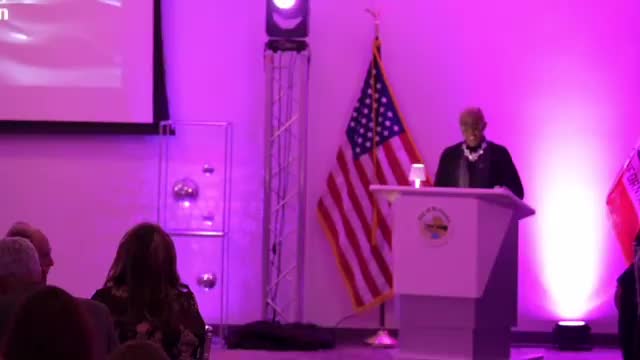
Summary
Mayor Sonia Carter presented El Centro’s 2025 State of the City, highlighting a balanced FY2025–26 budget, housing and downtown planning, public‑safety upgrades including a new police headquarters and ladder truck, library and recreation program expansion, and infrastructure projects to improve walkability and sewer resiliency.
Sonia Carter, mayor of El Centro, delivered the city’s 2025 State of the City address at the El Centro Library, saying the city adopted a balanced budget for fiscal year 2025–26 and outlining investments in infrastructure, public safety, housing and community services.
Carter said the city finalized the Imperial Avenue Complete Streets Plan and secured more than $200,000 to develop a Downtown and Civic Center Master Plan. She announced a Permit‑Ready accessory dwelling unit program designed to simplify adding housing and described progress enabling new residential developments, including approvals and inspections for the Town Center apartments, Willow Bend homes and the Lotus Ranch subdivision.
“Every plan we complete, every project we launch is a reflection of our belief in a thriving, connected community,” Carter said. She emphasized sewer improvements, noting the Southern Pump Station project is on track for year‑end completion and will extend sewer access to the Southeast Quadrant.
Carter highlighted public‑safety upgrades and readiness measures: the fire department adopted a three‑year strategic plan, completed a community risk assessment and standards‑of‑cover review, is pursuing international accreditation and acquired a Rosenbauer Viper 109‑foot ladder truck. On policing, she said the new police headquarters is complete and the department has implemented Axon technology and a drone program to support emergency operations.
The mayor emphasized community services and quality‑of‑life programs. She said the city’s library served more than 43,000 people in its summer reading program and expanded partnerships with Imperial Valley College to deliver ESL, computer‑literacy and citizenship classes. Parks and recreation initiatives included grant‑funded early‑childhood programming (Stepping Stones received $30,000 from Imperial County First 5), expanded youth programming and neighborhood outreach through Rec on Wheels.
On workforce and internal operations, Carter noted human resources transitioned 21 temporary employees to full‑time roles, welcomed 122 new hires, introduced NEOGOV platforms for recruitment and performance management, and migrated key financial systems to the cloud. Information‑technology efforts included new camera systems at water and wastewater plants, phishing‑awareness training for staff and a new cyber incident response plan; body‑camera operations moved into the Axon suite and preliminary work began on an upgraded computer‑aided dispatch (RIMS) system.
Carter described the city’s fiscal position as sound: external audits are current, general‑fund and Measure P reserves are healthy, and budgeting practices were modernized to support strategic planning. She credited the city council and staff for “teamwork and professionalism” in advancing the work.
The mayor closed by thanking residents and staff, adjourning the special meeting and inviting the audience to a musical performance that followed the address.
The mayor’s presentation was accompanied by a video summarizing departmental accomplishments and further examples of the programs she described. No formal votes or motions were taken during the event; the meeting concluded with the mayor’s adjournment.