
Rolling Hills council introduces ADU ordinance amendments to comply with new state law
Get AI-powered insights, summaries, and transcripts
Subscribe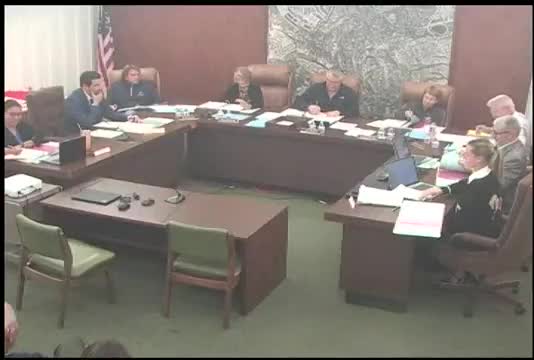
Summary
Council introduced amendments to city ADU and JADU rules to align with recent state laws (AB 462, AB 1154, SB 9, SB 543), covering occupancy, square-foot calculations, application timelines and penalties for late submittal to state housing authorities. Council introduced the first reading and waived full reading.
City staff on Tuesday presented an ordinance to amend chapter 17.28 of the municipal code so Rolling Hills can continue enforcing local rules for accessory dwelling units (ADUs) and junior ADUs (JADUs) after a wave of recent state legislation takes effect January 1.
The staff presentation, which cited AB 462, AB 1154, SB 9 and SB 543, said changes are mainly ministerial to preserve local regulatory authority and avoid a statutory "poison pill" that could render the ordinance unenforceable if the city does not adopt conforming language before the deadline. The amendments clarify: an emergency exception allowing an ADU certificate of occupancy in declared disasters (AB 462); that a JADU with its own bathroom does not require the homeowner to reside on the property (AB 1154) and remains barred from short-term rentals; that the 800-square-foot minimum is measured as interior, livable space; and new completeness and appeal timelines requiring the city to notify applicants within 15 days whether an ADU filing is complete and to act on a complete application within 60 days (SB 543/SB 9).
Staff also warned of a new penalty in SB 9: if an adopted ADU ordinance is not submitted to the Department of Housing and Community Development within the following statutory windows, it can be nullified until the city remedies the omission. Councilmembers pressed staff on how the penalties work; staff said the ordinance would be null and void only until the changes are adopted and submitted, after which local enforcement can resume.
After public comment was closed, a councilmember moved to find the adoption statutorily exempt from CEQA, waive full reading and introduce the ordinance by title only. The council voted to introduce the first reading and waive the full reading. The matter will return for final action at a subsequent meeting.
The council discussion emphasized compliance with state law and the need for staff diligence on ADU application checklists to avoid inadvertent nullification of local rules.
Ending: The council introduced the ordinance's first reading and instructed staff to return with any follow-up edits needed to ensure timely submittal to state agencies.