
Restaurant workers, advocates press Minneapolis to restore co-enforcement funding in 2026 budget
Get AI-powered insights, summaries, and transcripts
Subscribe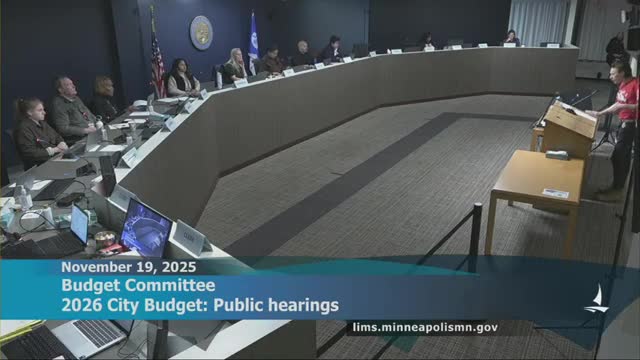
Summary
Multiple workers and service organizations told the budget committee that co-enforcement partners (ROC Minnesota and others) are essential for addressing wage theft, sick-and-safe-time violations and workplace injuries and urged the council to restore or expand funding cut in the mayor—s proposal.
A diverse set of workers, organizers and nonprofit leaders urged the Minneapolis City Budget Committee on Nov. 19 to restore funding for co-enforcement programs that assist workers with wage theft, sick-and-safe-time disputes and workplace safety.
Speakers described personal cases and summarized partner services. "The co enforcement program supports workers like me in holding my employer accountable to the law without the fear of reprisal," said Andrew Weitz, a line cook who described a work injury and an allegedly falsified workers— compensation report. Restaurant Opportunity Center (ROC) members and other witnesses recounted instances of unpaid wages, fired workers and barriers for non-English speakers; several testified that community-based organizations provided language assistance, complaint-letter support and help navigating state agencies.
Clarence Hightower, executive director of Community Action Partnership of Hennepin County, asked the council to consider funding to maintain services that in 2025 served roughly 23,000 households, about 11,300 of which were Minneapolis households. Other nonprofit leaders and ROC organizers said co-enforcement funding is a cost-effective way to reduce long-term housing instability and worker precarity.
Speakers urged the council to prioritize co-enforcement funding alongside other community investments such as neighborhood safety initiatives and shelters. Multiple commenters tied their asks to the mayor—s recommended budget, saying recent proposals reduced or eliminated some line items and that council amendments are needed to restore supports.
There was no formal committee vote at the hearing. Committee members will consider submitted testimony and written comments as they deliberate revisions to the mayor—s 2026 budget in coming meetings.