
Fort Lauderdale planning board backs Central City mixed‑use overlay with opt‑in option
Get AI-powered insights, summaries, and transcripts
Subscribe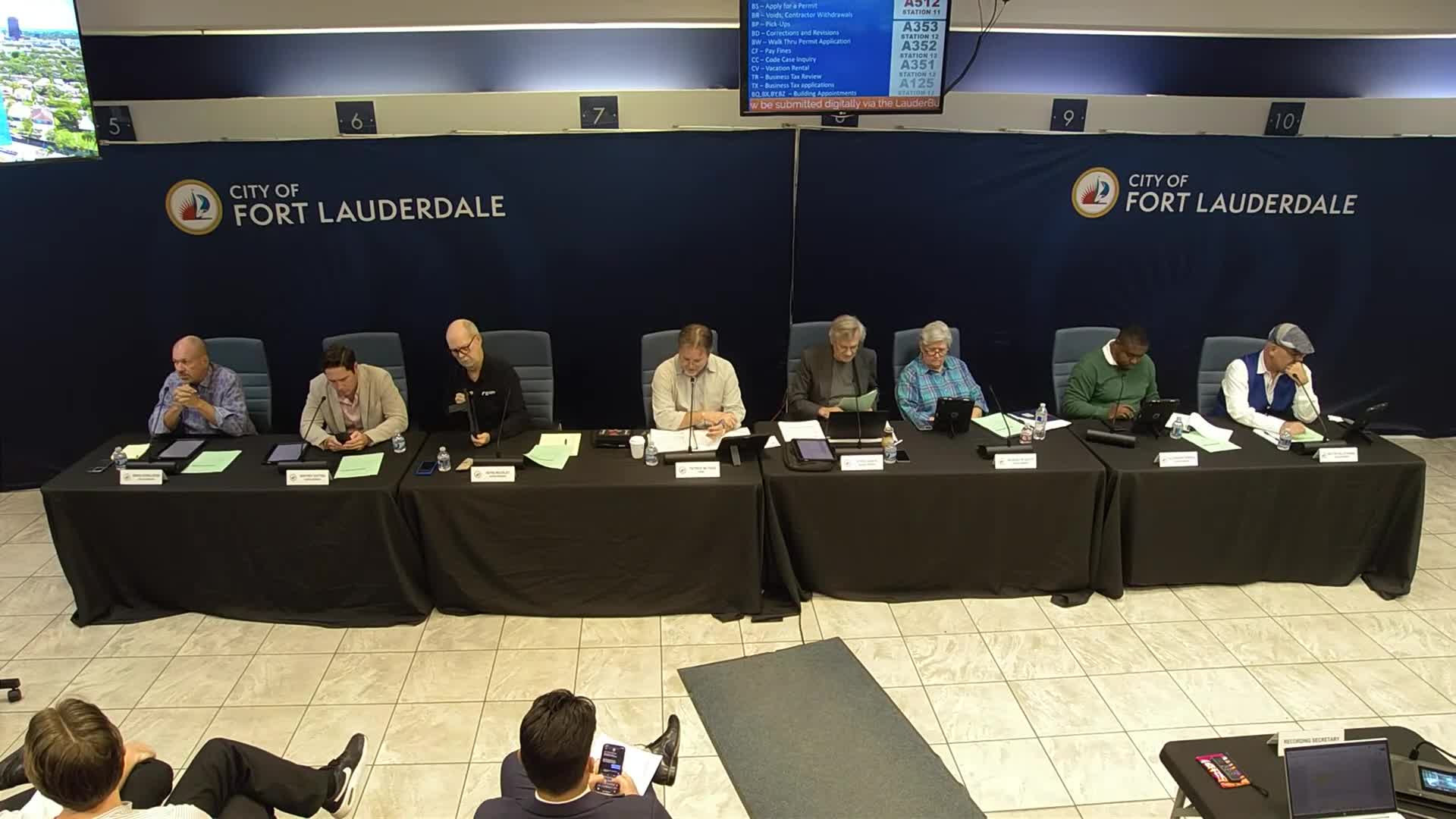
Summary
The Planning & Zoning Advisory Board recommended a text amendment to create Central City mixed‑use overlay districts and an opt‑in mechanism for property owners after lengthy public comment about podium heights, setbacks, and neighborhood compatibility; the measure moves to the City Commission with unanimous support from members present.
The Planning & Zoning Advisory Board on Nov. 25 recommended that the City Commission adopt a Unified Land Development Regulations amendment to establish Central City mixed‑use overlay districts and an opt‑in process for property owners.
Staff presented the proposal as a two‑part approach: new form‑based regulations and an optional overlay that property owners could invoke when they file for development permits. "The provisions of the Central City mixed use overlay districts are established as an optional alternative to the standards and requirements set forth in the underlying base zoning districts," Interim City Attorney Dwayne Spence read into the record when describing the staff‑proposed opt‑in language.
Why it matters: the amendment is the board’s response to community complaints that existing commercial corridors need reinvestment while residents asked for stronger protections where new development meets single‑family neighborhoods. The change is also shaped by Senate Bill 180, which limits adoption of new LDRs in certain disaster‑impacted areas until Oct. 1, 2027; staff said the opt‑in overlay preserves certainty during that period.
During a multi‑hour public hearing, neighborhood leaders and business owners clashed over scale and transition details. "This area needs TLC," resident Olga Zamora said, urging the board to support the planning effort and public engagement already undertaken. Troy Liggett, president of the Middle River Terrace Neighborhood Association, praised the plan broadly but requested three specific tweaks: larger residential transition setbacks, lower street‑facing podium heights on narrow NE 13th Street, and that the top 25 feet of tower height be made conditional so developers must demonstrate neighborhood compatibility.
Developers and long‑time property owners raised counterarguments about investment risk. "We bought this property with a 150 foot right, and I think any sort of down‑zoning is taken away from us," said 13th‑Street property owner Mel Levitt, who warned that reduced entitlement could discourage redevelopment.
Board members pressed staff on mechanics for an opt‑in overlay and whether it would be permanent. Staff said the overlay would sit above the underlying zoning and a property owner would formally indicate intent to opt in during a development permit application; absent opt‑in, the base zoning would remain the property's default. The text provides for a single mutually agreed extension that aligns with new state deadlines for development review.
The board moved and seconded the staff‑recommended amendment, including the opt‑in overlay language, and approved the recommendation by roll call. The board’s motion will now go to the City Commission for final consideration.