
Immigrant advocates and health workers urge committee to advance bill requiring notice of federal I-9 audits
Get AI-powered insights, summaries, and transcripts
Subscribe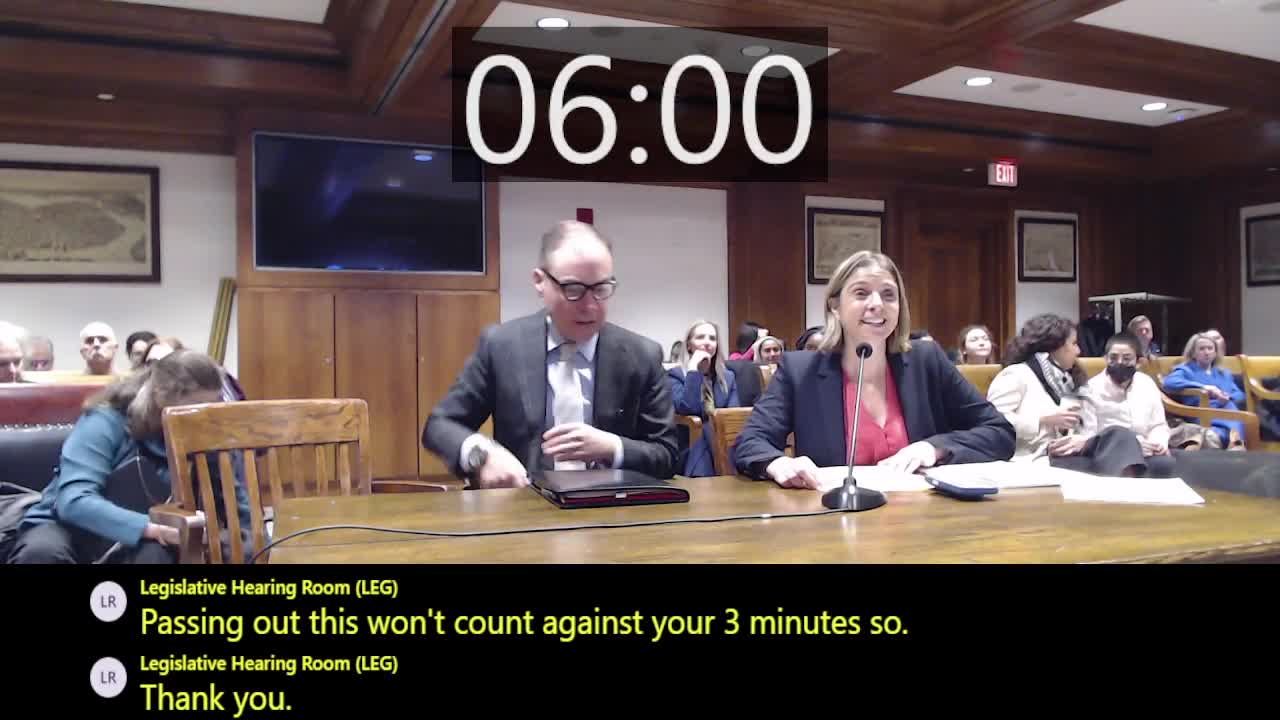
Summary
Witnesses told the Joint Committee on Labor and Workforce Development that S.2665 would require employers to post a one-page notice when ICE or DHS schedules an I-9 inspection, giving workers time to gather documents and seek counsel; supporters said Massachusetts privacy rules and Illinois’ 2025 law offer precedents.
Supporters of S.2665 told a joint legislative committee that a simple notice requirement would protect workers whose personal information is disclosed during federal I-9 audits.
Heather Yance, a senior immigration staff attorney at the Massachusetts Law Reform Institute, said the bill requires employers to post a one-page notice visible to employees when federal agencies schedule an I-9 inspection. “Notifying immigrants gives them a pocket of due process before ICE arrives,” she said, adding the notice would allow workers to consult an attorney and prepare documentation.
Matthew Maona, an immigration attorney and adjunct professor at Suffolk University Law School, described I-9 audits as a civil process that has taken on a stronger enforcement posture: “All of your personal information, your social security card, goes off to the U.S. government or a third-party contractor,” he said, and employees currently have no guarantee they will be told about the inspection.
Tejas Shaw, who testified from Illinois and helped implement that state’s right-to-privacy law, told the committee the Illinois statute — effective Jan. 1, 2025 — includes a similar notice provision and that advocates and employers there have adapted to the requirement. “The I-9 provision under Illinois law has helped provide immigrants with notice of an inspection, which can in certain circumstances prevent wrongful arrests,” Shaw said.
Dr. Fiona Danaher, director of the MGH Center for Immigrant Health, said fear of enforcement actions has already driven some immigrant health workers out of the Massachusetts workforce and harmed patient care. “S.2665 offers a simple solution to protect workers’ due-process rights,” she said.
Tom Vaughn, past president of the Massachusetts Bar Association, said the bill is straightforward and enjoys broad support from employers, immigrant advocates and lawyers. Witnesses told the committee they know of no organized opposition.
Committee members asked whether S.2665 should be framed as a data-protection measure. Supporters replied the bill is consistent with recent Massachusetts privacy initiatives and would extend the Commonwealth’s standards for safeguarding personal information to the notice process.
The testimony concluded with advocates urging the committee to report the bill favorably so the Legislature can adopt the notice requirement.
Next steps: the committee did not take a public vote during the hearing; committee staff recorded the testimony and invited written submissions through the legislative e-mail address provided at the hearing.