
Sandpoint commission reviews draft historic‑preservation ordinance, debates scope and owner impacts
Get AI-powered insights, summaries, and transcripts
Subscribe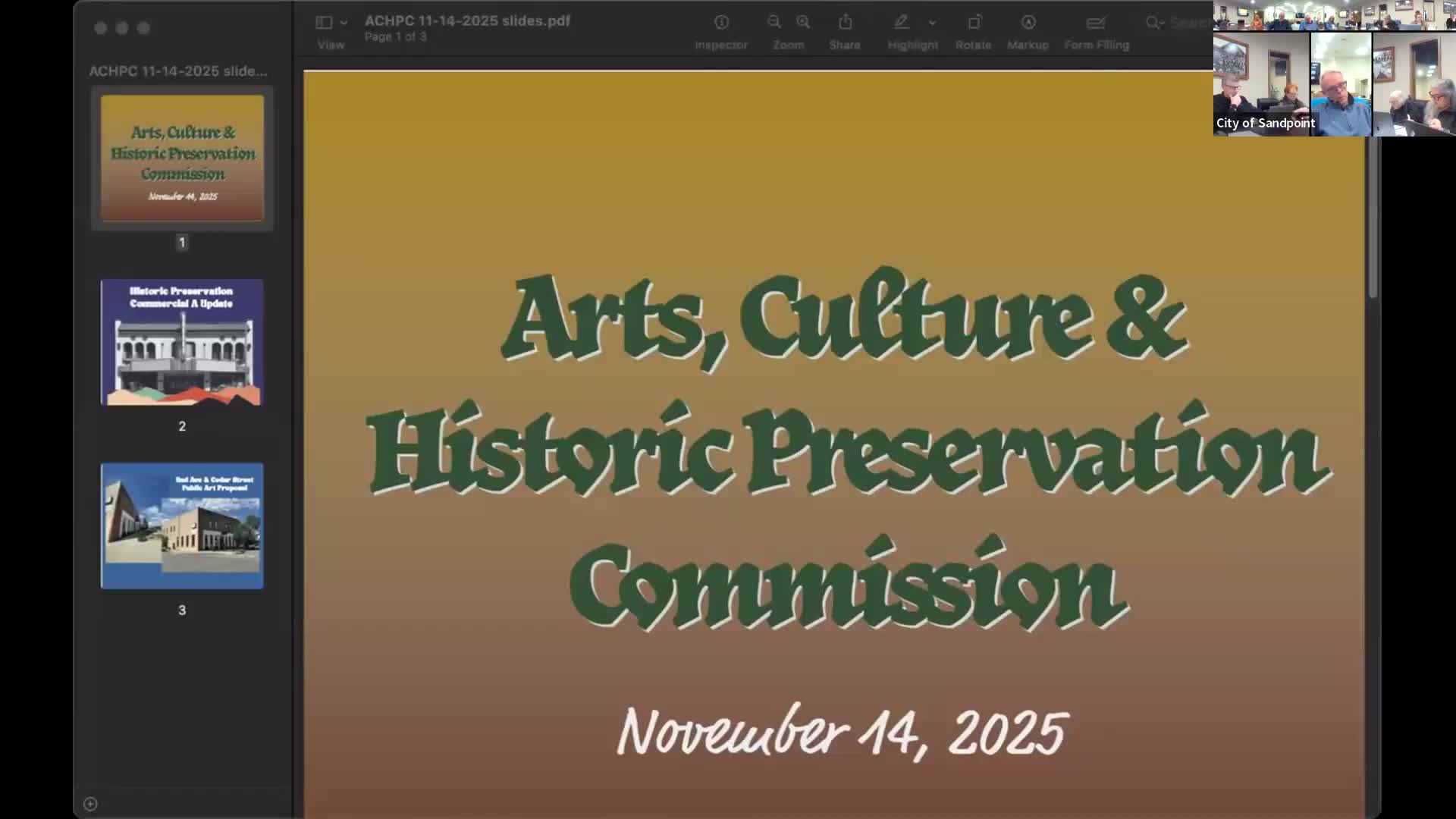
Summary
City staff presented a draft historic‑preservation code that would create a local overlay, a certificate‑of‑appropriateness permit, and demolition‑by‑neglect procedures; commissioners asked for a landmarks‑vs‑districts pros-and-cons memo, training, and more outreach before applying for CLG funds.
Chairwoman Ellie Sesnes convened the Sandpoint Arts, Culture, and Preservation Commission on Nov. 14, 2025, to hear a status update on a draft historic‑preservation ordinance that staff plans to share for legal review before the commission considers a recommendation to city council.
Bill Dean, the city staff liaison, told commissioners he had prepared a working table and a draft chapter to add to the zoning code that would enable locally enforceable protections for properties on the National Register of Historic Places and other landmarks. Dean said the draft creates an overlay district, a locally administered certificate‑of‑appropriateness permit for exterior changes, references design guidelines, and sets up appeals and timelines. "This ordinance goes there and talks about that," Dean said, adding that without a local ordinance the National Register listings remain "honorific." He also told the group the certificate would apply only to exteriors and that he had set a two‑year effective period for issued certificates.
The draft would also include provisions to address demolition and what Dean described as "demolition by neglect": a preliminary determination by the commission, notification to the building official, a 45‑day window for the owner to commence remedial work, and a potential referral to the city attorney if the owner fails to act. "If they fail to do this, there's a process you go through... and if they fail to implement what the commission says, the city attorney now begins legal action," Dean said.
Commission discussion focused on several policy choices that Dean said the commission must make before forwarding recommendations to council: whether to adopt Secretary of the Interior standards or a lighter local standard, whether to designate landmark properties only or create a district that would include noncontributing resources, and how much administrative versus commission review to require. Dean noted Sandpoint's two National Register districts and eight individual listings but emphasized the city currently lacks a local enforcement mechanism.
Several commissioners said they wanted to avoid overly burdensome rules that could squeeze out local artists and small developers. Commissioner Rick Decker warned against overregulation, saying the commission should "preserve the character of Sandpoint, but not restricting creativity," and used the example of preventing a building from being painted an inappropriate color. Others asked Dean to present pros and cons for landmarks versus district approaches and for the commission to pursue training through SHPO (the State Historic Preservation Office) or consultants to build expertise.
Commissioners and staff also discussed outreach and timing: Dean recommended more internal learning and refinement in the coming months and said property‑owner surveys and direct outreach would be appropriate once the commission has a clearer proposal. Dean said he intends to bring a draft ordinance to the commission the next month for review and to obtain legal review before wider distribution.
The commission recorded no formal vote on the ordinance at the meeting. Instead, members asked staff to continue drafting the code, prepare a landmarks‑vs‑districts comparison, and include clear areas of policy the commission should focus on when the draft is circulated. "I want you guys to see that... I'm working hard on this," Dean said.
Next steps: staff will complete legal review of the draft and return to the commission with the ordinance and supporting materials (including a pros‑and‑cons memo on landmarks vs. districts), proposed training options, and suggested public‑engagement steps for property owners and other stakeholders.