Parents and community members press board on student safety, restraint reports and EdTech privacy
Get AI-powered insights, summaries, and transcripts
Subscribe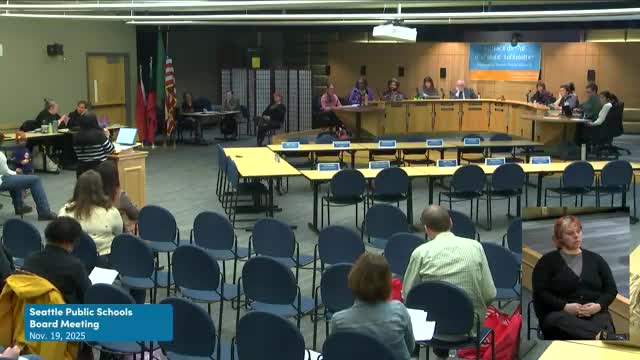
Summary
Public commenters urged the board to address alleged policy violations involving restraints and isolation, asked whether the board was briefed on litigation decisions, and raised concerns about district partnerships with Big Tech, data privacy and parental consent for AI and EdTech tools.
More than a dozen members of the public spoke during the board’s testimony period, focusing on two recurring themes: student safety and concerns about the district’s use of educational technology.
Several parents and PTSA leaders urged a thorough review of district policy implementation on safety and discipline. Manuela Slye and Michelle Campbell both cited alleged incidents in which staff used restraint or isolation in ways they say contradict district policy (policy 3240 and policy 3246), and they called for stronger accountability systems. Janice White and Sam Fogg referenced a recent trial involving a Meany Middle School student who was punched by a teacher and a subsequent $8 million jury award; they asked whether the board was briefed before the district sought a new trial and urged board-level oversight of litigation strategy.
A separate but related thread focused on EdTech: Thomas Coffey, Megan Hall and Emily Jerkin warned against reliance on commercial technology and generative AI in classrooms without independent research, pilots or meaningful parental consent. Jerkin referenced PowerSchool data-breach litigation and asked how the district will obtain informed parental consent for AI and other third-party products used on district-issued devices.
Speakers also pressed for structural remedies, including better staff training on trauma-informed responses, clearer data collection on policy compliance, and improved communication to families. Board leaders listened and directed staff to follow up: staff said they would validate pilot findings, expand family engagement, and bring clearer recommendations and procedures back to the board.