
Methuen committee holds firm on walker/rider distances and tightens bus-safety language
Get AI-powered insights, summaries, and transcripts
Subscribe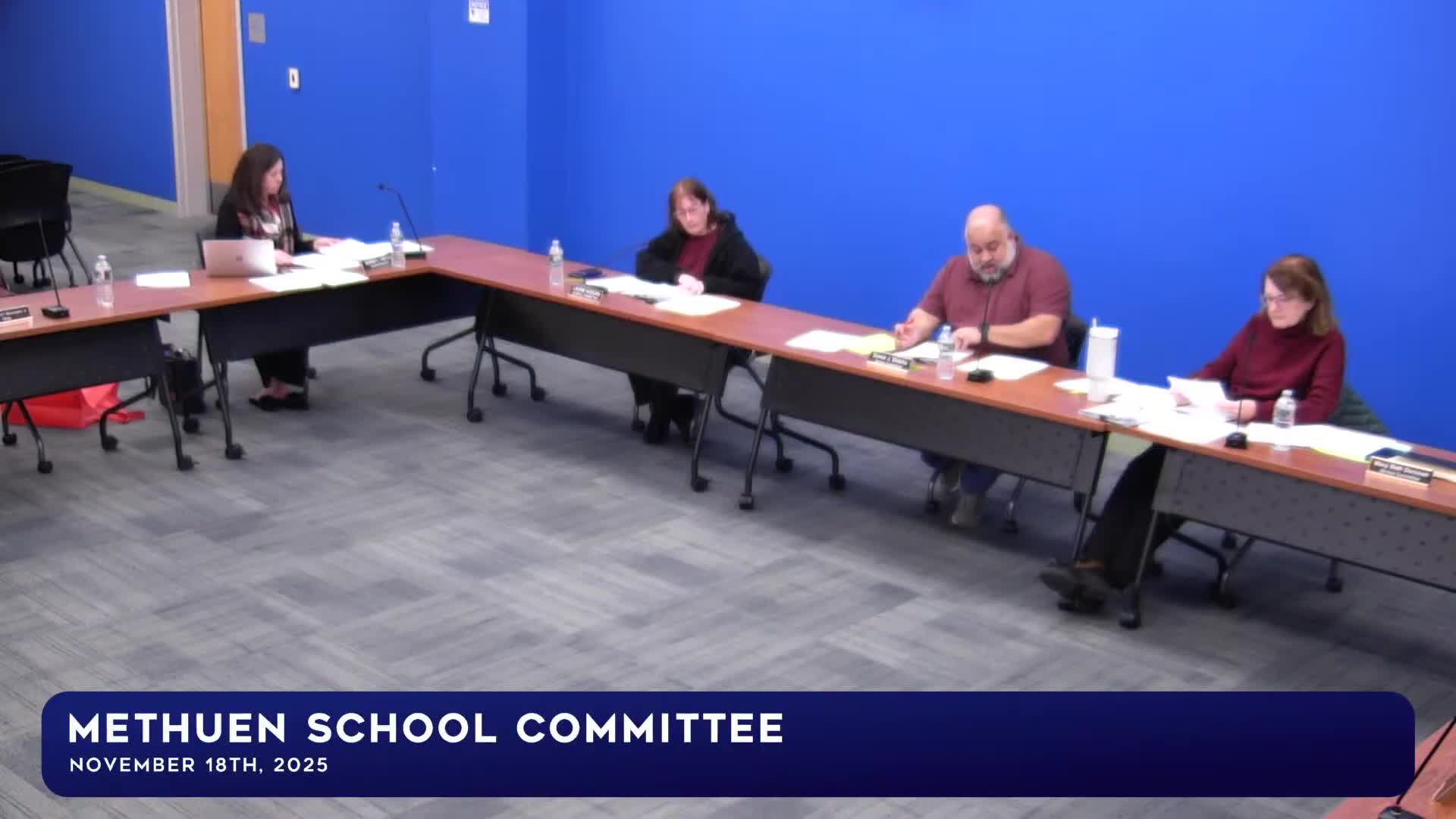
Summary
During the Nov. 18 policy review the Methuen School Committee retained distance guidelines for walkers and riders, discussed expanding bus safety instruction definitions and agreed to move background-check accountability to the superintendent or designee rather than the committee. The group also reaffirmed a blanket prohibition on private-vehicle transport for extracurriculars.
The Methuen School Committee devoted substantial discussion on Nov. 18 to transportation and bus-safety policies, ultimately retaining student-distance language for walkers and riders and clarifying oversight of driver background checks.
Members said that despite a bid to minimize routes as a cost-savings measure, many neighborhood roads lack sidewalks and students who live within a mile still require bus service for safety reasons. Speaker 3 summarized the subcommittee’s view: "So we needed to keep the language because we do have some kids in some neighborhoods that are able to walk, and we aren't busing them at the moment," and explained that keeping distance provisions preserves flexibility where walking conditions are present.
The committee also discussed EEEAE (school bus safety program) classroom-instruction language and resolved to keep a broad definition that can include instruction on the bus. On the subject of background checks and handling driver records, members agreed the school committee should not be placed in a position to review names or driving records in public session; Speaker 3 suggested replacing references to the committee with "superintendent or designee" to maintain confidentiality.
The group reaffirmed a strict policy barring use of private vehicles for extracurricular student transport (except for parents transporting their own child) and noted use of district vans for small-team travel. Committee members also discussed idling signage to reduce bus idling near schools and observed that drug and alcohol testing for commercial drivers aligns with DOT expectations.
Several of these transportation-related changes were incorporated in the Section E amendments the committee adopted during the meeting. Where language could conflict with handbook practice (mileage/distance specifics), Speaker 2 said staff would reconcile policy and handbook language before second read.