
Santa Maria posts year‑end surplus but city faces structural deficit; staff to return with action items
Get AI-powered insights, summaries, and transcripts
Subscribe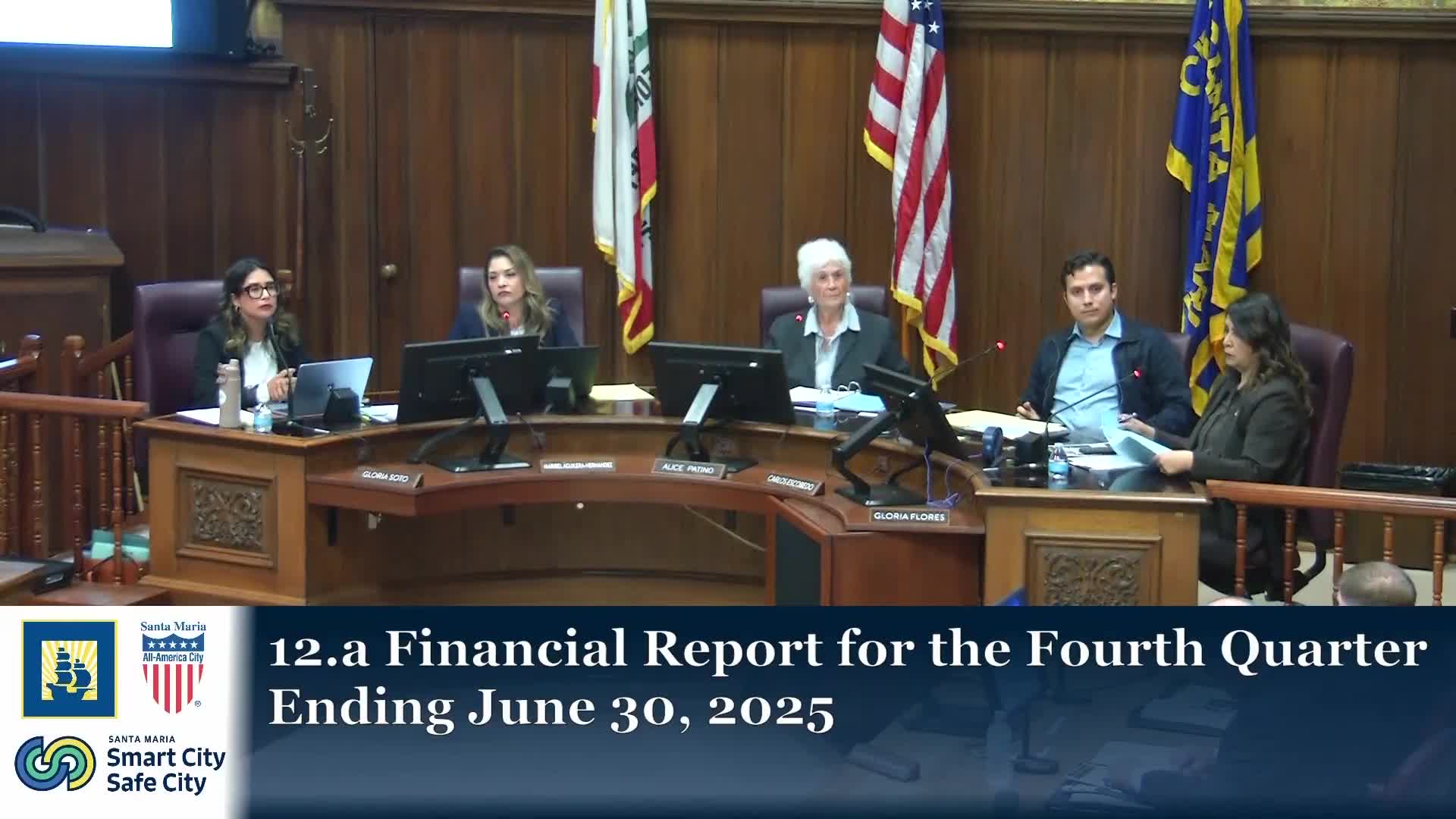
Summary
Finance director reported the city closed fiscal year 2024–25 with higher revenues and lower expenditures than budgeted, avoiding previously planned reserve draws, but staff warned of a $16–24M structural gap ahead and will return Jan. 20 with action items and a Q1 update.
The Santa Maria City Council received the fiscal year 2024–25 fourth‑quarter financial report on Nov. 18, when Director of Finance Rebecca Campbell said the city closed the year with stronger than‑expected results but remains constrained by a structural deficit.
Campbell told the council that revenues came in higher than budgeted ($98,400,000) while expenditures came in lower ($103,200,000), producing favorable year‑end results that allowed the city to avoid drawing from previously planned reserves. She said revenues exceeded budget by about $4.8 million and expenditures were about $8.9 million less than expected, driven largely by departments holding positions vacant (about $5.8 million in salary savings).
The report showed some revenue streams underperforming while others exceeded expectations: sales tax collections were down (sales tax receipts were ~$30,800,000 and below budget by ~$1.8 million), transient occupancy tax collections were weaker than budgeted, and property tax receipts were higher than expected by about $1.5 million. Measure U receipts totaled roughly $25.9 million for the year (about 97.1% of expected collections), with expenditures at 96.4%.
Campbell and staff emphasized that favorable year‑end results were largely one‑time or timing effects. The city plans to use one‑time funds to balance the 2025–26 budget (~$24.5 million), and staff warned the city will face ongoing costs for labor agreements and insurance (including a possible 10% increase in health costs) and pension cost increases; officials projected continuing pressure into 2026–27. The finance director said the city would return to council Jan. 20 with action items to address the structural deficit and a Q1 update.
Council members asked for additional detail on whether building permit and development fee revenue is sustainable (staff said a historic high in building‑permit revenue drove part of the positive variance and much of it was tied to projects now moving into permitting), the duration of long‑standing vacancies, and the impact of higher jury verdicts and work‑comp reserves on insurance costs. City staff recommended cautious budgeting and continued attention to vacancy savings and long‑term obligations.
The council voted to receive and file the report as presented.