
Rezoning petition for proposed Clinton County data center withdrawn; public comment highlights water, power, jobs and EMF concerns
Get AI-powered insights, summaries, and transcripts
Subscribe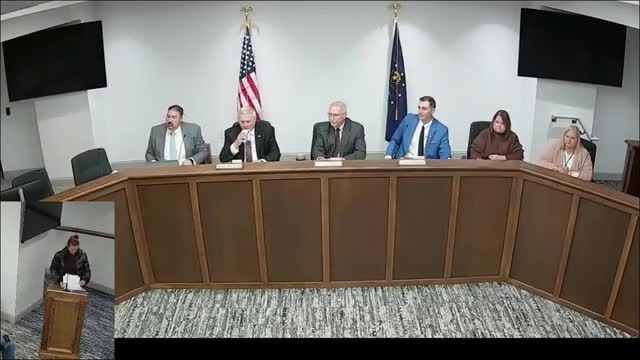
Summary
County staff announced the rezoning petition for a proposed data center (docket 15‑25‑RZ) has been withdrawn and the applicant intends to refile with a different configuration; residents used the meeting to press for written guarantees on water, power, local hiring and tax incentives.
County staff told the Board of Commissioners on Nov. 18 that the rezoning petition for the so‑called “loop pack” data‑center application (docket 15‑25‑RZ) has been formally withdrawn and cannot be acted on until a new, amended application is filed and renoticed.
The announcement, read by Area Plan Commission staff, said the applicant expects to refile with a different configuration and acreage tied to an identified end user; when a new filing appears, the plan commission will hold a new public hearing and the standard notice, sign and letter process will restart.
During the public‑comment period that followed, multiple residents raised technical and policy questions about the project’s likely local impacts. Richard Hammer asked for verification of claims that the facility would return water to the community and cited national examples of large data‑center water use: “Google’s data center in Council Bluffs, Iowa consumed 1,300,000,000 gallons of water in 2024,” he said, and asked the developer to produce verifiable data on water use and recirculation.
Several speakers questioned whether the project would receive tax incentives or abatements. Hammer asked the county to state on the record whether the project would receive incentives and whether the county would receive its full share on what he described as a $50,000,000,000 investment; speakers and commissioners repeatedly said they had not approved abatements and that incentive requests would be handled in later negotiations if offered.
Other concerns included local hiring guarantees for the roughly “30 or so high‑paying jobs” referenced in project materials, potential effects on residential electricity rates, and long‑term health questions about electromagnetic fields (EMF). “Has the developer even mentioned how this EMF issue will be addressed?” Hammer asked.
An attendee with IT industry experience, Michael T. Murphy, described changing his position after reviewing APC materials and site visits. Murphy said he had supported the idea initially but now favors getting more detailed operational and contractual information before any rezoning returns: “I changed my mind … Let’s get some more information before we make a decision,” he said.
A public proposal called the “Clinton County Wealth Compact” was also presented; the speaker proposed a county development trust equity stake, enforceable safeguards on water and energy agreements, independent audits, and annual reporting to ensure the community shares in long‑term benefits.
County staff urged residents that the item will return through the formal APC and re‑hearing process and invited people to watch public notices or contact the planning office for updates. No new application had been filed as of the Nov. 18 meeting.