
Board backs finance committee’s '1+1' levy approach; tentative 2025 levy adopted
Get AI-powered insights, summaries, and transcripts
Subscribe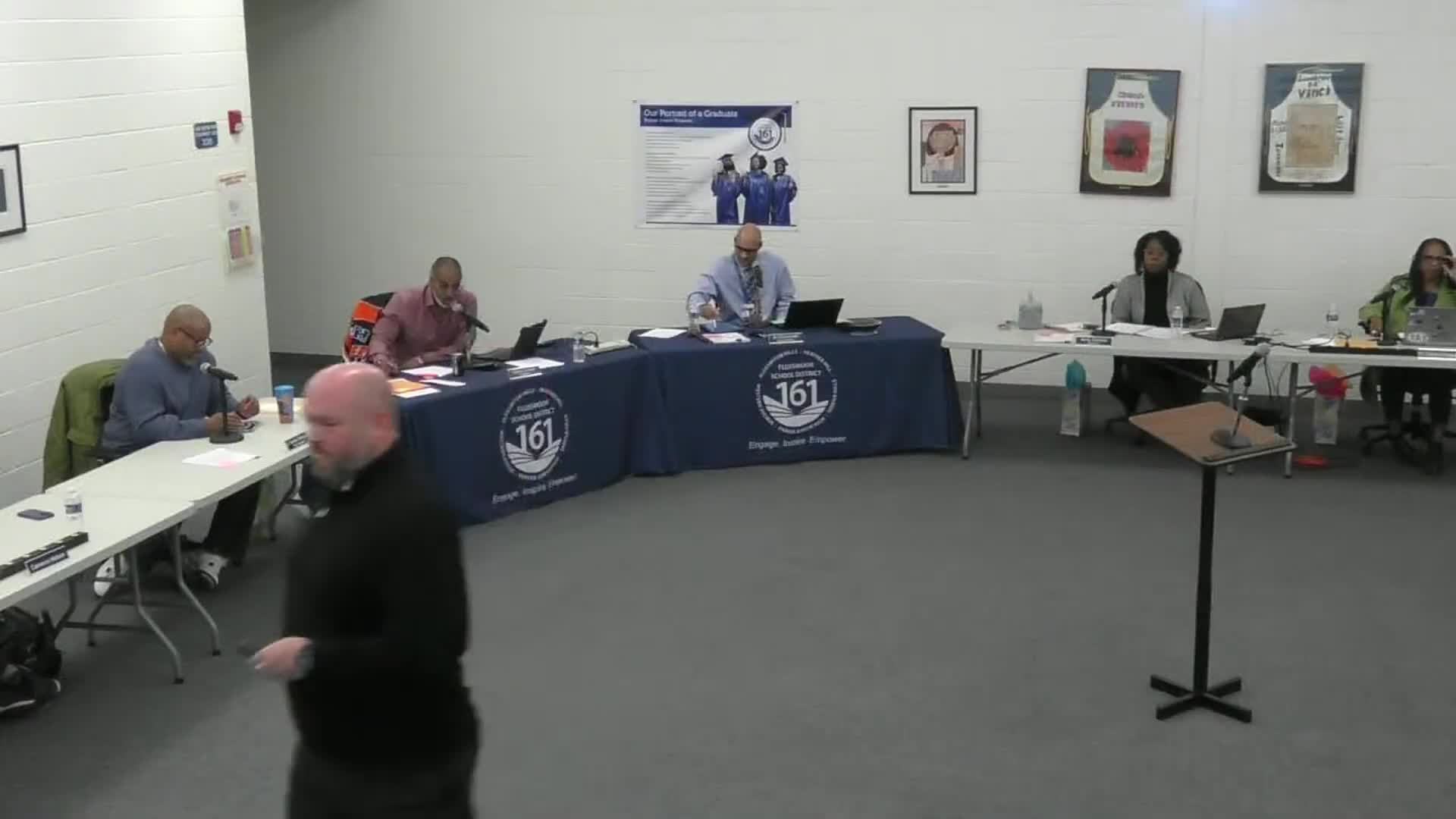
Summary
After a long discussion of levy models and capital needs, District 161’s board expressed consensus behind the finance committee’s recommendation to recapture $1 million of a property tax relief grant this year and consider the second $1 million next year; a tentative 2025 levy was approved by roll call for publication.
The Flossmoor School District 161 board on Nov. 11 approved a tentative 2025 property tax levy after the finance director and finance committee presented four models and the committee recommended a phased approach to restore local levy capacity.
Fran, the district’s chief school business official, walked the board through four levy options: extend the levy by CPI only (adding roughly $750,000 to the levy), CPI plus recapturing the full $2 million property tax relief grant (PTRG), CPI plus $1 million, and a '1+1' option that would claw back $1 million of PTRG this year and the second $1 million next year. Models factored in projected salary and benefit increases, assumed future CPI trends, and capital project costs, including a projected $10,000,000 construction outlay to finish planned refreshes and building work.
Fran's projections showed that a CPI-only extension would maintain fund balance above policy through 2030 but begin to produce operational deficits later; reclaiming both PTRG amounts would increase fund balances and delay deficits. The finance committee (Cam) recommended the 1+1 approach — recapture $1 million this year and plan to recapture the second $1 million the following year — arguing it balanced pursuing district goals (notably closing achievement gaps and funding multi‑year plans) while avoiding an immediate referendum.
Board members pressed for clarity on household impacts. Fran gave example homeowner numbers: on a $350,000 fair‑market‑value house, the CPI‑only model would increase the district portion by about $168; bringing back the full $2,000,000 would increase that line to about $515; the 1+1 scenario was intermediate (about $327 for the $350,000 example in her slide). Board members discussed the need to 'sharpen pencils' on spending and to pair any levy increase with targeted expense reductions and clear goals.
Following discussion, the board signaled consensus around the finance committee recommendation and approved a tentative levy by roll call to allow administration to publish the required notice and present formal adoption later. Administration will prepare the formal numbers and publish the tentative levy in the newspaper per statute before final adoption.
Outcome: the tentative 2025 levy was approved (motion and roll‑call vote recorded). The board directed administration to bring detailed cost breakouts and to continue budget scrutiny tied to the district’s 3–5 year goals.