
Residents urge Morton Grove to declare 'ICE-free' zones, seek signage and an end to Flock cameras
Get AI-powered insights, summaries, and transcripts
Sign Up Free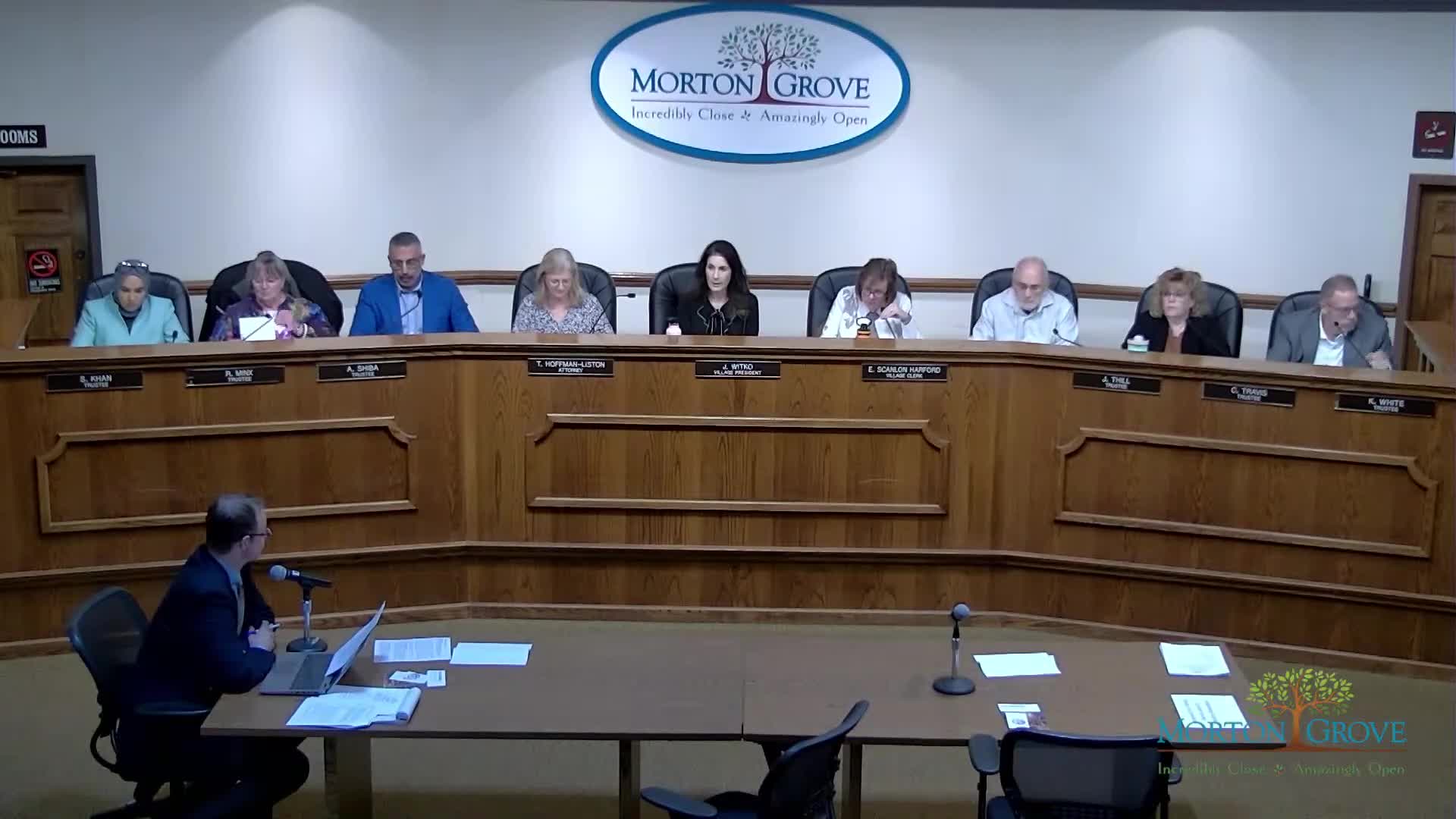
Summary
Dozens of residents called on the Morton Grove Village Board Nov. 12 to prohibit civil immigration enforcement on village property, post signage, stop the Flock license-plate reader contract and host 'know your rights' events; village staff cited the Illinois Trust Act and Illinois Voices Act and the mayor cautioned that symbolic measures may be limited in effect.
Dozens of Morton Grove residents used the public-comment period at the Nov. 12 Village Board meeting to press elected officials to take local steps in response to recent federal immigration-enforcement activity reported in and near the village. Speakers asked the village to declare 'ICE-free' zones on village-owned property, produce signage templates for businesses and residents, end the village’s contract with Flock (a license-plate–reading vendor), and use village platforms to notify the public when agents are active.
Residents described multiple recent incidents — worksite raids, vehicle stops, low-altitude helicopters and an incident at a Menards store — that they said have traumatized neighbors and disrupted local businesses and services. Mary Elsner said the village should identify and publish a list of village-controlled properties and make signage available for businesses and residents. "We are already a target of civil immigration enforcement," she said, asking the board to act to preserve community trust and access to services.
Several speakers recounted alleged abductions and worksite raids, including accounts that Morton Grove police were present during some detentions. Lisa Kebir said she had documented multiple incidents and urged the board to follow steps taken by nearby communities: direct police to obtain agent names and badge numbers, prompt sergeants to respond when residents report activity and publicize training and 'know your rights' information on village channels.
Other residents framed the issue as moral and civic: a mixture of legal workers, educators, health-care workers, attorneys and parents urged the board to go beyond statements of sympathy. Karina Marin said the mayor’s previous written response was "disappointing" and urged concrete actions including ending Flock contracts, partnering with local organizations for rights training and using village social media to inform residents.
Village staff and the mayor responded by noting legal limits. The administrator summarized village adherence to state law — explicitly citing the Illinois Trust Act (2017) and the Illinois Voices Act (2019) — and said staff will not inquire about immigration status, will not transfer detainees to federal custody, and will not make village facilities available to federal agents for immigration enforcement. Mayor Witko told the audience that formal proclamations or signage aimed at federal agents would be largely symbolic and could, she said, increase risk for vulnerable residents, and encouraged advocacy to federal legislators for policy change.
The public-comment period included calls to end the Flock license-plate–reader program and to clarify how data are stored and whether federal agencies can access them. Janice Cha asked the village to explain how the Flock data are protected and whether they have been shared with federal agents. The board took no immediate action during the meeting on these requests; many speakers asked for follow-up and clearer transparency about village policies.
The meeting adjourned after public comment.