
Council hears Throne Labs pitch for tech-enabled park restrooms; staff directed to explore regional rollout and costs
Get AI-powered insights, summaries, and transcripts
Subscribe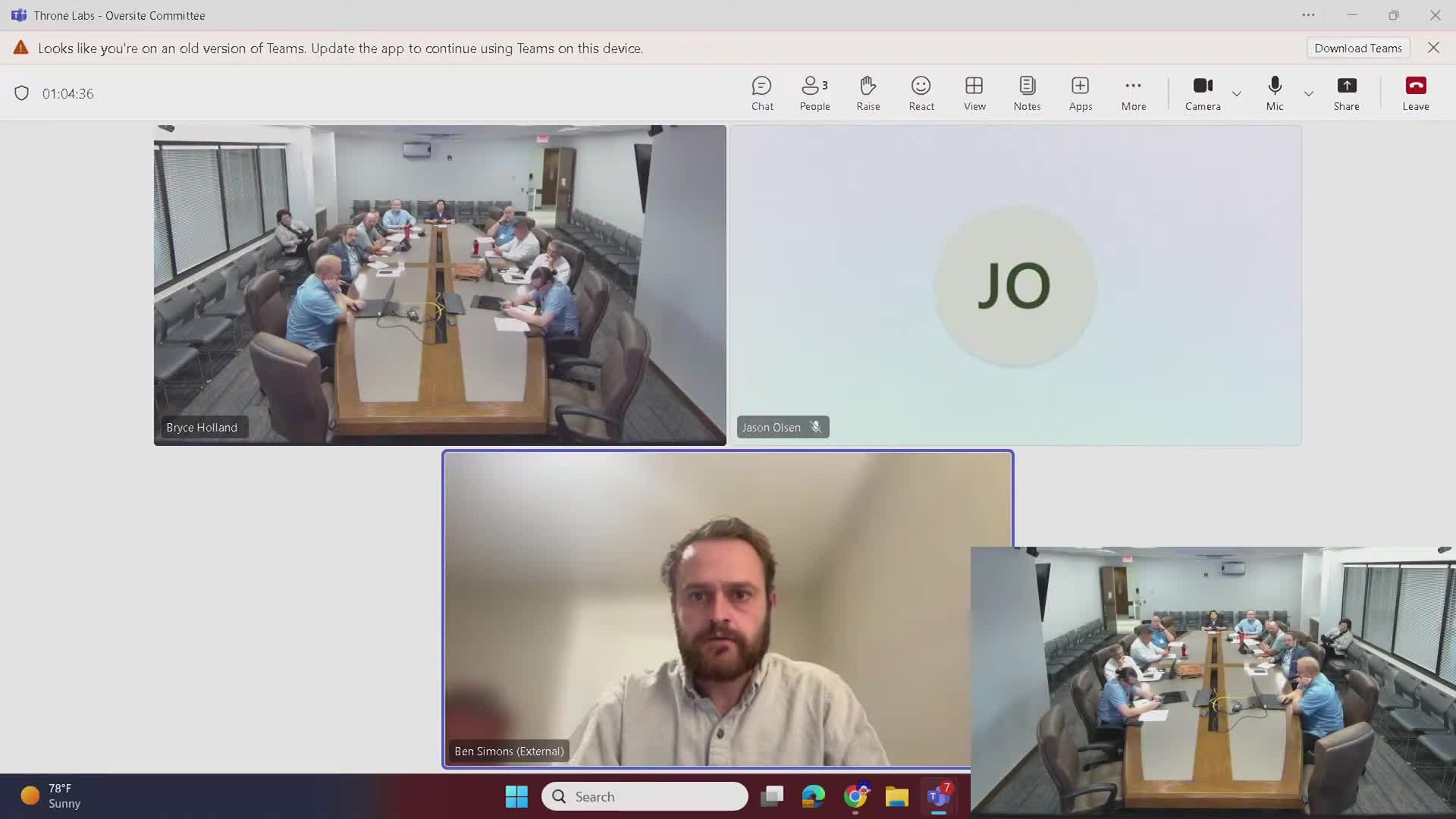
Summary
Ben Simons of Throne Labs presented a tech-enabled, QR-code-activated portable-restroom system that includes touchless entry, water and sink, remote monitoring and usage-based cleaning; Throne seeks minimum market deployments of 15'20 units and council asked staff to pursue regional partners and budget options.
Ben Simons, speaking for Throne Labs, described a modular, touchless public restroom designed for high-traffic and hard-to-service areas and proposed a pilot deployment in the Norman metro.
Simons said Throne units are unlocked by a QR-code/text workflow that starts a timed, touchless session. He described the user experience and accountability features: a voice prompt in English and Spanish warns users of a 10-minute time limit, the system sends post-use cleanliness surveys and a remote monitoring team can lock or temporarily restrict access for repeated misuse. "They're like a little mini ambulance," Simons said when describing bike medics'(clarifying that quote applies to medics earlier in the EMS presentation); for Throne he explained the units include running water for a toilet and a sink, ventilation and climate control.
The company presented operational data from other markets: average uptime across roughly 85 Throned units nationally is about 95%, the company reported that in Downtown Santa Monica deployments correlated with a 70% decrease in public defecation and that LA deployments showed roughly a 50% decline in public defecation in some areas. Simons said the company targets cleaning cycles roughly every 15 uses on average and operates a remote monitoring and cleaning workforce to maintain availability.
On costs and scale, Simons said there is typically no upfront cost to install a unit in an existing market; Throne charges an annual service fee billed monthly that covers installation, supplies and servicing. He said Throne often requires a minimum market entry of 15'20 units so the company can hire local cleaners and technicians; he confirmed contracts are 12 months. Council members and staff discussed possibilities for reducing the initial quantity by combining purchases with neighboring agencies (for example, Oklahoma City or county partners) and the staff recommended pursuing regional conversations before including the program in a future budget cycle.
Council asked several operational questions'Simons said cleaners and techs are hired locally and that Throne can provide QR-code cards or alternatives for unhoused residents who do not have phones. Multiple council members said Norman's immediate budget could not absorb a 15-unit minimum but supported continued outreach to neighboring jurisdictions and to parking or campus stakeholders (OU) to identify flagship customers and shared deployment models.
The council gave direction to staff to continue outreach to neighboring jurisdictions, gather cost estimates and return with options and potential partners for the FY26/FY27 budget cycle. No procurement decision was made at the meeting.