
Tennessee Supreme Court Hears Arguments in Greg Lance’s Bid for New Trial After 25 Years Behind Bars
Get AI-powered insights, summaries, and transcripts
Subscribe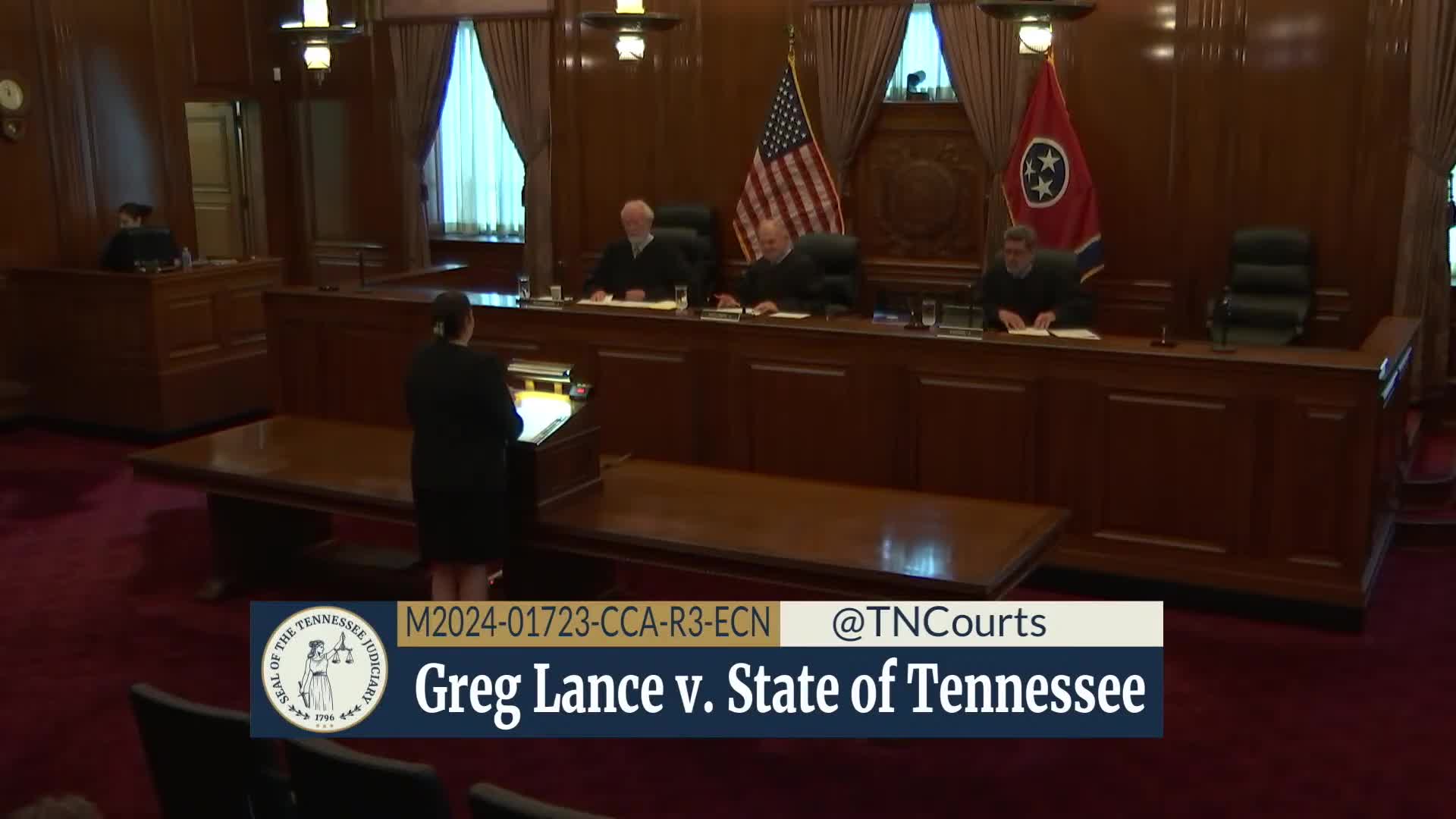
Summary
Petitioner counsel told justices that five alleged confessions and DNA evidence point to Sam and Peggy Horn as the killers, while the state countered the accounts are hearsay and pointed to trial evidence tying Greg Lance to the crime; the court questioned timing, credibility and the applicable jury instruction. No decision was issued.
The Tennessee Supreme Court heard oral argument in the case of Greg Lance, who has spent more than a quarter of a century in prison and is seeking post-conviction relief through a coram nobis petition.
Margaret Dodson, counsel for Lance, told the court she represented "the petitioner-appellant, Greg Lance," and argued the lower coram nobis court erred in denying relief in the face of what she described as "overwhelming evidence of actual innocence." Dodson said the petition filed in 2024 included sworn affidavits from three new witnesses and two prior witnesses — five people in total — who "said Sam and Peggy Horn did it," and that one of the new witnesses reported that Sam Horn had used his nephew to dispose of the murder weapon near where it was later found. She told the court there was "DNA evidence that another man's DNA, not Greg Lance's, was on the murder weapon." Dodson said a local pastor found a shirt at the victims' home in the days after the murders, consistent with earlier testimony that Peggy Horn left a shirt behind.
"Greg Lance has spent more than a quarter of a century in prison for crimes he did not commit," Dodson said. She argued that under Tennessee precedent and statutory equitable tolling, the new evidence should be credited at the tolling stage under the Clardy standard and that the coram nobis court misapplied the law and the merits standard.
State counsel Lacey Wilbur disputed those claims. "The newly discovered evidence is hearsay," Wilbur told the court, and the trial record contains multiple pieces of evidence implicating Lance: Wilbur said the petitioner allegedly solicited three people to commit the murders, was seen target practicing days before the killings, and that the Tennessee Bureau of Investigation matched bullets from the scene to the murder weapon. Wilbur also said two witnesses identified a green cord wrapped around the murder weapon as matching a cord the petitioner had in his yard and that gasoline was found on the petitioner's shoes and socks and his hair was singed.
Wilbur urged the justices to defer to the coram nobis court's credibility determinations, noting the lower court observed that many post-conviction witnesses were drug users or had unstable recollections. "As time goes by and the petitioner exhausts remedies," she said, the state's interest in finality "gets weightier," and she asked the court to affirm the lower court's denial as untimely and without equitable tolling.
Throughout argument, justices pressed both sides on procedural and legal questions. One justice asked whether the newly discovered accounts existed before the death of Sam Horn; Dodson said the confessions were made before his death but that Lance's team first learned of them after a recent television program prompted witnesses to come forward. Another justice asked whether a retrial would be governed by the jury instruction in effect at the time of trial or by a revised instruction; Dodson replied that the appropriate comparison for the "may have resulted" inquiry is the instruction the jury received at trial.
Dodson urged that the coram nobis court had credited testimony — specifically naming Darren Dunn's account of a confession and the related recovery of the gun — and yet failed to analyze how that credited testimony would have affected the jury under the applicable standard. She asked the court to vacate and reverse the lower court's judgment.
Wilbur replied that the coram nobis court reasonably found the newly offered material to be hearsay and insufficient to overcome the trial evidence, and urged affirmance.
The court asked follow-up questions about credibility, timing of discovery, and admissibility; no ruling was announced from the bench. The justices thanked counsel and called the next case on the docket.