
County officials say Prop 36 increased felony filings but treatment enrollment remains tiny
Get AI-powered insights, summaries, and transcripts
Subscribe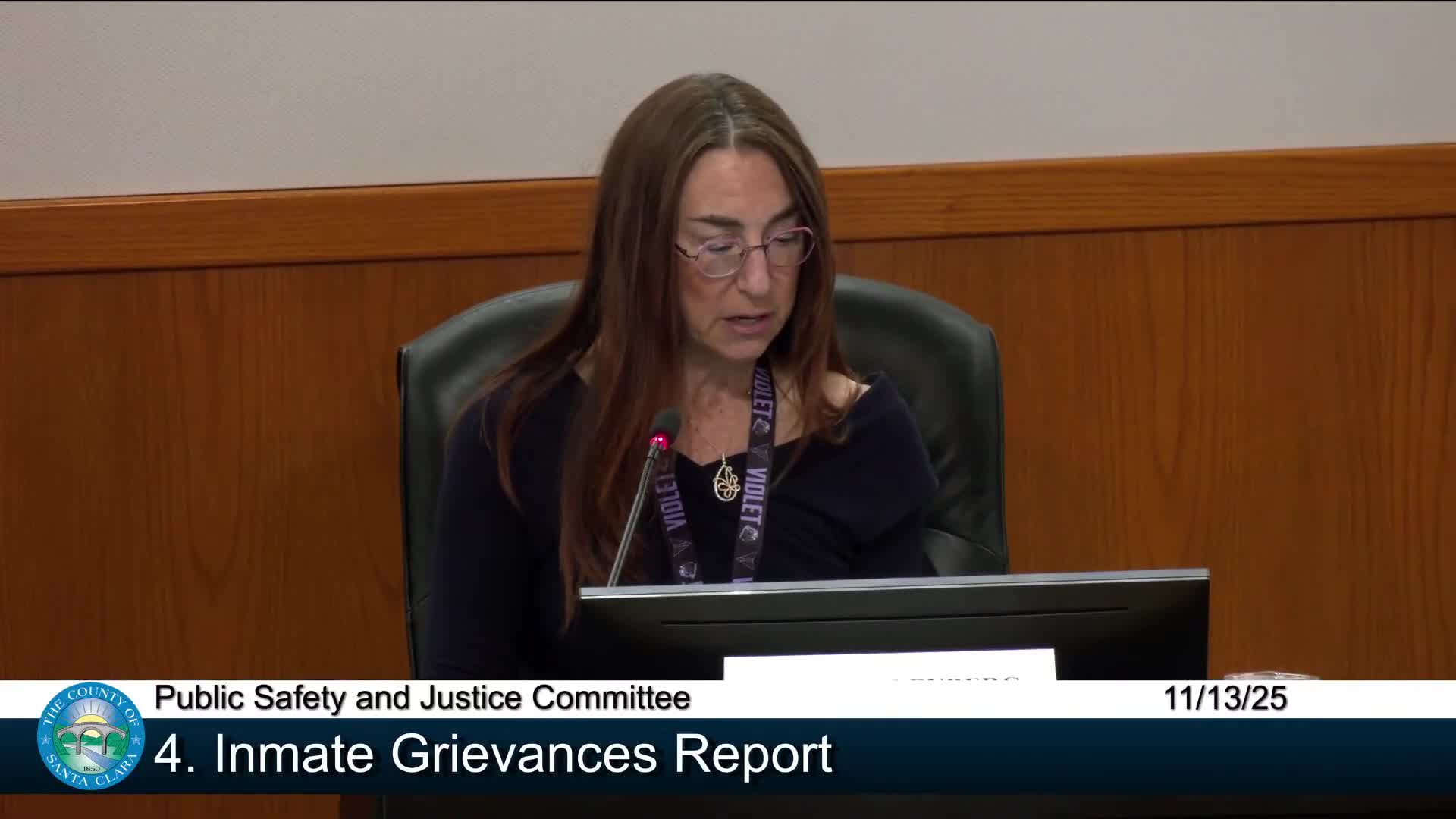
Summary
Deputy County Executive Casey Halkin and justice partners told supervisors Prop 36 raised felony exposure for repeat drug/theft offenses and added a court-mandated treatment path, but county staff reported only one defendant enrolled so far in the mandated treatment stream; supervisors directed staff to return with in-custody treatment options.
County officials briefed the Public Safety & Justice Committee on the early local effects of Proposition 36 on Nov. 13, saying the new law expands felony liability for repeat drug and theft offenders and creates a treatment-mandated felony option that can lead to dismissal upon successful completion.
"The first key change was the felony changes for repeat offenders," Deputy County Executive Casey Halkin said, summarizing the statute. "Successful completion can lead to a dismissal of charges. However, the failure could result to up to 3 years in prison." Halkin emphasized the law was enacted as an unfunded mandate, increasing workload for prosecution and indigent defense.
The District Attorney's office explained the county charging standard for repeat offenders (two qualifying convictions within a 10-year lookback leads the office to charge as a felony), and county data showed fears that Prop 36 would explosively increase the jail population had not materialized in aggregate point-in-time counts.
But multiple presenters and defense counsel warned of practical implementation issues. Acting public defenders and court partners reported that many defendants are choosing traditional criminal-court pathways rather than the mandated-treatment pathway out of concern about the potential prison penalty for failure to complete lengthy programs and uncertainty about assessment timelines.
A striking operational metric presented during the hearing: of roughly 894 narcotics charges referenced under the Prop 36 provision, county staff said only one person had enrolled in the mandated treatment program to date. "Right now, of the roughly 894 11 3 95 that have been charged, only 1 person is in the program to date," a DA office speaker stated during the presentation.
Supervisors and the sheriff raised concerns that the county currently lacks a voluntary in-custody treatment program and discussed using the Elmwood facility as a potential pilot site to create a treatment-ready unit that could admit people while they await placement in residential programs. The board directed administration, with sheriff participation, to return with options and a timetable (targeted to the next PSJC meeting or January) for voluntary in-custody treatment and to provide additional information on capacity and funding constraints.
The motion to receive the Prop 36 update and to request follow-up passed on a committee voice vote.