
Evanston council approves 605 Davis planned development after hours of debate over scale, tax breaks and community benefits
Get AI-powered insights, summaries, and transcripts
Sign Up Free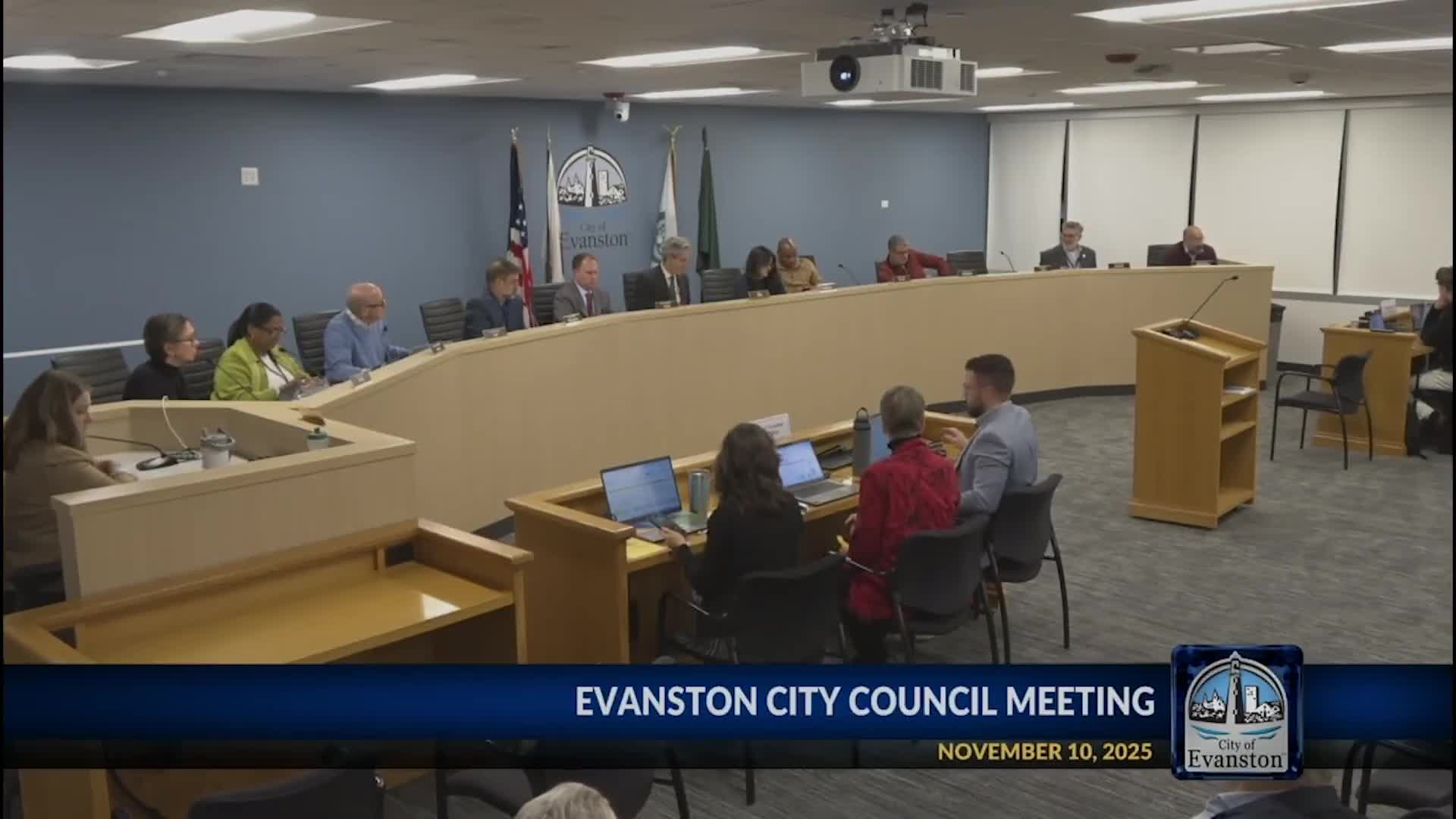
Summary
After extended public comment and dozens of amendments, the City Council introduced and adopted Ordinance 66-O-25 approving a 29‑story planned development at 605 Davis with several negotiated community-benefit conditions. Supporters cited housing and affordable units; opponents criticized the scale, large tax abatement and limited benefits.
The Evanston City Council approved Ordinance 66‑O‑25 on Nov. 10 to allow a 29‑story mixed‑use development at 601–615 Davis Street and 604–608 Chicago Avenue, concluding an evening of extensive public comment, amendments and debate.
Supporters, including the Evanston Chamber of Commerce and several affordable‑housing advocates, urged the council to move the long‑vacant parcel into productive use. "This project is an important opportunity for our downtown, bringing more residents and increasing demand for our restaurants, retail, services and entertainment," said Brianna Gray of the Chamber.
Opponents pointed to the size of the project and a large county‑level tax abatement repeatedly cited in public testimony as roughly $40 million, questioning its local fiscal and neighborhood impacts. "This is a bad deal for Evanston in so many ways," said resident Julia Forgash, who urged significant reductions to the building’s scale, design and financial incentives.
Throughout the ordinance debate, Council member Nussbaum secured amendments binding several community benefits that the applicant had pledged during review: the developer will forego deferred building‑permit fee deferrals allowed under the inclusionary housing ordinance; maintain a workforce development commitment with a $75,000 pledged collaboration with the Trade Collective over two years; and a $100,000 contribution targeted for alley repair in the downtown area (a proposed expansion to use some of those funds for the Fountain Square fountain failed to pass).
The ordinance language also was clarified to list total units consistently: the development was described as 299 dwelling units plus 120 bonus units, for a total of 419 units, with a 10% on‑site inclusionary requirement (the text specifies how the developer may elect certain affordability options). City staff said that inclusionary units would be made available under the IHO process and that income certifications follow HUD standards; staff also encouraged the developer to place as many inclusionary units as feasible onto the city’s IHO waiting list.
Applicant representatives said several design and sustainability features remain under engineering review and noted they had explored mass‑timber and other construction approaches but had not made a final decision. The developer’s team told the council a mass‑timber scheme for a 29‑story tower would be costly and difficult under current market conditions, but they and several council members said a shorter mass‑timber pilot (roughly 20 stories) could be explored separately.
The council adopted multiple amendments in the evening (including a requirement that the project hire an Evanston‑based artist for public art and make the lobby art accessible during staffed hours) before voting to adopt the ordinance as amended. The final passage recorded a 5–4 vote in favor of the amended ordinance.
The council’s action now allows the project to proceed to the implementation steps laid out in the ordinance and to future administrative and permitting actions, subject to the adopted community‑benefit conditions and the normal permit review process.
What’s next: the ordinance and associated development agreements will be posted with city permitting staff, and city officials said they will continue technical review of final building plans, affordability placements and traffic/streetscape details. Council members and staff also signaled continued attention to tax‑abatement accounting and school‑district revenue timing as the project moves into permitting.