
Oxford staff outline draft Unified Development Code, propose incentives and district consolidations
Get AI-powered insights, summaries, and transcripts
Subscribe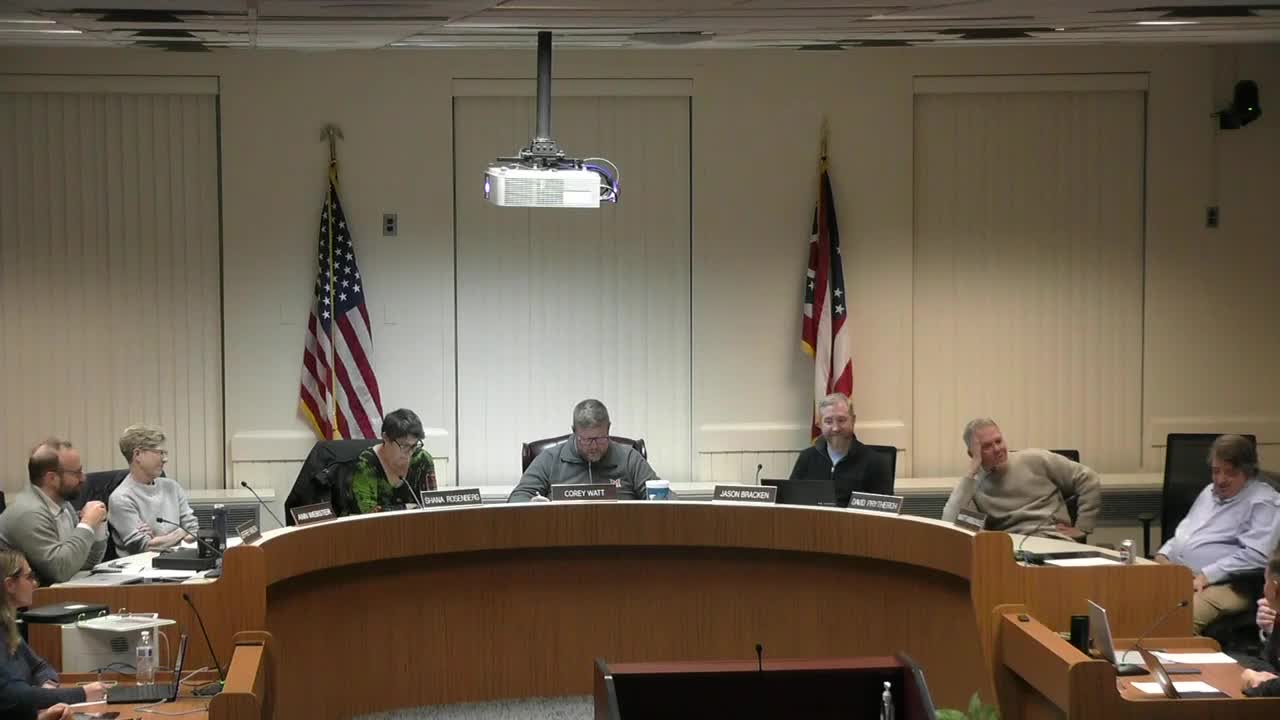
Summary
City planner Zach Moore presented the 'Oxford Today' Unified Development Code update, describing a 164-item spreadsheet of objective and qualitative standards to guide a consolidated zoning and subdivision code.
City planner Zach Moore presented the 'Oxford Today' Unified Development Code (UDC) update to the Planning Commission on Nov. 11, describing a three-part effort to unify zoning and subdivision regulations, adopt an updated historic preservation plan and revise district standards.
Why it matters: The effort seeks to make requirements more objective and predictable for developers while creating incentive tracks — a "fast lane pass" — for projects that include public benefits such as affordable housing set-asides, green infrastructure, adaptive reuse, transit improvements or public art. Moore told the commission the working group (which includes Councilor Bracken, Councilor Prithridge and Commissioner Webster) has distilled the code to a 164-line spreadsheet of numerical and binary qualitative standards that will guide chapter drafting.
Key details: Moore said the Mile Square district labels have been removed in favor of transect-style categories (Uptown Core, Uptown Transition, Urban Mixed Use, Urban Neighborhoods and consolidated suburban business types). He cited a draft desirable lot-coverage band "anywhere from 65 to 70%" for certain districts compared with the current Mile Square average of roughly 45%.
Commissioners asked how subjective standards would be enforced and whether authority should be delegated to the zoning administrator or retained by the commission; Moore offered four options ranging from full delegation to strictly objective standards and said the working group is leaning toward a hybrid that retains some subjective review for larger projects while enabling incentives for projects that meet community goals.
Moore also showed sample district maps and building-type graphics and said the spreadsheet blueprint will be used to draft the UDC chapter by chapter. He invited further questions and follow-up on parcel classifications (examples cited included Shell, Walmart and Tractor Supply) that commissioners flagged for further mapping discussion.
Next steps: Staff will continue refining the spreadsheet and drafting code chapters; commissioners raised interest in keeping Commissioner Prithridge involved for continuity. The presentation was informational; no formal vote on the UDC took place at this meeting.