
Blue Cross funds three-year BARR pilot at Winona High; board seeks data on integration with MTSS/AVID
Get AI-powered insights, summaries, and transcripts
Subscribe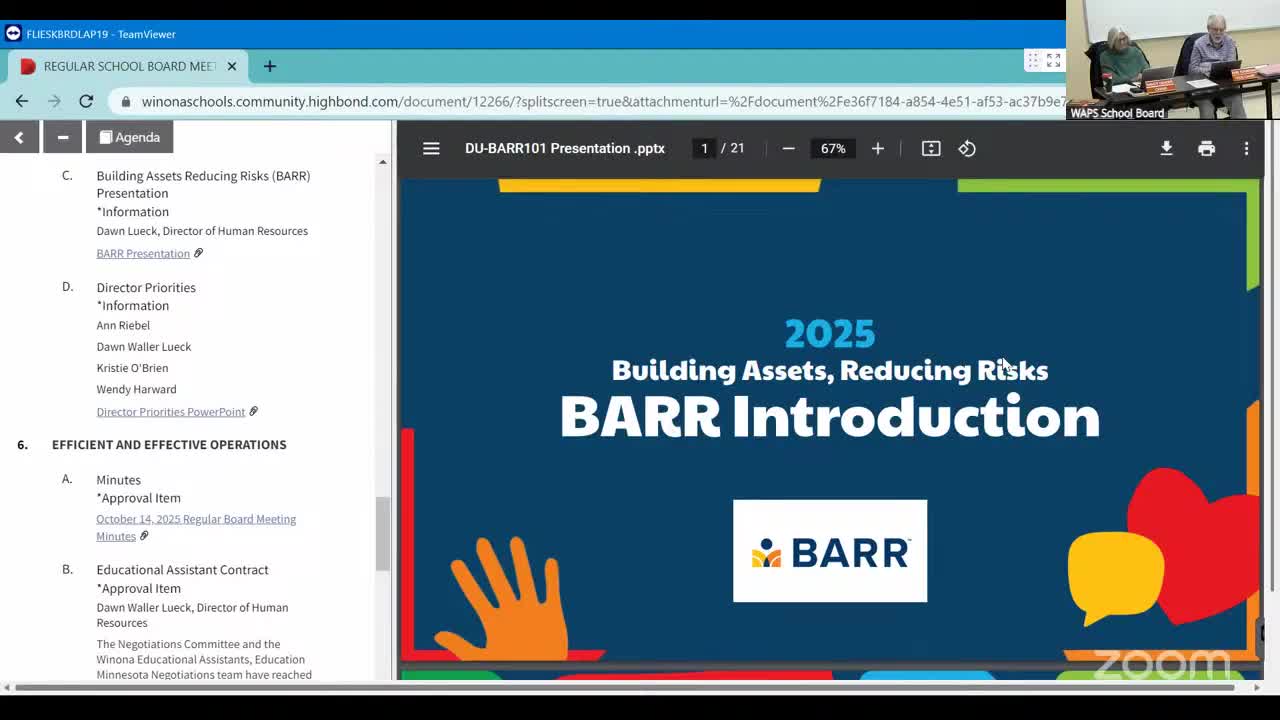
Summary
The board previewed a three-year, Blue Cross Blue Shield-funded pilot of the BARR school-improvement model at Winona Senior High School.
Director Lueck gave a full briefing on BARR (Building Assets and Reducing Risks), describing it as an evidence-based model that emphasizes relationships and data to improve academic outcomes, reduce suspensions and increase teacher retention. The presenter said BARR provides a package of site coaching, scripted SEL lessons ("I time"), structured staff-team meetings focused on every student, and a data spreadsheet that follows students longitudinally.
Blue Cross Blue Shield has offered to fully fund three years of implementation at the high school, covering internal coaching and two full days of professional development; the presenter said the program’s list price is about $80,000 per year and the funder would contract directly with BARR for year 1–3 support.
Board members pressed for specifics: how BARR complements existing multi-tiered systems of support (MTSS) and AVID work, who will maintain the data, and what happens after the three-year funded period. Administration identified the dean position (named as a BARR facilitator/coordinator) to maintain the electronic student-tracking spreadsheet and said BARR offers a lower-cost "thrive" model should the district need to transition after the funded period. Questions about mental-health and substance-use supports were raised and staff said the SEL lessons, increased adult–student connections and community-linkage components are intended to identify needs earlier and connect students to clinic and community services.
Board direction: proceed with year-one implementation planning; staff will return with operational details, precise data-collection fields, expected staff time commitments, and a post-grant sustainability plan.
Quotation in this article is taken from the recorded meeting transcript and attributed to the speakers shown in the meeting minutes.