
Evanston holds Truth in Taxation hearing on proposed 2026 levy amid public calls to avoid abatements and follow pension policy
Get AI-powered insights, summaries, and transcripts
Sign Up Free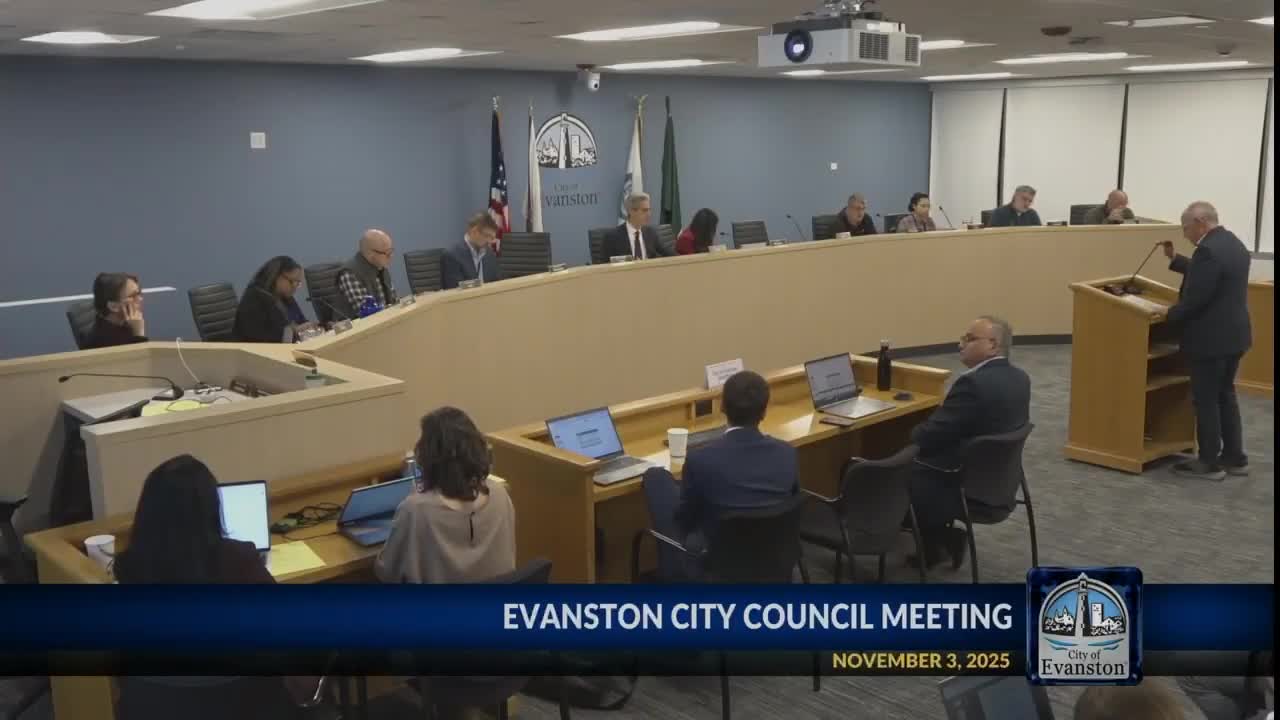
Summary
At a Nov. 3 special meeting, Evanston officials opened a Truth in Taxation public hearing on the proposed FY2026 property tax levy, presented a staff summary of a 12.9% levy increase (including library), and heard public objections urging use of reserves and existing pension funding policy rather than raising taxes or granting large abatements.
The Evanston City Council convened a Truth in Taxation public hearing on Nov. 3 to solicit comment on the proposed FY2026 property tax levy, which staff said would raise the total levy by $7.3 million (a 12.9% increase including the library).
The hearing produced multiple public comments urging restraint and pointing to alternative revenue sources. "You'll be asking every resident and business to reach into their pocket and pay more in property tax, not because pension costs have gone up, but because city leadership refused to follow its own rules," said Jack Mortel, president of the Evanston Firefighters Pension Trust Fund, referring to Resolution 45-R-23, the city—s 2023 public-safety pension funding policy. Mortel told the council the city had collected more than $5.2 million in pension-property-replacement-tax (PPRT) receipts and had tens of millions in excess reserves but had not applied those funds to public safety pensions as the resolution intended.
Resident Jeff Berini urged the council to "sharpen your pencils" and consider hiring freezes, reallocation of open positions and restructuring to reduce costs and improve affordability. Linda Damashek warned that approving a tax abatement for 605 Davis would reduce school and city revenues for years and said any abatement should be a Tier 1, not a Tier 3, under Illinois Housing Development Authority guidance.
Staff presentation and timing City finance staff walked the council through the levy presentation and impact scenarios, showing examples of estimated tax impacts for different property types and noting the city had used some reserves to keep debt service flat. The finance presentation also described debt-service abatement filings with Cook County and a calendar leading to ordinance introductions on Nov. 10 and anticipated budget adoption on Nov. 24.
Assistant finance and departmental presenters noted that while the general corporate levy—s share of general-fund expenditures has fallen from about 20% in 2013 to roughly 7.8% in the current year, other levies (notably pensions and debt service) have risen.
Council reaction and policy questions Several council members said they support following the 2023 public safety full-funding policy and urged staff to apply PPRT receipts and excess reserves as directed by Resolution 45-R-23 to avoid raising the public-safety levy. "That funding plan will fully fund our pensions without raising property taxes if it is only followed," Mortel told the council. Council members asked for clearer accounting and pledged further review before any levy ordinances are introduced.
What—s next No final action on the levy was taken at the Nov. 3 hearing; the mayor said levy ordinances and related debt-abatement resolutions will be introduced at the Nov. 10 regular council meeting. Staff posted budget and TIF memos and will return to the council and the finance and budget committee in coming weeks with detailed numbers and options.