
Orland Park sets maximum 2025 property tax levy and advances FY2026 budget process
Get AI-powered insights, summaries, and transcripts
Sign Up Free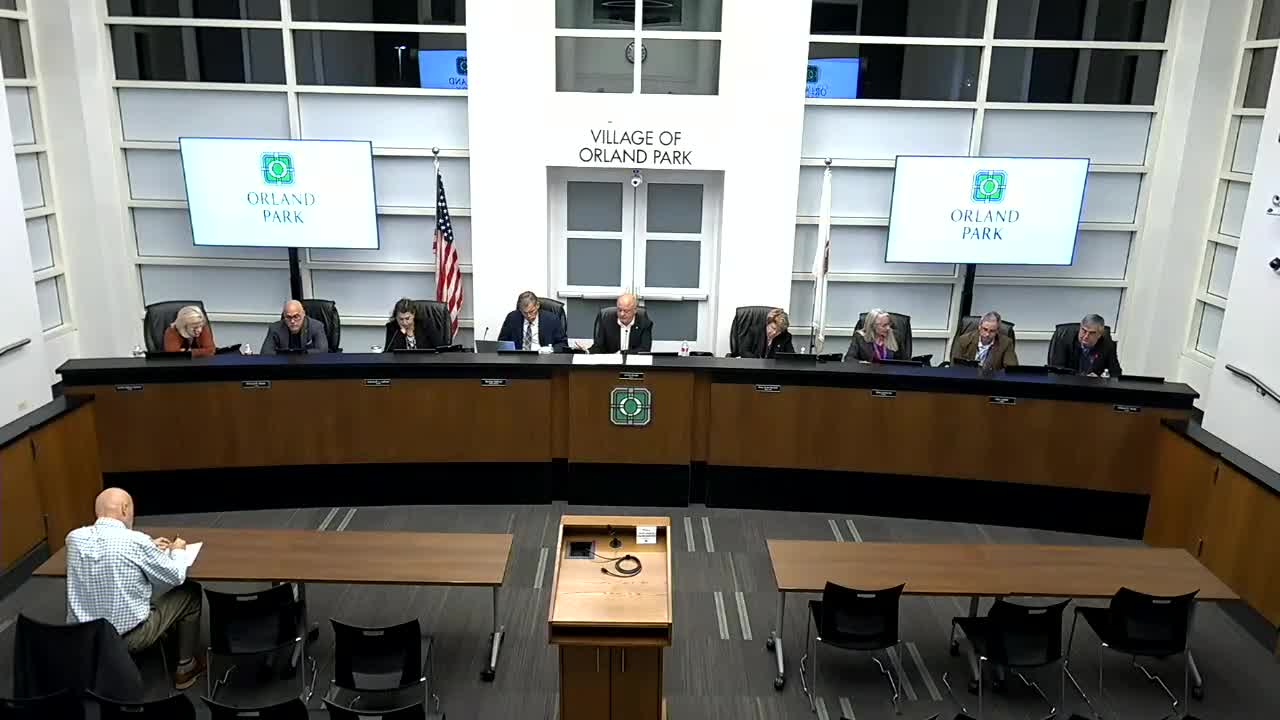
Summary
The board set a maximum 2025 tax levy (3.75% to capture new growth), approved budget amendment #4 for FY2025, and adopted a resolution making the proposed FY2026 budget available for public inspection and setting hearing dates ahead of Dec. 1 formal adoption.
On Nov. 3 the Village Board approved a resolution establishing the maximum 2025 tax levy (a 3.75% increase intended to capture anticipated EAV growth) and approved budget amendment number 4 for fiscal year 2025. Board members and staff emphasized the distinction between setting the maximum levy today and adopting the final levy and budget on Dec. 1; the board can reduce but not increase the levy on Dec. 1.
Staff presented revenue and expense context: property tax revenue comprises roughly 23% of General Fund‑like revenues for purposes identified in the packet, with a significant portion directed to pension and debt service obligations (police pension, IMRF and GO bond debt service). The proposed levy increase is intended to capture new growth in equalized assessed valuation so that the village's portion of property tax remains roughly neutral for existing taxpayers. Staff said the police pension actuarial valuation guided levy amounts; trustees discussed pension funding, reassessment effects and the village's revenue mix.
The board approved budget amendment #4 (net general fund increase of $267,495.56; capital fund decrease $1,207,298.71; water & sewer fund increase $2,825,911.45) and adopted a resolution making the FY2026 proposed budget available for public inspection and setting a public hearing. The tax levy resolution passed the board by recorded vote.
Trustees asked staff to prepare clear public explainers on how reassessments and multiple taxing districts affect a homeowner's property tax bill and to report back on implementation details.