
Bills would require manufacturers to fund NPLEx transactions and modernize online pseudoephedrine sales
Get AI-powered insights, summaries, and transcripts
Subscribe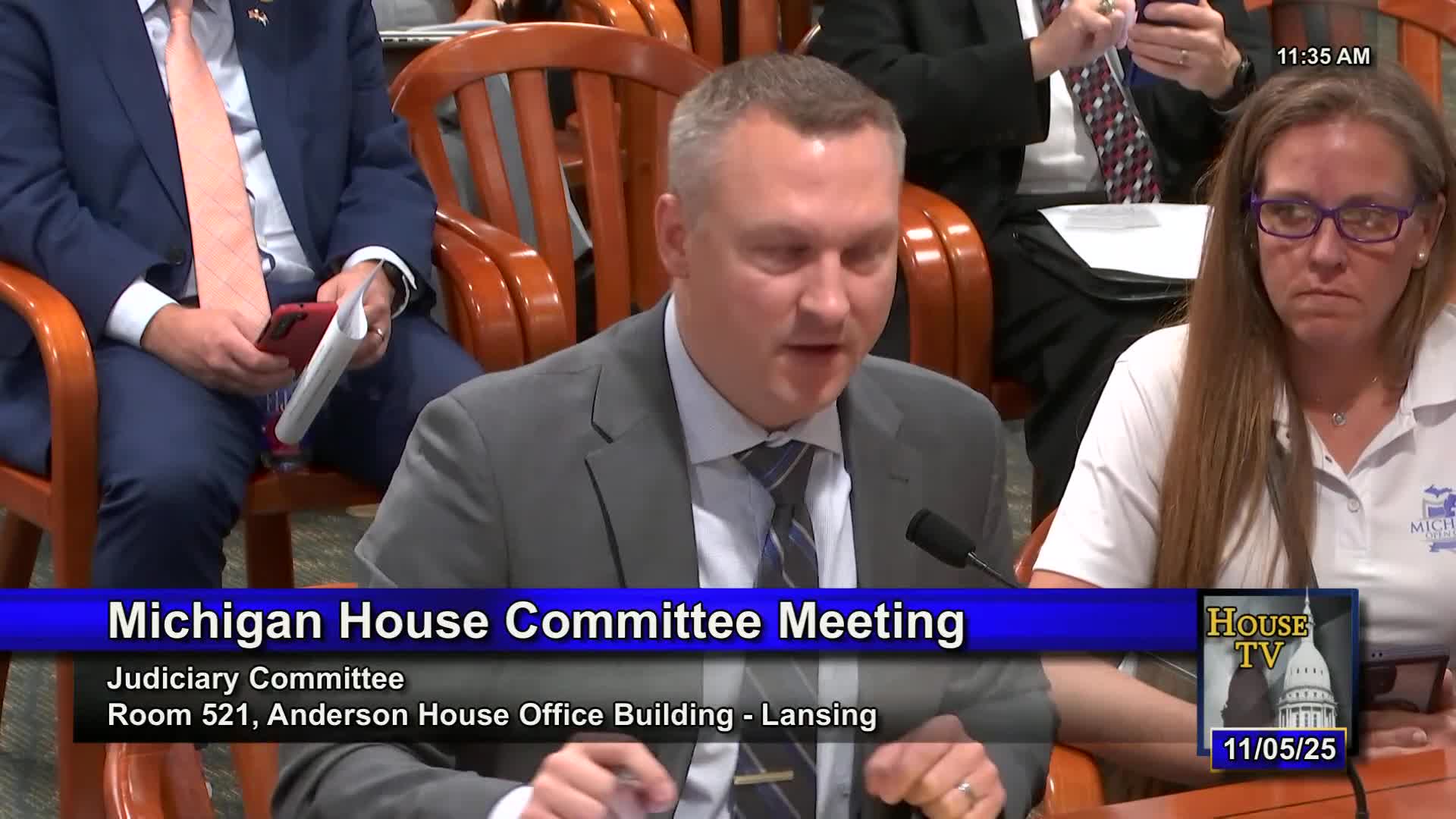
Summary
Representatives Bagole and McFaul presented a two‑bill package to preserve Michigan's NPLEx electronic blocking system by requiring manufacturers who sell pseudoephedrine products in Michigan to pay for their product transactions, and to allow online/curbside transactions while maintaining ID checks and purchase limits.
Representatives Bagole and McFaul introduced House Bills 4947 and 4948, a two‑bill package designed to preserve the National Precursor Log Exchange (NPLEx) funding model used to block illicit pseudoephedrine sales, and to modernize how pseudoephedrine products may be sold (for example, permitting curbside pickup or online purchase with in‑person ID verification).
Representative Bagole, a former law‑enforcement official, said Michigan’s electronic blocking system is not taxpayer funded and has prevented thousands of potentially diverted boxes. He explained that manufacturers of pseudoephedrine products have voluntarily paid for the system since the statewide rollout in 2012 but that the market has changed with new manufacturers entering and not all contributing. House Bill 4947 would require that any manufacturer selling pseudoephedrine‑containing products in Michigan pay for the transaction checks associated with their products.
Representative McFaul said HB 4948 would update related code language to reflect modern sale and shipping methods and would adjust sentencing code language tied to distribution of ephedrine/pseudoephedrine only in the event HB 4947 is enacted.
Carlos Gutierrez, vice president of state government affairs for the Consumer Healthcare Products Association, provided remote testimony in strong support. He listed common brand examples (Zyrtec‑D, Allegra‑D, Sudafed, Advil Cold & Sinus) and called NPLEx “incredibly effective,” noting cross‑state blocking and industry willingness to fund the system. Industry representatives said similar measures passed in Mississippi and Illinois this year.
Sponsors and industry witnesses emphasized that any modernization for online sales would retain identity verification, purchase limits and other safeguards; the bills are framed as protecting public safety by preserving the real‑time blocking that prevents pseudoephedrine diversion into illicit meth production.