Colorado regulators approve on‑bill financing program but order safeguards, caps and reporting
Get AI-powered insights, summaries, and transcripts
Sign Up Free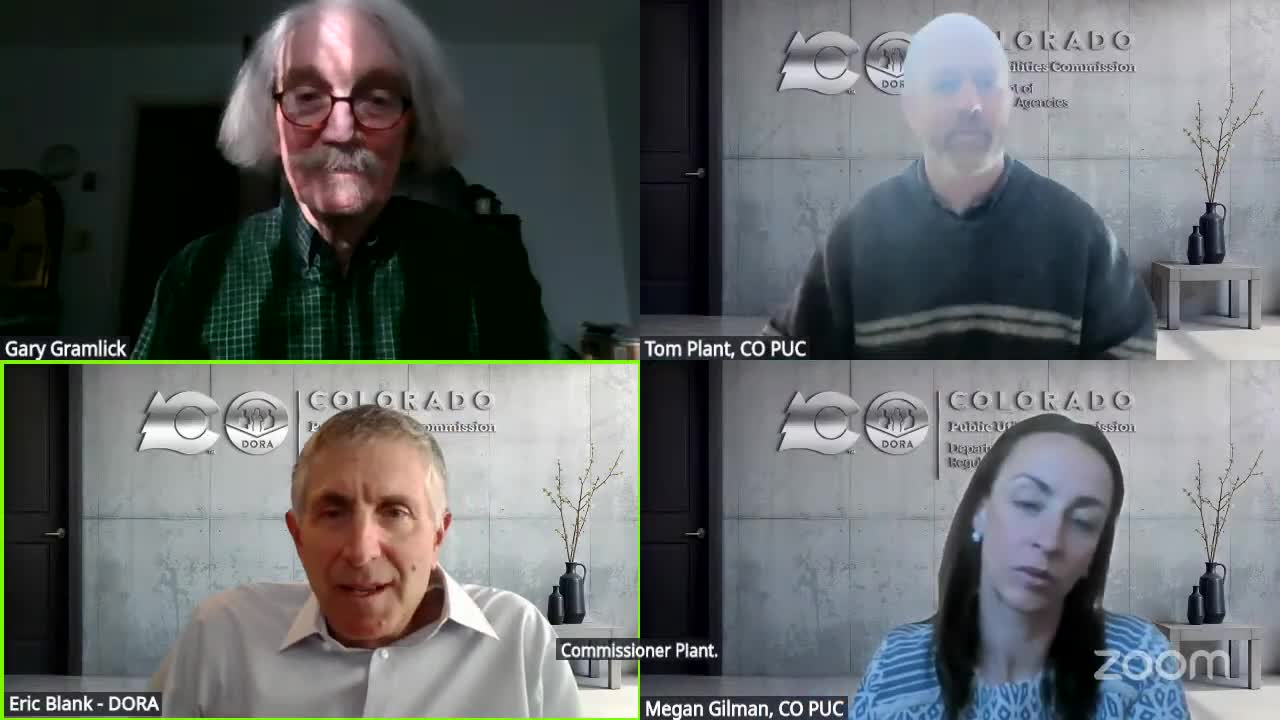
Summary
The Colorado Public Utilities Commission on Nov. 5 approved Public Service Company of Colorado's on‑bill financing program to help customers pay for energy efficiency and electrification upgrades but attached multiple consumer protections, spending caps and reporting requirements.
The Colorado Public Utilities Commission on Nov. 5 approved Public Service Company of Colorado's on‑bill financing program to help customers pay for energy efficiency and electrification upgrades but attached multiple consumer protections, spending caps and reporting requirements.
The commission voted to let the program launch with $10 million in capital and to allow the Clean Communities Energy Fund (CCEF) to expand the program up to $100 million if additional capital is secured, using the established 60/90‑day notice process to alert parties and allow review, the commission said. Commissioners also authorized the company to recover start‑up and administrative costs through its demand‑side management cost adjustment (DSMCA).
Why it matters: Supporters say an on‑bill option can unlock home upgrades such as heat pumps and envelope work for customers who cannot pay up front. Opponents raised concerns about affordability, renter protections, contractor oversight and the use of ratepayer funds.
What the commission ordered and directed - Initial funding and expansion: Commissioners authorized an initial program budget of $10 million and a pathway to expand to $100 million if CCEF or other capital becomes available and parties are given notice through the 60/90‑day process. Commissioner Gilman emphasized that the 60/90 notice is a chance for staff or intervenors to request commission review if concerns arise. - Cost recovery: The commission permitted recovery of startup and administrative costs through the DSMCA and charged the utility to justify the use of DSM funds in the company's filing; staff will monitor and parties can seek review if they object. - Loan maximum: The commission approved a $50,000 per‑customer maximum loan amount. Commissioners debated lower caps for income‑qualified (IQ) customers; ultimately the body approved the $50,000 cap while directing additional safeguards for IQ customers. - Income‑qualified customers and renters: The commission decided not to exclude IQ customers or renters from participation. Instead it directed a near‑term work plan to design consumer protections: the utility must coordinate with community organizations and stakeholders and identify protections within roughly six months. Commissioners emphasized upfront application of rebates where commercially feasible to reduce financed amounts for vulnerable households. - Contractor and consumer protections: Commissioners asked the company to pursue clearer contractor eligibility and consumer disclosure requirements so customers understand estimated savings, loan terms and potential bill impacts before signing. - Loan loss reserve and disconnection: The commission declined to adopt a single approach immediately. Commissioners asked the company to pursue a loan loss reserve (regulatory asset) option in negotiations with CCEF while seeking transparency about how a reserve would change credit enhancement needs; if a loan loss reserve can provide comparable credit support, the commission signaled a preference for it over customer disconnection as an enforcement tool but left final resolution to the company's contract negotiations with CCEF and to future filings. - Reporting and next steps: The commission ordered the company to file an executed vendor agreement with CCEF within 60 days of the decision and to include a customer‑oriented summary of program offers; it also required expanded reporting as part of the company's June GMAC/DSM filings and in the next DSP to track uptake, defaults, program costs, and impacts on arrearage/assistance flows.
What commissioners said Ron Davis of advisory staff summarized the filing and options before the commission and urged clarity on consumer protections and cost allocation. Commissioner Plant said, “I see this as sort of an introductory step,” and urged the commission not to delay establishing a workable program, while also pressing for protections like applying rebates before financing. Commissioner Gilman said the commission should move quickly to enable access while putting safeguards in place, and favored a near‑term, six‑month work plan to build protections for IQ and renter households.
Budget and safeguards remain subject to implementation details and contract negotiations. The commission's action is procedural and prescriptive: it authorizes the program but requires the company and CCEF to deliver the specified contracts, reporting and consumer protections before broader scaling.