
Council adopts Cache County Water Use and Preservation element required by state law
Get AI-powered insights, summaries, and transcripts
Subscribe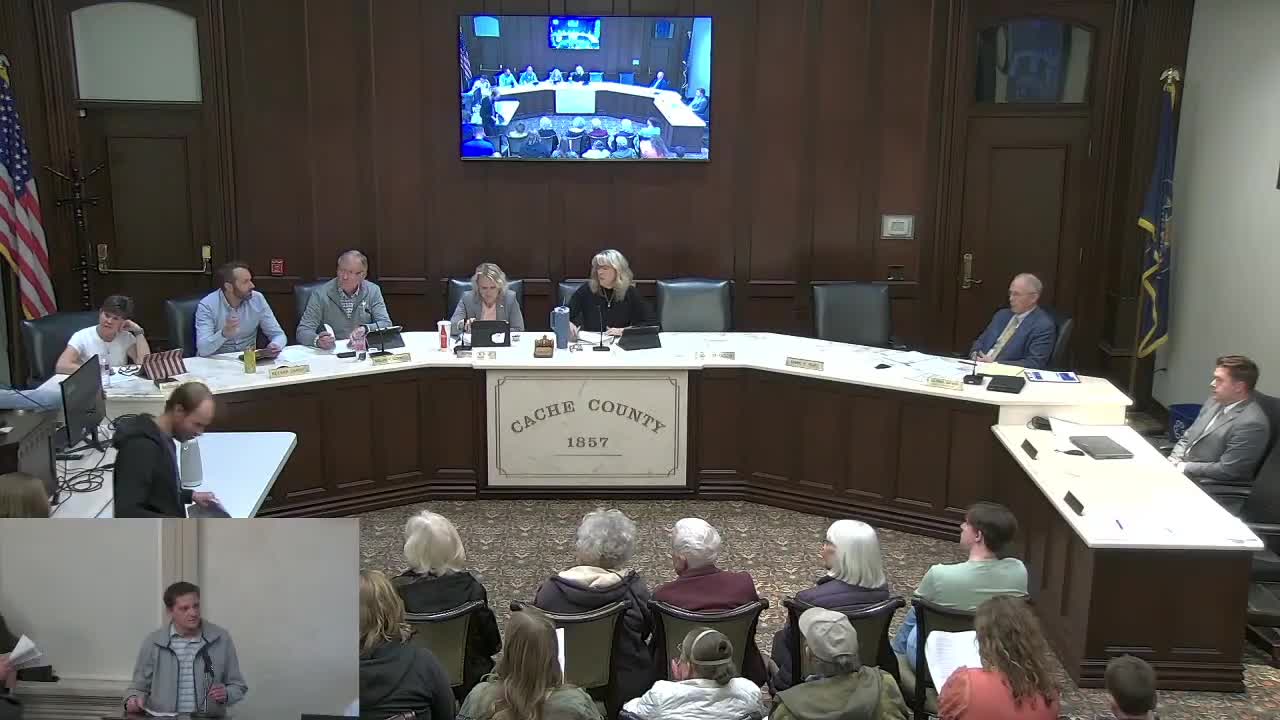
Summary
The Cache County Council adopted a new Water Use and Preservation element to the county general plan required by state law, directing county staff and stakeholders to consider water impacts when making land-use decisions.
Cache County adopted Ordinance 2025-34, the Water Use and Preservation element added to the county general plan to comply with the state’s land-use/water planning law. Landmark Design consultant Aubrey Larson (with engineer Easton Hopkins on speakerphone) briefed the council on the element, which the planning commission recommended by a 6–0 vote.
Larson told the council the element is advisory and intended to guide land-use decisions, not create immediate regulatory requirements. She said the chapter addresses four primary objectives in the state law: measuring how permitted development affects water demand and infrastructure, reducing per-capita water demand for existing and future development, identifying operations or practices that waste water, and proposing strategies to align future growth with long-term water availability.
The study highlights that nearly all Cache County culinary water is groundwater, agriculture accounts for a major share of water use, and shifting agricultural acres to residential use tends to increase per-acre water consumption and move demand from surface diversion to groundwater. The consultants noted data limitations — private well usage is not centrally reported — and said a current groundwater study will be important for future policy choices.
Larson summarized the plan’s recommendations (11 total) focused on conservation, agricultural protection, efficiency upgrades, and better data collection; the document also lists existing policies in the current general plan and provides a resources appendix for residents. After a brief public hearing with no public speakers, the council moved, suspended rules, and adopted the ordinance by voice vote.
Councilmembers discussed turning particular recommendations (for example, identifying and converting underutilized county turf to low-water landscaping) into actionable items that would be tracked as follow-up tasks.