
VTSU presents new KPIs, retention dashboards and marketing analytics to trustees
Get AI-powered insights, summaries, and transcripts
Subscribe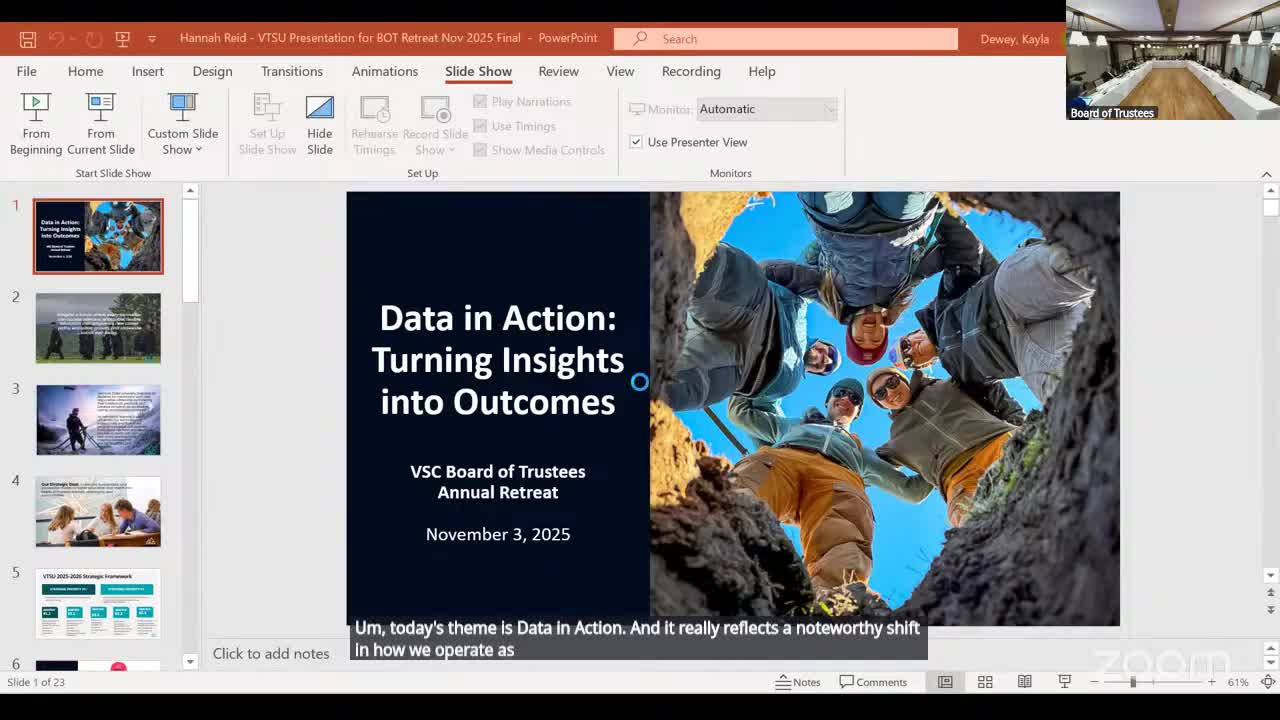
Summary
Vermont State University leaders described a new, system-wide approach to data-driven decisions: finalized KPIs, retention and graduating-student dashboards, and a marketing analytics funnel tied to Slate and prospective-student research. Trustees pressed on faculty buy-in, Workday integration and how KPIs will be owned and measured.
Vermont State University officials told trustees they are embedding data into academic planning, student success and marketing, and that new dashboards and key performance indicators will guide decisions on program viability and enrollment.
Kelly Duckworth, vice president of student success, said VTSU is collecting survey, advising and operational data and integrating it with systems soon to be in Workday to allow targeted interventions. "We're really able to do that now. And so the result is that we can make better decisions, and we can really target to the groups who need the help," Duckworth said.
The presentation highlighted several data tools under development: a retention dashboard that can be disaggregated by race, Pell status, first-generation status and program; annual advising and graduating-student outcome surveys; and marketing dashboards that connect campaign spending, click-through and conversion metrics to Slate inquiry and application data.
Provost Nolan Atkins described program-array analysis that combines internal Policy 109 reports (enrollment trends, fiscal analysis, class size) with external market research by Carnegie to assess student demand, competitive intensity and workforce alignment. "We have asked [Carnegie] to survey prospective students and what they're looking for," Atkins said, and the firm has provided data on modality preferences and market signals that will inform program prioritization.
Hannah Reed, vice president of marketing and enrollment, demonstrated a pilot marketing dashboard that ties campaign performance to inquiry and application funnels. She said the leadership team is developing multi-year KPI goals, including an overall persistence-rate target and thresholds for program viability.
Trustees asked how the KPIs will translate to accountability. Leaders said the enterprise is still implementing clear ownership but described department-level metrics and a plan to connect individual annual objectives to institutional KPIs. They also discussed Workdayimplementation and how consolidated data will give advisers earlier warning signs and enable targeted outreach.
Speakers emphasized that retaining small, high-value programs and aligning program offerings with workforce demand will be key to long-term sustainability. No formal board actions were taken; presenters said they will return with more detailed KPI targets and a management structure to report progress.