Attendees at World Cities Day press for stronger accessibility and data-driven planning
Summary
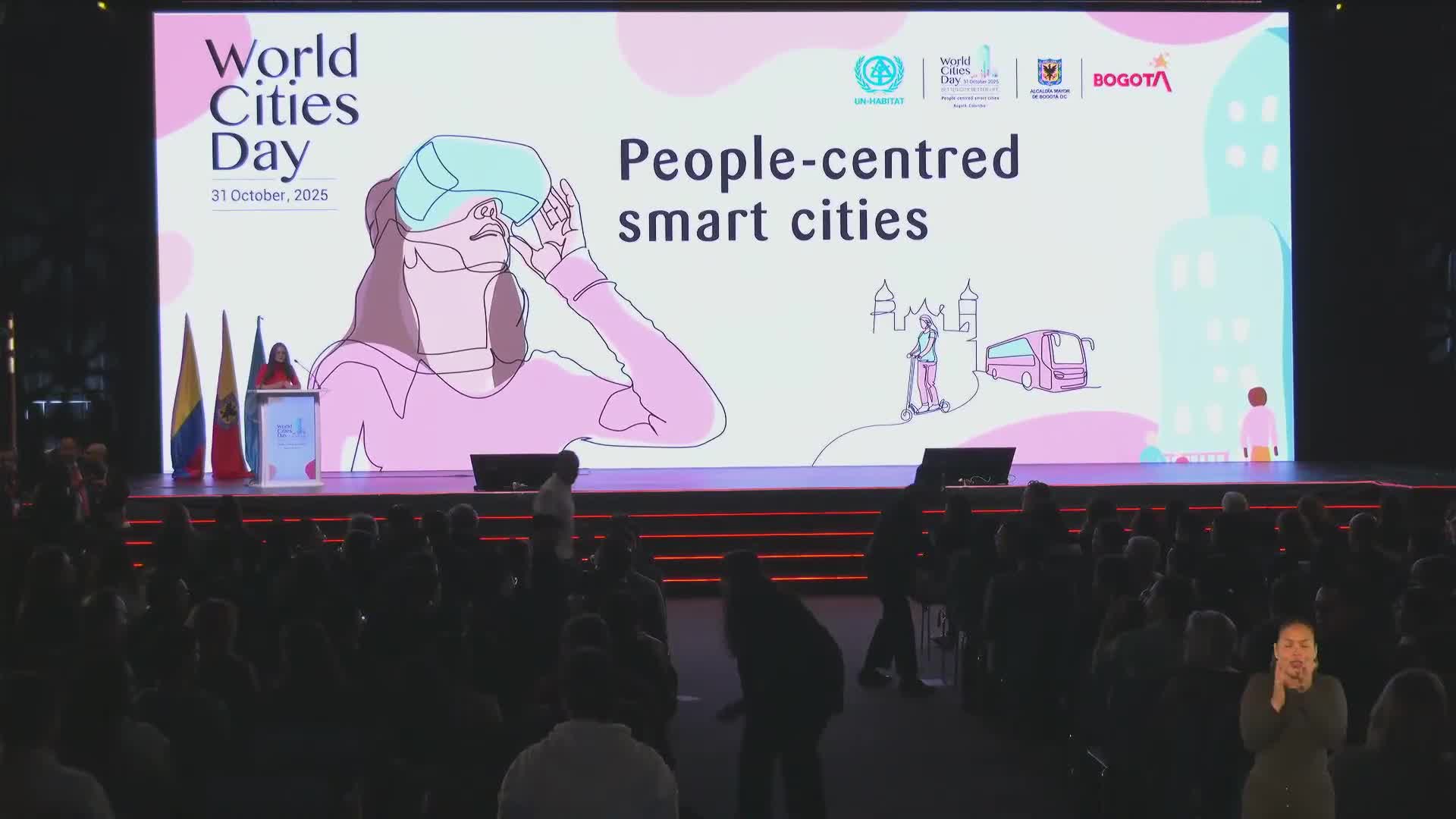
During the opening session of World Cities Day in Bogote1, multiple attendees used the microphone to urge greater attention to disability access in transport, inclusive governance across scales, and stronger capture and use of data and simulation tools for planning.
Several participants in the plenary—s early public-comment slot urged officials to prioritize accessibility, participatory governance and data to improve urban planning.
A resident who identified herself as Norma told the plenary at 00:19:18: "La discapacidad no es tenida en cuenta en la ciudad de Bogote1, es vergonzoso y mucho me1s en el transporte pfablico... Las personas adultas no pueden ni siquiera bajar de los articulados." The comment raised transport accessibility as a live concern for daily users.
Milan Espitia (public comment at 00:22:09) reflected on a presentation by Peter Bishop and urged better multilevel governance linking civil society, the state and the private sector, citing Kinge2s Cross as an example of cross-scale governance.
Javiera Saldaf1a (Chile) said data capture and integration are central to planning: she called for tools that allow municipalities to simulate future urban scenarios and provide decision-makers with actionable analysis.
Context and limits: These were unscripted public-comments from attendees and do not represent formal policy decisions. The interventions underscore the themes later taken up by ministers and UN officials (inclusion, data and people-centered technology), but they are appeals and recommendations rather than enacted measures.
Ending: Organizers acknowledged public comments during the plenary; subsequent program items included ministerial addresses that addressed inclusion and data-driven approaches.