
Committee advances bill requiring larger localities to incorporate environmental justice in comprehensive planning
Get AI-powered insights, summaries, and transcripts
Subscribe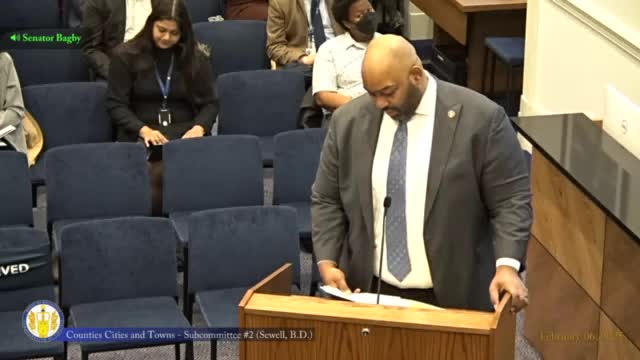
Summary
Senate Bill 12-54 would require cities with populations over 20,000 and counties over 100,000 to incorporate community health and environmental justice strategies into comprehensive plans. Supporters framed it as a planning tool; manufacturers warned it could unfairly target industry and complicate permitting. The committee reported the bill 5-3.
Senate Bill 12-54, presented by Senator Bagby, would require Virginia localities above specified population thresholds (cities >20,000; counties >100,000) to incorporate community health and environmental justice (EJ) strategies into their comprehensive-plan processes.
Supporters — including Faith Harris and Kim Suttard from Virginia Interfaith Power and Light, Lillian Anderson of the Virginia Conservation Network, Blair St. Lehi Olsen of the Virginia League of Conservation Voters, Trent Pollard of the Southern Environmental (group), and Ken Wright of Potomac Conservancy — said the measure gives planners a roadmap to identify pollution siting, vulnerabilities (for example, seniors who lack age-in-place access), and other health disparities so communities can target services and mitigation. Faith Harris told the committee the bill helps planners “ascertain whether [vulnerable groups] have access to and are able to remain and age in place.”
Stacy Gorham of the Virginia Manufacturers Association testified in opposition, saying the bill’s broad EJ definition could be used to target industry, threaten jobs, and create permitting uncertainty. She urged the committee to reconsider or narrow the scope so manufacturing and energy investments aren’t unintentionally discouraged.
Committee members debated the bill’s reach and the population thresholds; Senator Bagby noted the measure was narrowed from earlier versions to apply only to larger localities. The committee voted to report the bill, 5 to 3 (motion by Delegate Simons). The transcript records testimony on both public-health and economic concerns and a recorded committee vote of 5-3.
The bill will advance with a committee report for further legislative consideration.