
Leland planning board backs conditional rezoning for Mallory Creek Mixed Use, sends recommendation to council
Get AI-powered insights, summaries, and transcripts
Subscribe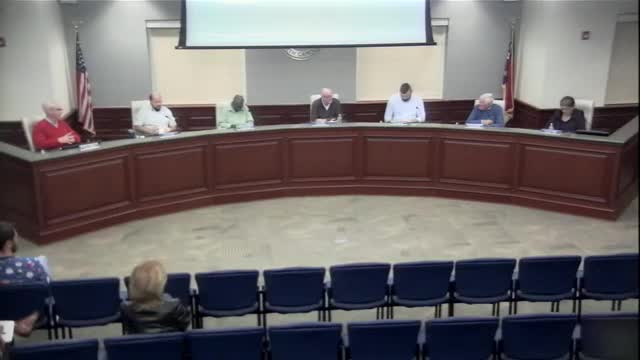
Summary
The Leland Planning Board voted to recommend that the Town Council approve a conditional zoning map amendment for the Mallory Creek Mixed Use project after hearing residents, the Mallory Creek HOA and the applicant team.
The Leland Planning Board voted to recommend that the Town Council approve a conditional zoning map amendment for the Mallory Creek Mixed Use project after hearing residents, neighborhood representatives and the applicant team on Jan. (project presented at the board meeting).
Ben Watts, planning staff, told the board the application would rezone roughly 31.5 acres near N.C. 133 and Mallory Creek Drive from a mix of C1 (commercial) and PUD (planned unit development) to a combination of R6-CZ (conditional) and C1-CZ, and that the site plan submitted with the application would become a condition of approval. The plan shows about 127 townhomes (roughly 5.8 dwelling units per acre in the proposed R6 areas), approximately 30,000 square feet of commercial space split between restaurant (5,000 sq ft), retail (15,000 sq ft) and office (10,000 sq ft), four stormwater ponds (one existing, three new) and an 8-foot multi‑use path that would extend the Gullah Geechee Heritage Trail.
The project also includes landscape buffers and a note on the site plan that "no burning will take place as part of the demo or land disturbance activities," which staff said would be a condition of conditional zoning approval if adopted. A tree survey submitted with the application identified one significant coniferous tree (24.2-inch DBH) and six significant flowering hardwoods, including a 12.42-inch red maple and five tulip poplars; the applicant said it was still locating exact specimen positions for plan adjustments.
The plan drew both support and criticism. Nicholas Newell, president of the Mallory Creek Plantation HOA, said the HOA board — representing about 1,500 homeowners — supports the request and had negotiated revisions with the developer and landowners, including a commitment to preserve a perimeter buffer. "The developer has agreed that they will leave the vegetation untouched," Newell said, adding that the HOA had requested a 25-foot buffer in addition to a 10-foot easement, for an effective 35-foot undisturbed area behind homeowners' fences.
Several residents urged stricter protections and traffic mitigations. Carol Grosbier, a Mallory Creek resident, said she favored keeping the site commercial but worried two‑story townhomes would be "out of place" for adjacent single‑story homes and urged that "absolutely no burning" occur when clearing the site. Stan Powers, another resident, called for additional pedestrian crossings and traffic calming on Mallory Creek Drive, saying drivers "are driving, like, 50 miles an hour" and that recent near‑misses justify more crosswalk signage.
Applicant representatives described the proposal as the product of roughly 24 months of discussions with staff, property owners and the HOA. John Danford, project manager with Thomas and Hutton, said he was available to answer technical questions. Ian Flannery, representing D.R. Horton (to be the residential builder), told the board his firm had worked through multiple iterations with staff and the HOA and said the team was "excited" about the project and its conditions.
Staff acknowledged areas where the application falls short of some goals in Leland 2045: it does not explicitly call out green building practices, it lacks dedicated on‑street bicycle lanes (relying instead on the multi‑use path), and it does not detail small‑scale stormwater best management practices in common areas. Watts said a traffic impact analysis (TIA) is required before technical review; the applicant's initial worksheet showed peak‑hour trips above the town's TIA trigger and estimated about 170 AM peak trips and 226 PM peak trips for the project.
Board members split over larger policy concerns. Several members questioned whether removing about 10 acres of commercial land from the Mallory Creek PUD and converting it to residential was consistent with Leland 2045 and whether the town should retain more land for future commercial uses. Those concerns led one planning board member to move that the board recommend council disapprove the rezoning on the grounds it was inconsistent with the comp plan; that motion failed. A subsequent motion to recommend approval as presented by staff passed and will be forwarded to the Town Council for final action.
The conditional rezoning recommendation is procedural, not a development permit: if the Town Council approves the rezoning the project will still need a traffic impact analysis, technical review committee approval, finalized engineering plans, and any state or federal permits that apply. The applicant and staff said further changes to engineering details, street sections and on‑site drainage will be addressed during those subsequent reviews.
Votes at a glance: the planning board defeated a motion to recommend council disapprove the conditional rezoning; later, the board voted to recommend approval of the conditional zoning map amendment and corresponding Mallory Creek Master Land Use Plan update. The recommendation now goes to the Town Council for decision; a traffic impact analysis and Technical Review Committee review are required before building permits could be issued.