
County IT director outlines five-year plan: cloud migration, permitting rollout and savings
Get AI-powered insights, summaries, and transcripts
Subscribe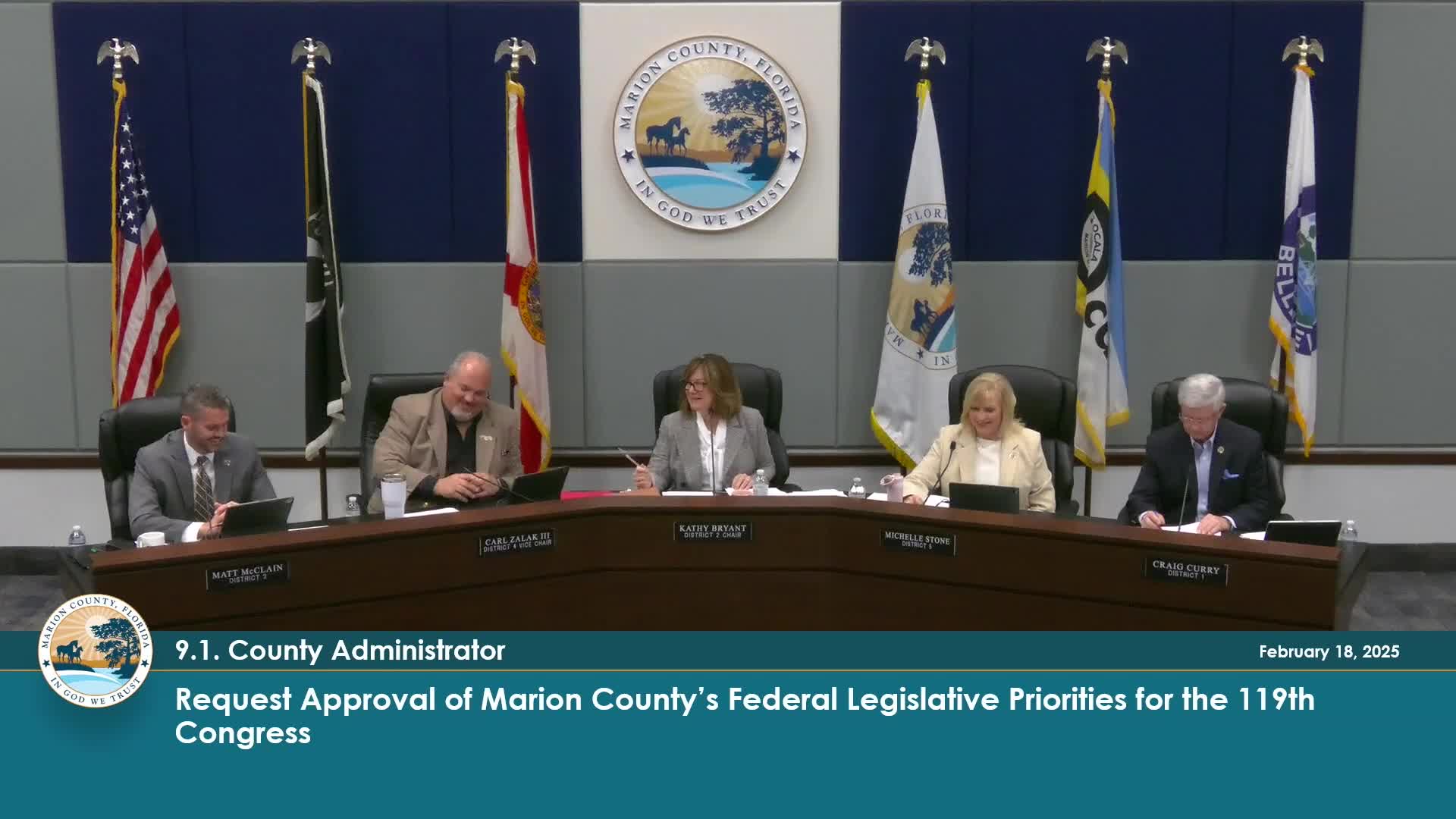
Summary
Marion County’s IT director briefed commissioners on a five-year operational plan that prioritizes cloud migration, deployment of Tyler modules (including payments and resident access), expansion of Microsoft 365, cybersecurity review and training; staff said some moves will save the county six-figure amounts annually.
Tom Nord, Marion County’s information technology director, presented a detailed five-year operational plan to the board on Feb. 18, outlining priorities to migrate county systems to cloud infrastructure, modernize core platforms and invest in cybersecurity, training and wireless upgrades.
Nord said the county has a five-part flight-plan approach: improving citizen and staff experience, platform and technology modernization, outreach and impact, strengthened cybersecurity and organizational change to support hybrid work. Key near-term items include deployment of Tyler Payments (a new digital payment platform) expected in May, a resident-access portal for utility payments scheduled in April and a large enterprise permitting and licensing system slated for later in 2025. Nord said Tyler Payments will handle approximately $3 million in monthly payments once live.
IT is retiring legacy asset management software (Cartograph) in favor of Tyler’s Enterprise Asset Management module; the switch will save about $126,000 annually, Nord said. He also described a Microsoft Government cloud tenant security review funded by a $25,000 voucher from Microsoft and a countywide SharePoint rollout to centralize internal collaboration. Nord said about 41% of departments have been trained on new Microsoft 365 tools and 6% of departments have documents syncing to OneDrive, with a multi-year migration of a large document repository (roughly three-quarters of a petabyte) underway.
Nord said IT has deployed 51 wireless access points so far in county facilities, is rolling out a Teams phone solution for some departments and has established a mobile training lab that has delivered more than 120 trainings to date. Commissioners praised the presentation and asked staff to track productivity and hybrid-work metrics going forward.
No board vote was required; the briefing was informational.