
Senate passes veterans and military budget bill with new programs for veterans and recognition for allied veterans
Get AI-powered insights, summaries, and transcripts
Subscribe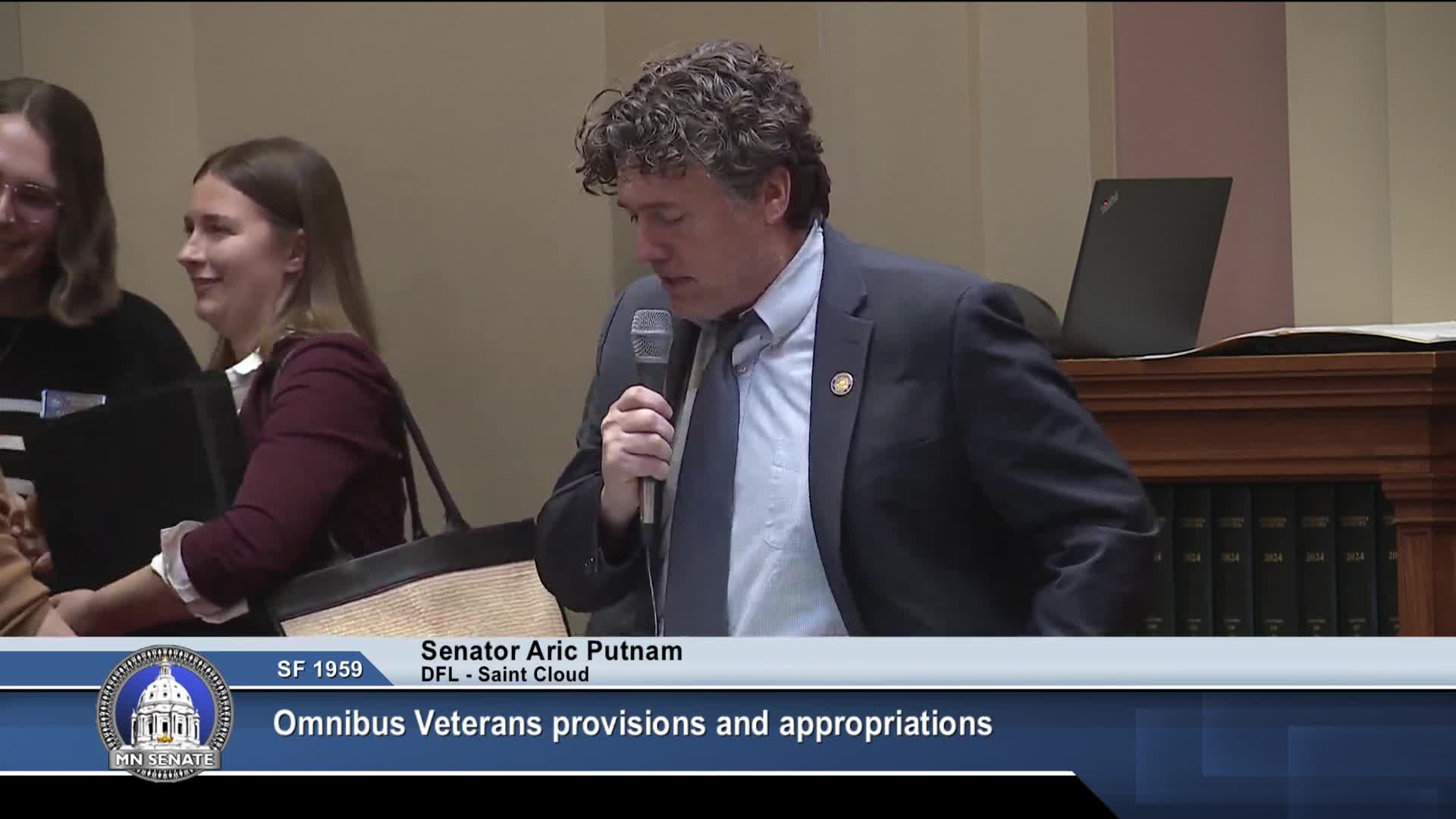
Summary
The Senate passed Senate File 1959, a state budget and policy bill for the Department of Military Affairs and the Department of Veterans Affairs, adding new veterans programs, Meals on Wheels expansion for Greater Minnesota veterans, enlistment bonuses and recognition for allied Hmong SGU veterans; the conference report passed 45‑19.
The Minnesota Senate on May 17 passed Senate File 1959, a budget and policy bill for the Department of Military Affairs and the Department of Veterans Affairs that includes funding for veterans’ housing, meal programs, suicide prevention, enlistment bonuses and recognition measures for allied veterans who fought with U.S. forces.
Senators said the conference committee refined several provisions from the Senate bill. The package creates a Veterans Meals on Wheels program for Greater Minnesota, extends support for Metro Meals on Wheels, increases funding for suicide prevention, and funds recruitment and enlistment bonuses for the Department of Military Affairs to preserve education benefits for those who join the guard. The bill also includes a provision recognizing the service of Hmong and other allied veterans who served in the secret war in Laos.
Senator Putnam, who presented the conference report, said the bill keeps promises to people who have served and their families and described the package as “good work” that improves services and benefits. He urged support for the conference report on the floor.
Several senators raised objections to how certain recognition language was handled. Senator Anderson said some allied groups — including Cambodian, Filipino and Khmer veterans — were not explicitly included in the provision and urged that the provision be broadened. Senator Howe argued the bill should also better address benefits for Minnesota National Guard and Reserve members before expanding recognition to other allied groups. Those concerns led several senators to oppose adopting the committee report on first consideration, but after floor debate the conference report was adopted and the bill was given third reading and passed 45‑19 on final passage.
Senator Pa spoke on third reading, saying she was deeply disappointed that the conference compromise left out many eligible allied veterans; she said the conference text substantially reduced the number eligible for a specific SGU recognition benefit and lamented that many of those veterans, she said, will not live to see full recognition if the narrower version remains law.
Senator Hur, speaking in favor on third reading, described the recognition provision as primarily an honorary identification and license‑plate designation for a small group of surviving SGU veterans in Minnesota and urged support, saying the measure preserves a legacy for future generations. Supporters emphasized the bill’s veterans services and programs as the principal achievements of the conference report; opponents said some recognition language and benefit eligibility still needs further work.
The conference committee report was adopted on the floor and the bill passed as amended by the conference committee by roll call, 45 ayes and 19 nays.