
Fish and Wildlife outlines $75M climate-ready fisheries plan and $25M hatchery funding; requests targeted operational dollars
Get AI-powered insights, summaries, and transcripts
Subscribe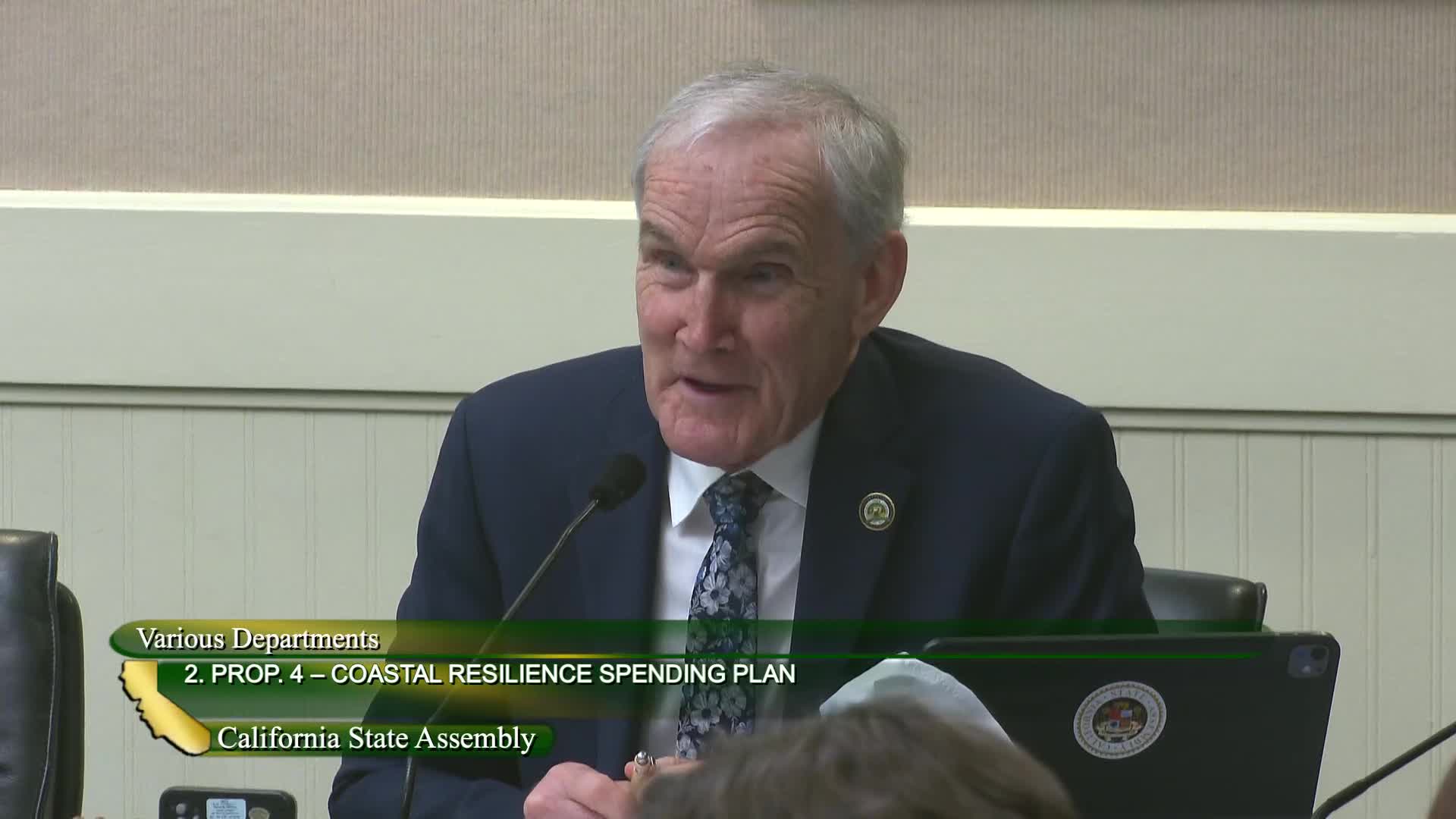
Summary
The Department of Fish and Wildlife described a focused plan to use a Prop 4 allocation for climate-ready fisheries while seeking additional operational funding for hatcheries, including $5 million for a Friant-area facility tied to restoration agreements.
California Department of Fish and Wildlife (CDFW) Director Chuck Bonham explained how his agency would use its Proposition 4 allocations for ocean and fisheries activities and for hatchery modernization.
Bonham said the bond names three possible priority areas for a $75 million allocation in the fish and wildlife chapter: island ecosystem protection and restoration, kelp forest restoration, and climate-ready fisheries. He told the subcommittee the department proposed to prioritize "climate-ready fisheries," focusing on monitoring, gear modifications to reduce whale and turtle entanglements and improved data systems. "We take 11, almost 12,000,000 and apply it to salmon monitoring and new technology," Bonham said, referencing funds for DNA-based parental tagging and electronic reporting systems to improve stock assessments and management decisions.
Bonham also addressed the $25 million hatchery line item in the bond. He requested an additional $5 million in the current budget year for operations at a facility tied to the San Joaquin-Friant settlement that would rewet a stretch of river and provide a hatchery to support spring-run Chinook recovery. He said CDFW has already invested roughly $45 million in hatchery infrastructure modernization over the last five years and expects to return to the Legislature with more specific modernization requests.
LAO responders noted the administration—s plan has merit but observed the bond text left latitude among the three named objectives; LAO recommended the department coordinate with OPC and the Conservancy to avoid duplication and ensure broadly agreed priorities.
Why it matters: climate changes in ocean temperature and species distributions, and increasing whale entanglements, have created urgency to modernize fisheries monitoring and gear so the state can protect marine species while supporting fishing livelihoods. Hatchery modernization and targeted operational dollars connect to planned river rewetting and species recovery projects.
Next steps: CDFW will move forward on a climate-ready fisheries plan and return with more detail on hatchery modernization needs and specific BCPs for operational support.