
Army Corps outlines debris removal methods, timetable for Palisades and Malibu recovery
Get AI-powered insights, summaries, and transcripts
Subscribe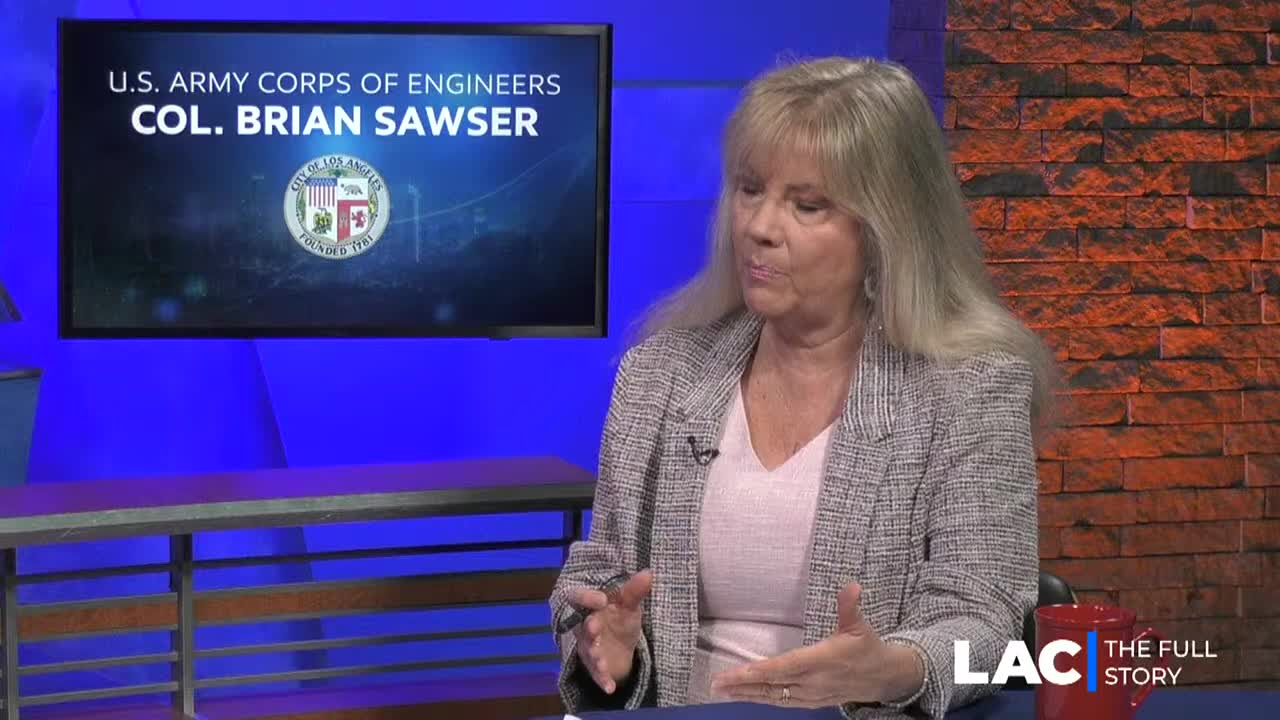
Summary
Colonel Salser told Los Angeles public radio that wildfire debris is being sorted, wetted and transported to certified facilities, with a presidential deadline for federal removal and ongoing work to reduce truck traffic and protect coastal runoff.
Colonel Salser of the U.S. Army Corps of Engineers described how crews are collecting and disposing of debris from the recent Palisades and Malibu wildfires, saying the removal program separates waste on site, uses water to suppress ash and ships regulated materials to certified facilities across Southern California.
In an interview on LA Currents, Colonel Salser said the Corps and its partners are using ‘‘wet methods’’ during collection to keep ash and fine particles from becoming airborne and are transporting ash in lined, wrapped dump trucks to state‑certified receiving sites. ‘‘We put them in super 10 dump trucks licensed by the state of California that are lined with a very heavy plastic liner,’’ Salser said. He added that trucks are then double‑tarpped before leaving the site.
The Corps is routing different waste streams to specialized facilities, Salser said: asbestos‑contaminated material is bagged, separated and sent to asbestos receiving facilities; concrete and metals are consolidated, washed, crushed or baled for recycling; green waste is chipped and sent to green‑waste facilities. The speaker noted that ‘‘around 17 different facilities here in Southern California’’ are in use and that CalRecycle and Los Angeles Sanitation have certified the receiving sites.
Salser described a local staging area on Temescal Canyon Road where the Corps is operating a concrete‑crushing plant and a metal baler to reduce truck volume by sending crushed aggregate and recycled metal back into the construction supply chain. ‘‘We crush the concrete. We bale the metal. And then we’re able to keep a lot of trucks off the road because that decreases the amount of volume per truck,’’ he said.
Responding to concerns about contamination of coastal waters, Salser said crews install perimeter erosion controls on each property, including wattles filled with organic fiber and hydromulch to stabilize soils and keep runoff on site. He also urged the public and homeowners to accelerate decisions about federal cleanup elections so crews can move debris from ‘‘an uncontrolled environment to a controlled environment’’ regulated by the state.
On timing, Salser said the ‘‘president gave us a deadline of January of 26’’ for the Corps’ mission, and described an aggressive operational tempo: crews have a goal of clearing more than 35 parcels per day early in the operation, a record of 45 parcels in a single day, and an ongoing ramp‑up that he said should push daily truck movements from about 850 toward 1,200. ‘‘If you do 40 a day, you do 1,200 in a month,’’ he said, and added that legal or engineering complications will leave a smaller subset of properties to be resolved later in the recovery.
Salser said debris removal and rebuilding can proceed in parallel; homeowners can start designs and pull permits while debris removal continues. He also pointed listeners to the county recovery website for updates and insurance guidance: recovery.lacounty.gov.
Why it matters: the Corps’ methods and the speed of removal affect public‑health risk, coastal and stormwater quality, traffic on Pacific Coast Highway and when residents can rebuild. Salser framed the operation as the product of years of wildfire lessons and close coordination with state and local partners. ‘‘We are strangers. We are guests of Southern California. So if you don’t make those partnerships, if you don’t understand how the community works and build those strong relationships, you absolutely cannot accomplish this mission,’’ he said.
Provenance: Excerpts above are drawn from the LA Currents interview with Colonel Salser, which ran at the top of the provided transcript. The program presented operational details (waste separation, wet collection, truck tarping, recycling practices), environmental protections (erosion control, hydromulch) and operational tempo (parcels per day, truck counts, presidential deadline) in Col. Salser’s own words.
Credits: Interview on LA Currents; Colonel Salser (U.S. Army Corps of Engineers) and the LA Currents host appear in the transcript.