Salinas outlines housing targets, warns Homekey projects imperiled by pause to Section 8 vouchers
Get AI-powered insights, summaries, and transcripts
Sign Up Free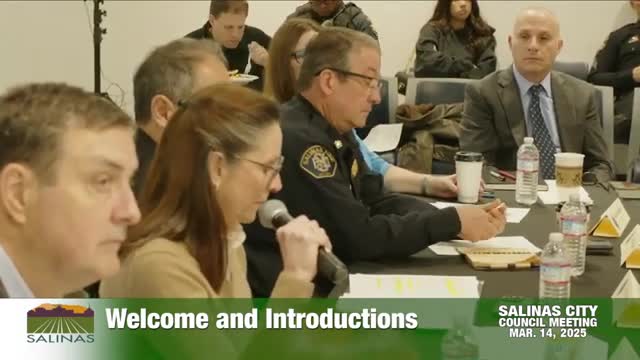
Summary
City officials updated partners on the sixth-cycle housing goals, recent and planned housing production, and warned that a March 6 pause on issuance of Section 8 housing choice vouchers threatens the financing and operations of Homekey and shelter projects.
Salinas city officials on March 14 told state and federal legislative partners that the city is advancing multiple housing plans and projects but faces a funding squeeze after a pause in Section 8 voucher issuance.
Lisa, the city’s community development director, said the city is pursuing its sixth-cycle regional housing goals, with a stated target figure of 6,674 units for the cycle. The city is investing in updates to its general plan, zoning code and an East Area specific plan meant to increase density and streamline approvals; those efforts, she said, are intended to enable roughly 3,400 additional units. In 2024 the council approved a Central Area specific plan and related pre-entitlements that allow more than 1,700 units, and staff permitted over 200 accessory dwelling units, Lisa said.
The city has pursued pro‑housing designations, established a local housing trust fund and, according to Lisa, secured about $49,000,000 in state and federal awards for housing and homelessness programs. She said roughly $18,000,000 of that funding has been directed to homeless services, including street outreach, navigation and shelter supports.
Renee Mendez, Salinas city manager, and other staff described three emergency shelters in the city that together provide about 200 beds and carry an annual operating cost the city estimated at $8,000,000. The city has committed about $6,000,000 from the general fund over the past two years to sustain these services, Mendez said, and warned that level of local subsidy is not sustainable without continued state and federal support.
Both city and county behavioral health staff have committed $2,500,000 toward acquiring the Fairview Homekey project, which staff said would provide 45 permanent supportive housing units. Lisa said the housing authority was targeting a March 31 closing on that property, but she added the March 6 pause on issuing Section 8 housing choice vouchers “is really limiting the feasibility of this project going forward,” because those vouchers were intended as a primary source of operating dollars. Lisa said staff would seek state extensions of occupancy deadlines and flexibilities to redirect grants to cover operations if federal voucher assistance remains unavailable.
Why it matters: city leaders characterized housing production, Homekey conversions and shelter operations as tightly linked to operating subsidies. With a city general fund already supplementing operations, a continued pause on vouchers or a change in federal funding flows would force staff to rework financing and could delay or end planned conversions.
City staff said several decisions remain to be made: whether alternate operating subsidies can be secured, whether Homekey sites can be brought online without vouchers, and whether the city must further commit general‑fund dollars or reduce scope. Officials asked legislative partners for flexibility on state grant deadlines and for help restoring voucher issuance or finding alternate operating revenue.
Quotes in context: “Those vouchers were going to be the operational funding source for these projects,” Lisa said. “Given this situation, there will be a need to pivot and a request to the state for an extension of the time frame for occupancy and flexibility to redirect other grant funding sources to cover operations.”
Staff and speakers noted the scale of the financial challenge but did not propose a formal council action at the meeting. Next steps described by staff included pursuing state flexibilities for Homekey timelines, continuing outreach to housing voucher administrators, and preparing alternate operating scenarios should vouchers remain paused.