
Salinas police describe tech and staffing investments; chief urges state law changes to address street prostitution
Get AI-powered insights, summaries, and transcripts
Sign Up Free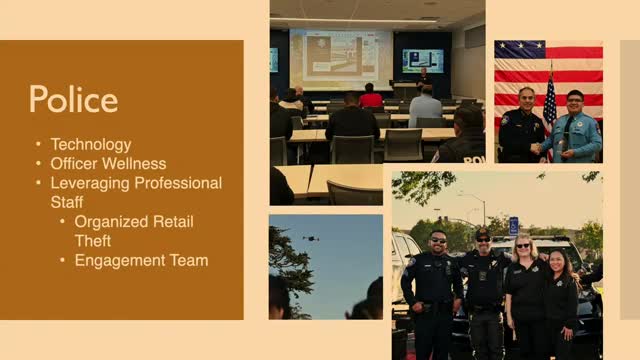
Summary
The police chief and other public safety leaders briefed partners on camera and data investments, wellness and civilianization efforts, and said the statewide ‘Safer Streets for All’ changes limit proactive enforcement on loitering for prostitution, prompting requests for legislative fixes.
Chief of Police Carlos Acosta told the March 14 legislative breakfast that technology, data analytics and civilian staff are being used as force multipliers while the department pursues grants to fund new initiatives.
Acosta said patrol vehicles and fixed cameras, along with “flock” cameras in specified areas and Peregrine data analytics software, have helped investigators identify trends and allocate enforcement measures. He said the department is civilianizing functions such as community engagement and youth services, and that a grant addressing organized retail theft funded two investigative specialists so sworn officers can focus on enforcement.
Acosta also emphasized officer wellness and retention programs, including financial and sleep education, emotional‑survival training and in‑house supports.
On prostitution enforcement, the chief said California’s 2022 Save First Street for All law (referred to in the meeting as the Safer Streets for All statute) changed criminal statutes and repealed Penal Code section 653.22, limiting officers’ ability to proactively address loitering with intent to commit prostitution. He said attempts to restore misdemeanor loitering offenses via Senate Bill 1219 and Assembly Bill 2034 in 2023–24 failed to pass and that the department wants better legal authority to contact and engage persons involved in risky street activity as a way to identify victims and intervene.
Why it matters: the department framed the statutory changes as constraining proactive enforcement and preventing officers from engaging potentially exploited individuals. The chief requested legislative attention to restore tools for contact and intervention while continuing outreach and services.
Staff described no new local ordinance proposals at the meeting; the discussion was framed as a request for state legislative fixes and as background on how the department uses technology and grants to address crime trends.
Quotes in context: “This law… restricts law enforcement’s ability to be proactive and address the actual act,” Acosta said. “If we can go out there and legally talk to them, engage with them, offer them services… we can hopefully try and prevent some of these activities in our streets.”