Quorum Court backs state/federal grant to rework dangerous intersection
Get AI-powered insights, summaries, and transcripts
Subscribe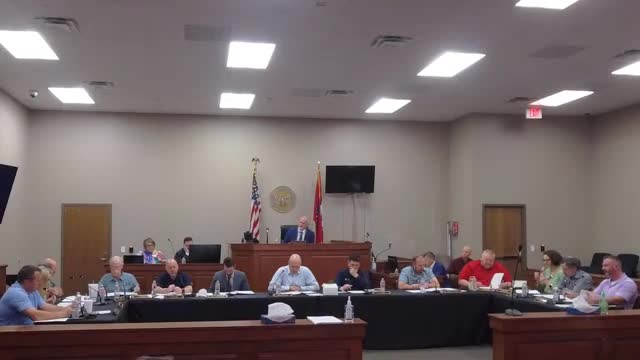
Summary
The Quorum Court backed a resolution to accept a state/federal intersection improvement grant to reconfigure a hazardous intersection; county staff said the award covers the majority of project costs and will avoid land condemnation for a safer design.
Faulkner County’s Quorum Court voted to move forward with an intersection improvement project after hearing details from road department staff and county leadership.
Staff described the site as a non‑right‑angle intersection that has generated numerous accidents. The court considered Resolution 25-02, which expresses the county’s willingness to participate in an intersection‑safety grant program and to accept matching funds. County officials said the grant program will cover the majority of project costs and that the award was obtained through coordination with the state agency’s Intersection Improvement Program.
Road department staff and county officials said the project avoids the need for land condemnation by adjusting access and approaches and will include new signalization in both directions along the state route. The county’s presentation referenced an approximately $1.125 million award as the program amount for the project; staff described the funding as largely coming from state and federal matching funds and characterized it as a substantial opportunity to address a high‑accident location.
Several members of the court thanked road staff and state partners for obtaining the award and noted the intersection had produced serious accidents in the past. Court members also asked brief technical questions about signals and utility relocations; staff said the design includes a signal and that utility impacts were being evaluated as part of project planning.
The resolution moved forward with court approval; staff said the next steps are final design, utility coordination and construction scheduling with state transportation partners.