
Lakeville library to run ‘food for fines’ program for 30 days to support local pantry
Get AI-powered insights, summaries, and transcripts
Subscribe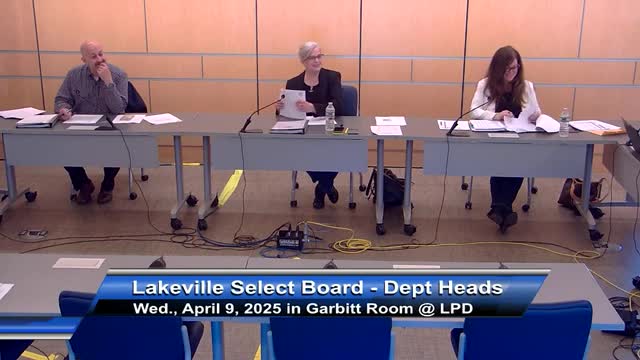
Summary
The select board approved a one-month 'food for fines' program at the Lakeville Public Library. Residents can donate one nonperishable, unexpired item per overdue charge to have fines waived; lost items and other charges are not covered. The board approved the program unanimously.
The Lakeville Select Board on April 9 approved a 30-day “food for fines” pilot at the Lakeville Public Library that will allow residents to clear overdue fines by donating nonperishable food to the town’s food pantry.
Library Director Jennifer Jones presented the plan: for each overdue fine a patron drops off one unexpired nonperishable item and the corresponding fine will be waived on a one-for-one basis. The program will not apply to replacement costs for lost items or to non-fine charges such as printing fees; it applies only to overdue fines. Jones told the board the library currently collects roughly $300 a month in fines; the balance remaining in outstanding fines is approximately $3,500.
The board voted unanimously to run the program for 30 days. Roll-call votes were recorded as: Hunt — aye; Plonka — aye; Carboni — aye; Candido — aye; Day — aye.
Library staff said the initiative will be coordinated with the Council on Aging food pantry and will include a donation bin at the library. Board members expressed support for the library’s outreach and for partnering with local food providers.
Why it matters: The program converts small overdue fines into donations to a local food pantry and is intended to both boost pantry resources and reduce barriers for library use among residents who may be financially strained.
Details: The library noted historic fine revenue and the volume of overdue accounts has declined since automatic renewals started; the director proposed the one-month pilot with the option to extend if community need remains.