Bids for 7 Gables exterior rehab exceed allocation; staff to seek condition assessment and options
Summary
Two firms responded to an RFP for exterior rehabilitation of the historic 7 Gables House. Tradesman Group ranked highest but their construction price exceeded the Fort Pierce Redevelopment allocation; staff will explore a structural condition assessment, grant options and alternative uses before award.
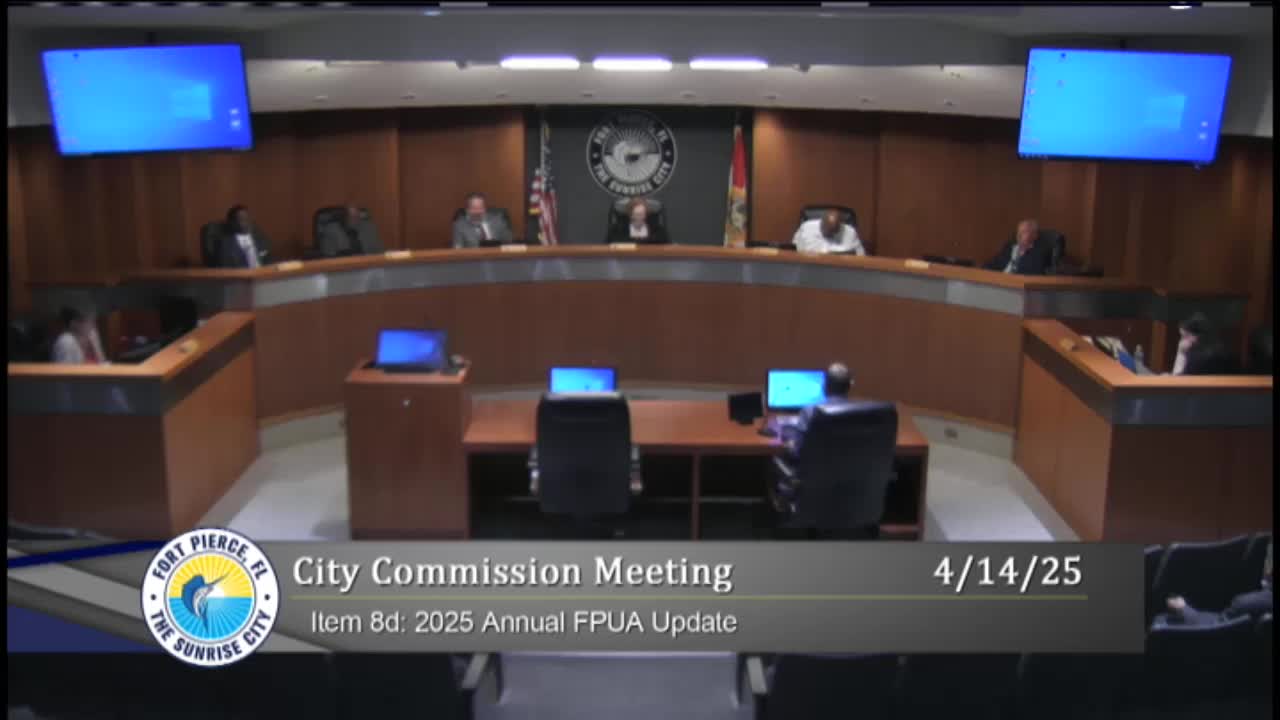
City staff told the Fort Pierce City Commission on April 14 that bids returned for an exterior rehabilitation of the historic 7 Gables House were significantly higher than the $500,000 Fort Pierce Redevelopment Agency (FPRA) allocation, and recommended pausing award to pursue further analysis, funding options and a clear plan for future use.
Marcia Kamon, special projects coordinator in Public Works, said the RFP (design‑build delivery) drew two respondents: Tradesman Group LLC and New World Builders, with Tradesman Group receiving the higher evaluation score. Tradesman Group submitted a detailed pricing package that, combined with design and preconstruction fees, yielded a proposed total of $948,654—about $450,000 above the FPRA allocation. New World Builders provided fewer firm construction line items, which made a total project price unclear from their submittal, staff said.
Staff described three principal selection considerations: (1) price transparency and line‑item clarity, where the Tradesman Group offered a full schedule; (2) scope conformance, where staff judged Tradesman’s approach more closely aligned with the RFP; and (3) schedule, where Tradesman provided a clearer 10–11 month completion estimate.
Kamon said staff’s recommended next steps are to pause award and either (a) negotiate with the top‑ranked respondent while exploring additional funding (FPRA augmentation or a state historic preservation matching grant with a competitive selection calendar), or (b) cancel the procurement and release a focused solicitation for a condition assessment and design phases. The latter would permit an independent structural and destructive inspection, provide more precise cost estimates, and build a clearer decision basis for rehabilitation versus demolition or relocation.
Commissioners raised concerns about the building’s overall condition (termite vulnerability, uncertain interior condition, and whether a full historic restoration is appropriate). Commissioner Broderick and others suggested an initial condition assessment by a design professional or structural engineer as a lower‑cost, early step before committing construction funds. City attorney and staff advised that a separate solicitation for a condition assessment and design could be appropriate, and that certain state grant programs (50/50 matching historic‑preservation grants) have application calendars and appropriation timelines that would delay funding availability until after next year’s fiscal cycle if successful.
Ending: The commission gave staff direction to pursue a condition assessment option, check continuing‑services contracts for available design professionals, and report back with one or more costed options and any grant opportunities. No contract award was made at the April 14 meeting.
(Quotes and attributions reflect the RFP presentation and commissioners’ comments.)