
Council authorizes $7,500 to study color change for City Hall elevator cladding after accessibility upgrade
Get AI-powered insights, summaries, and transcripts
Subscribe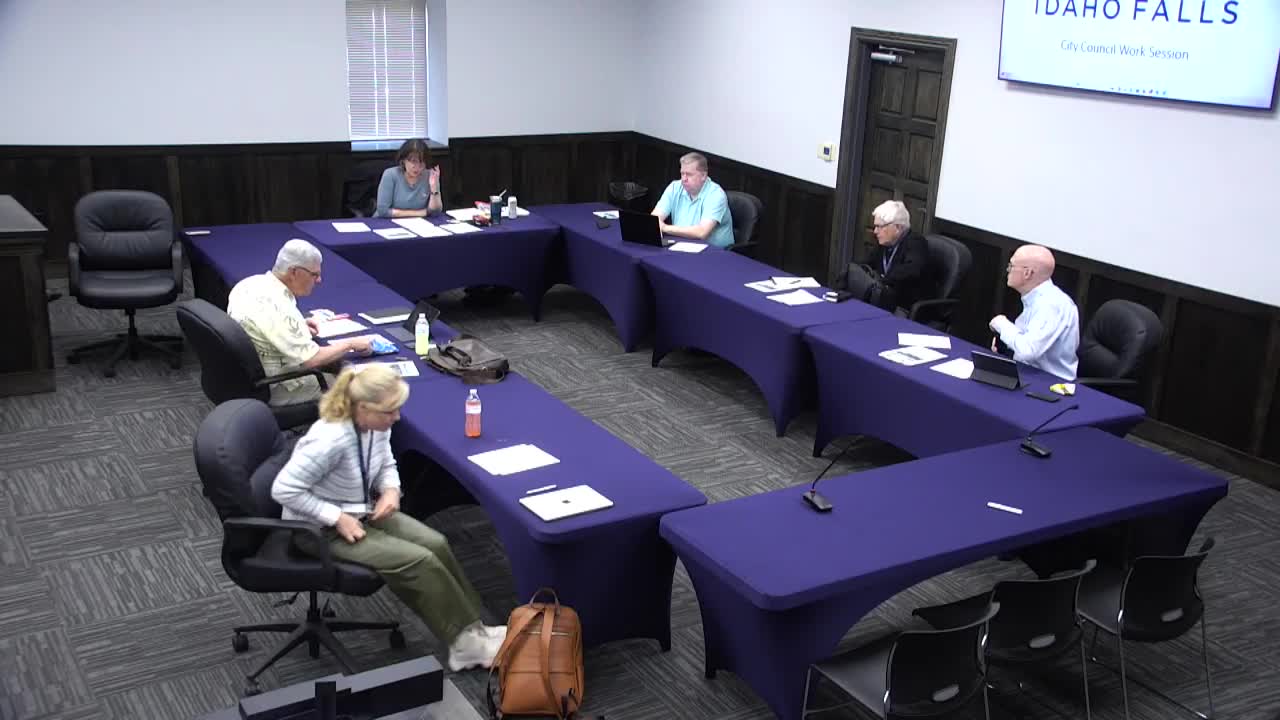
Summary
Idaho Falls — The City Council on April 14 authorized up to $7,500 for additional work with Resin Architecture to study changing the color and trim of the rain-screen panels installed on the new elevator at City Hall.
Idaho Falls — The City Council on April 14 authorized up to $7,500 for additional work with Resin Architecture to study changing the color and trim of the rain-screen panels installed on the new elevator at City Hall. The money will fund design options and samples for council review; any ordering or installation would require later council approval.
The council heard from Greg Croft, an architect with Resin Architecture, who described the design approach for the elevator project and the company’s decision to use a rain-screen panel system rather than attempting to match century-old glazed brick on the historic building. "We're not gonna find those glazed bricks," Croft said, explaining the firm chose contemporary panels sized and banded to relate to the original masonry rather than replicate it exactly.
The presentation emphasized that the primary goal of the project was improved accessibility. Croft and city staff said the elevator substantially increased public access to City Hall: "This project was really meant to be an accessibility project to create access to a building that... had less than 20% of it accessible," Croft said.
Council discussion focused on the visual contrast created by a light-colored band on the new cladding and on whether the band should be replaced with a darker trim that would better blend with the existing façade. Resin staff explained the panels are a durable cement/resin product installed over a ventilated rain screen, with stock material available for future repairs. Croft noted advantages of the system: panels are replaceable individually and the rain screen helps the wall dry if moisture penetrates behind the cladding.
Cost and schedule for a change were discussed. The firm and staff estimated the material and installation could range from $3,000 to $7,000 for switching the band color, with lead times pushing production to about six months depending on cutting and shipping. Council members also discussed testing physical samples on site before deciding. "Photoshop's only gonna take you so far — having the physical samples" was how one councilor framed the need for real samples before committing.
Mayor and several council members praised the accessibility gains, and multiple speakers urged restraint on changes. Council President Bertenshaw summarized the approach: staff will gather physical samples and photos and share them with council; if council subsequently approves a change, the earlier study authorization will permit the consultant work needed to present a firm proposal.
A motion to authorize $7,500 for Resin Architecture to explore a band-color change and prepare options — described in the motion as "not a commitment to order material, but [to] allow flexibility" — passed on a unanimous voice vote. The clerk recorded the roll call: Radford—aye; Francis—aye; Bertenshaw—yes; Larson—yes; Freeman—yes.
Council and staff also discussed timing for a ribbon-cutting to celebrate the completed accessibility work; council expressed general support for a future ceremony once the council is satisfied with weather and scheduling.
Ending: Staff will obtain physical samples, photograph them in place, distribute images and sample information to council, and report back. Any procurement or installation of replacement panels would require a future council decision.