
Regional planning agencies urge lawmakers to block retroactive state retirement payments that could force closures
Get AI-powered insights, summaries, and transcripts
Subscribe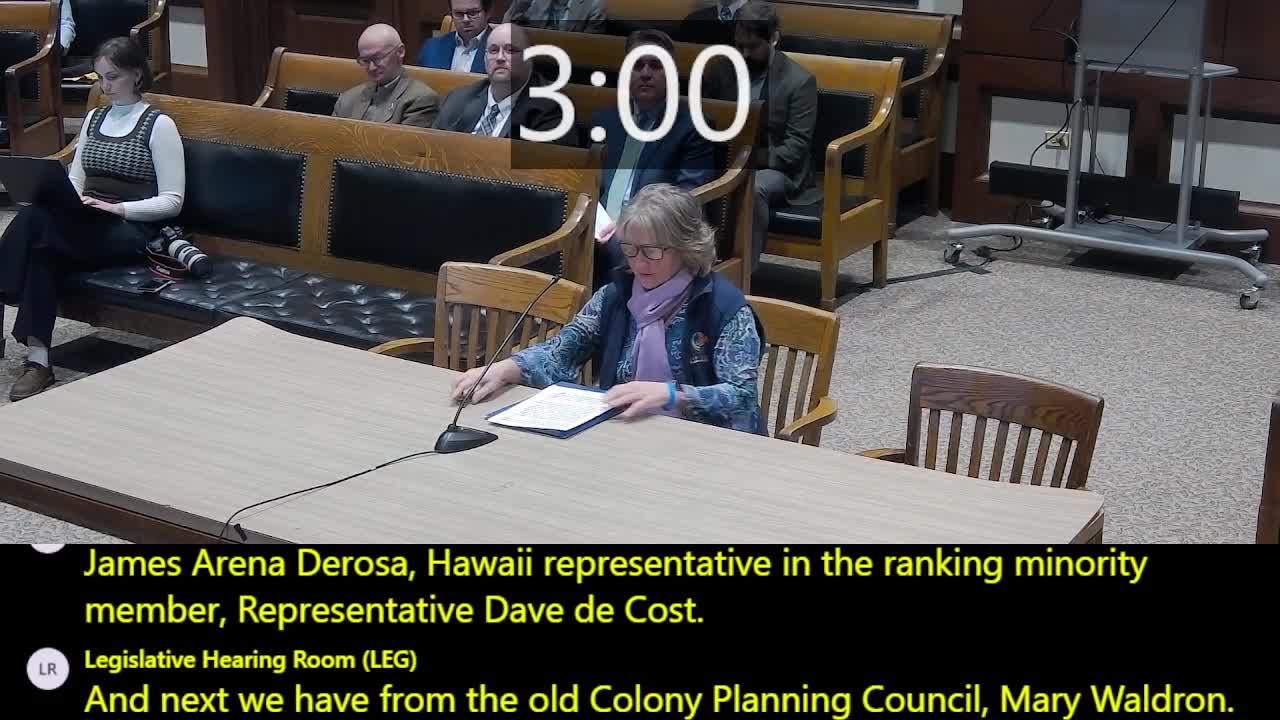
Summary
Executive directors of Massachusetts regional planning agencies told the Joint Committee on Public Service that retroactive employer contributions to the Massachusetts State Retirement Board would be unsustainable and could force layoffs or closures of multiple regional planning agencies.
Executive directors from Massachusetts regional planning agencies told the Joint Committee on Public Service that a proposed interpretation requiring retroactive employer contributions to the Massachusetts State Retirement Board would create overwhelming costs and risk the agencies’ survival.
"The payments to the state retirement board would be unsustainable and certainly would lead to large scale layoffs, termination of services to our communities and force many regional planning agencies to shut down," Mary Waldron, executive director of the Old Colony Planning Council, said. Waldron said her agency’s annual municipal assessment totals about $160,000 and that regional planning agencies are heavily constrained in their ability to raise new revenue.
Jeff Walker, executive director of the Southeastern Regional Planning and Economic Development District and co-chair of the Massachusetts Association of Regional Planning Agencies (MARPA), told the committee the agencies were created in the 1960s and have long provided regional planning services to municipalities that lack capacity. "If suddenly obligated 50 plus years in to pick up those employer contributions," Walker said, "it could require quite a number of us to close our doors and no longer be able to provide the important work on behalf of the communities that we serve."
Both Waldron and Walker asked the committee to favorably report legislation filed as Senate 1805 and House 2889, described by witnesses as measures to protect regional planning agencies from retroactive liability to the state retirement board. Waldron and Walker said the agencies rely on a mix of federal, state, foundation and municipal funding and that federal overhead caps limit how much indirect cost recovery they can claim, meaning an employer-contribution mandate could render them ineligible for federal grants.
Why it matters: Regional planning agencies provide transportation, economic development, housing and other technical assistance across dozens of municipalities. Witnesses warned that an unanticipated retroactive funding obligation could reduce regional planning capacity across affected districts and interrupt federally funded work.
What was not decided: The committee did not take a vote. The witnesses urged support for the pending bills; committee members acknowledged the testimony and moved to the next panel.