
House approves voluntary non-opioid directive allowing patients to refuse opioid treatment in advance
Get AI-powered insights, summaries, and transcripts
Subscribe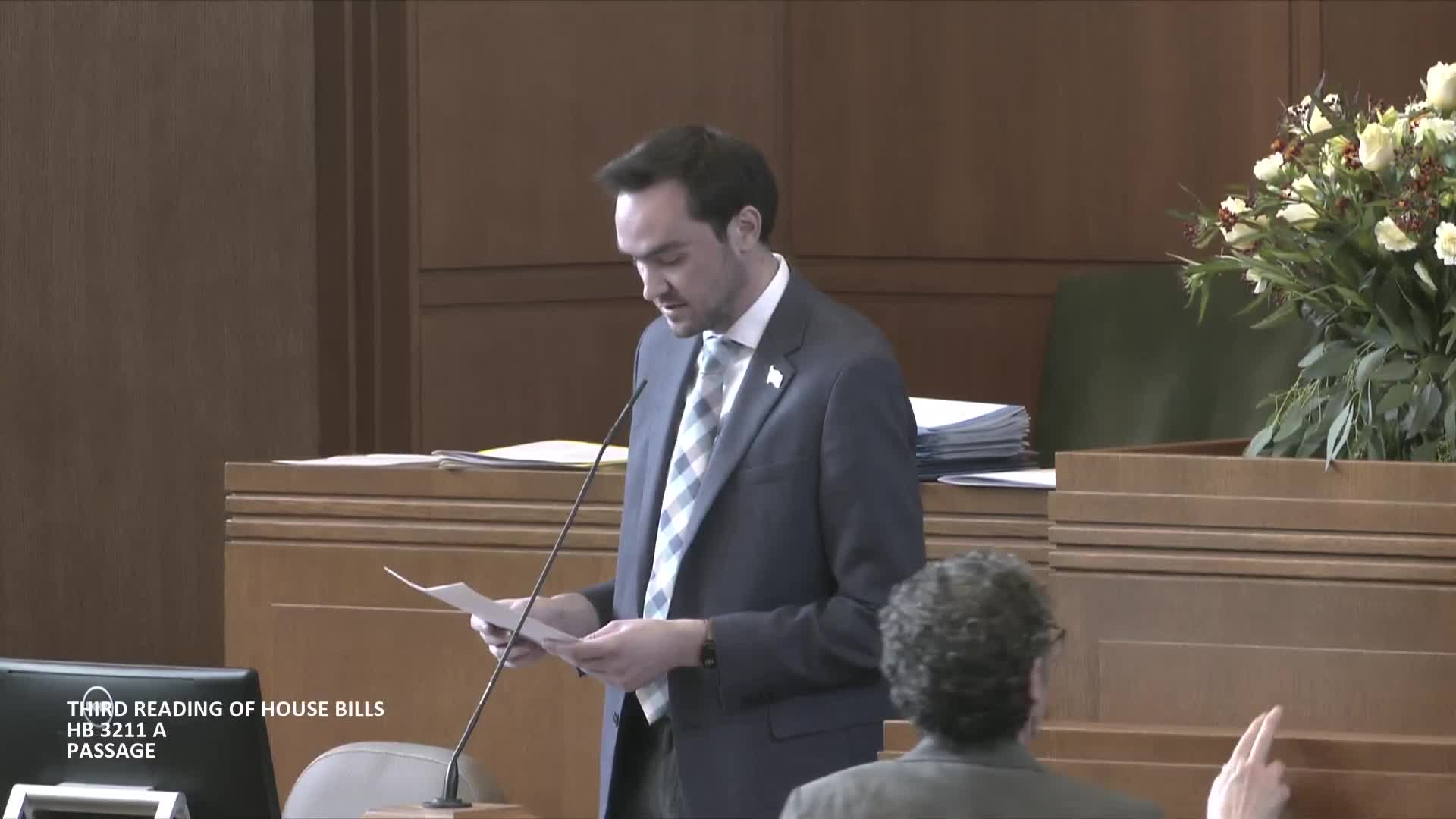
Summary
Lawmakers passed House Bill 3211, which directs the Oregon Health Authority to create a voluntary non-opioid directive form patients may use to indicate they do not want opioids, with specified exceptions for emergencies, surgery, hospice and substance-use treatment.
Representative Levy brought House Bill 3211 to the House floor, a measure directing the Oregon Health Authority (OHA) to create a voluntary non-opioid directive form. The form would allow patients or their authorized representatives to indicate a preference to avoid opioids and require providers to include the directive in the patient's medical record when presented.
Levy said the form is modeled on Michigan law and is designed to give patients — particularly those at risk for addiction — a tool to express care preferences and start conversations with clinicians. The directive would include warnings that declining opioid therapy could lead to unrelieved or breakthrough pain and provide instructions for how to revoke the directive.
The bill includes exceptions permitting opioid administration when clinically necessary in an emergency, for intraoperative use, in skilled nursing facilities, for hospice patients, or for treatment of substance use disorder. It also shields providers and health facilities from civil or criminal liability when they act in good faith in compliance with the directive.
Supporters described the directive as another tool in a broader strategy to manage pain and reduce opioid-related harms; the measure passed the House unanimously in committee and was approved on the floor by constitutional majority.