
House raises county authority for small wind projects, shifting some siting decisions from state council
Get AI-powered insights, summaries, and transcripts
Subscribe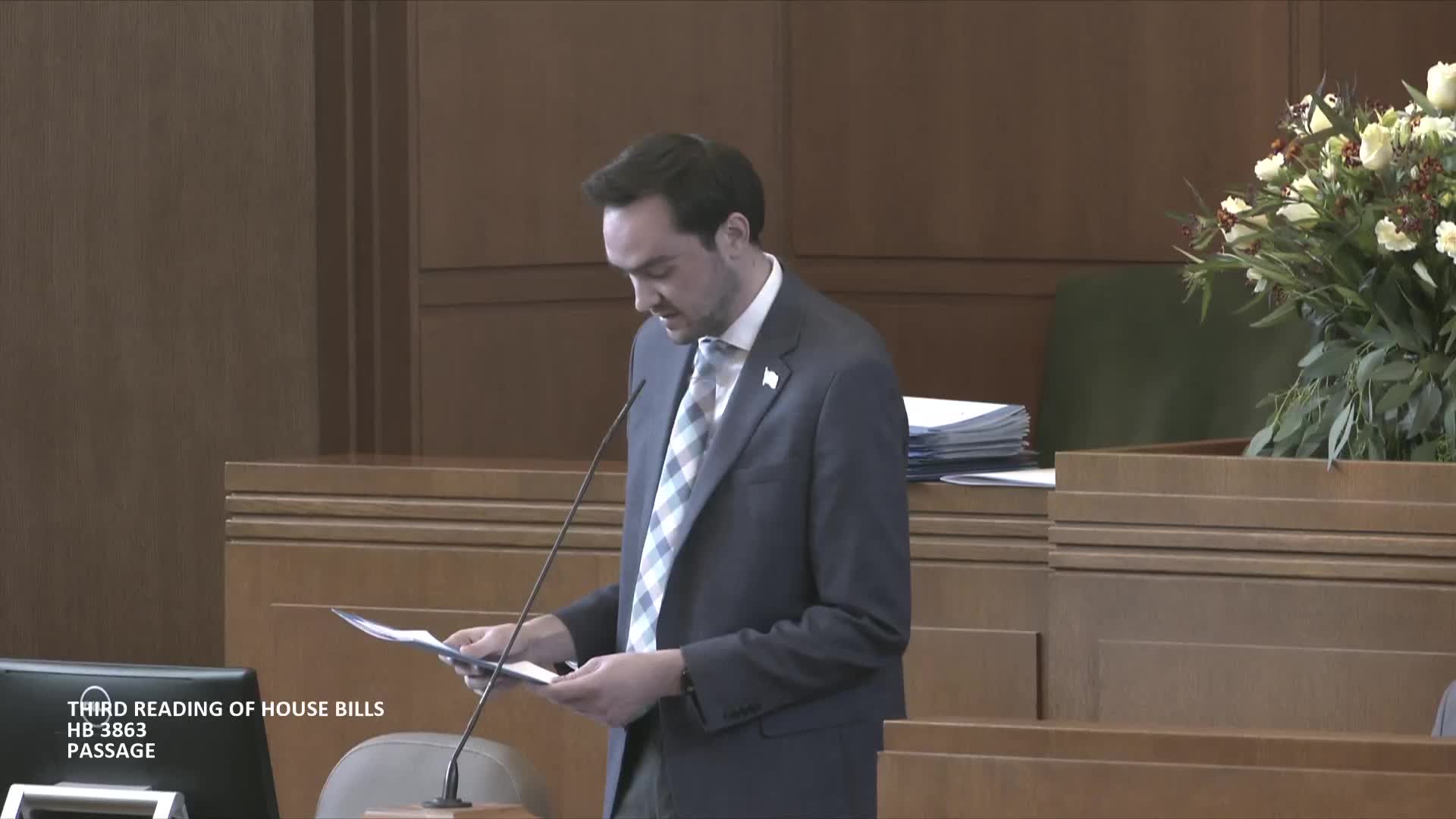
Summary
The House passed House Bill 3874 to raise the threshold for state-level Energy Facility Siting Council jurisdiction over wind projects from 50 MW to 100 MW, letting counties approve some larger projects locally if both county and developer agree.
Representative Helm sponsored House Bill 3874 to change the jurisdictional threshold for wind energy projects subject to the state Energy Facility Siting Council (EFSC). The measure raises the megawatt threshold from 50 MW to 100 MW, allowing counties to approve more mid-size wind projects through local land-use processes when both the local government and the developer opt for local review.
Helm and supporters said modern wind turbine technology generates more power per turbine than in past decades, allowing viable projects with fewer turbines and smaller footprints. The sponsor argued that counties—especially in eastern Oregon where wind resources are abundant—should have the option to process projects locally to keep permitting simpler for community-scale renewable developers and farmers.
Supporters emphasized that the bill does not remove state oversight where either the county or the developer prefers EFSC review; rather it offers flexibility. Floor discussion flagged concerns about decommissioning and end-of-life obligations for turbines; sponsors said counties may adopt bonding or decommissioning requirements and suggested the Senate might consider technical changes on that topic.
The House approved the bill by constitutional majority. Proponents said the change aligns siting rules with current technology and local control preferences, while opponents asked for clearer decommissioning standards going forward.