
Wake County approves up to $17.875 million in gap loans to preserve and build 725 affordable units
Get AI-powered insights, summaries, and transcripts
Subscribe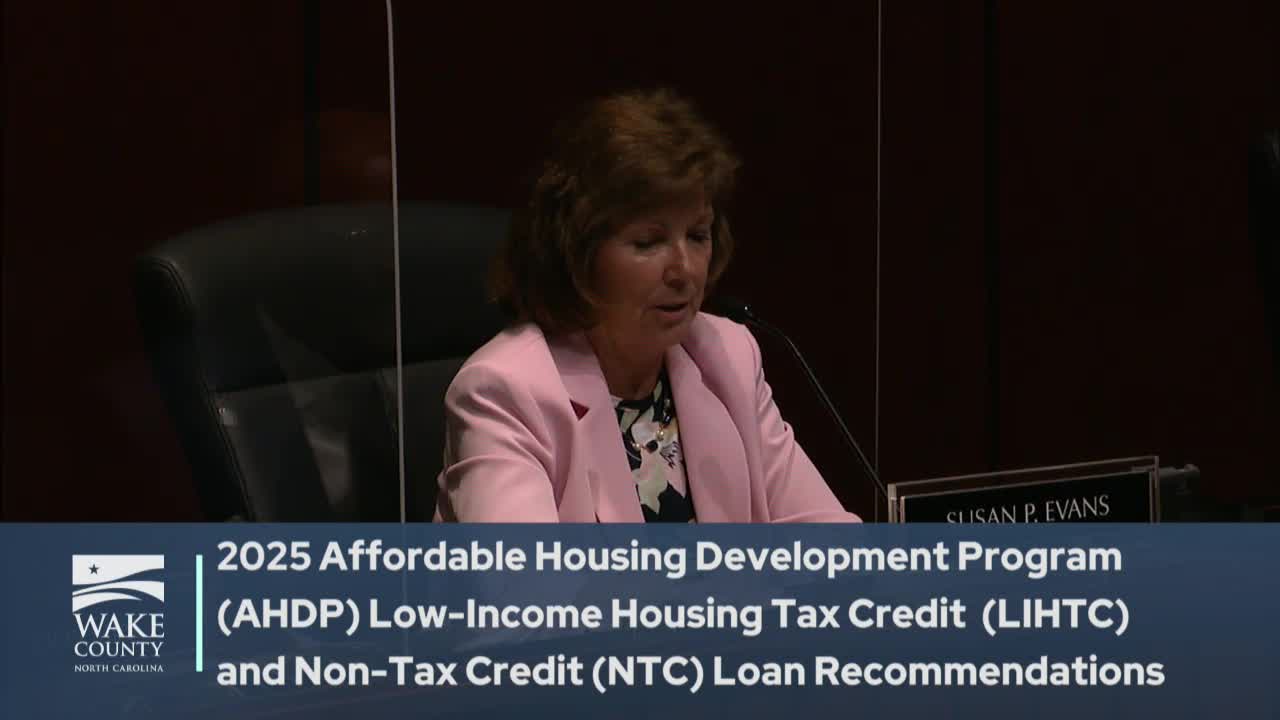
Summary
The board approved staff recommendations to provide development loans for a slate of rental and homeownership projects (both LIHTC and non‑LIHTC) that staff said will produce or preserve 725 affordable units across Wake County, with long affordability periods in several projects.
Wake County commissioners on April 21 approved staff‑recommended gap financing for a package of affordable housing developments that staff said will create or preserve 725 units and leverage private and state tax credit funding.
Mark Perlman (introduced at the meeting as the county’s affordable housing development lead) presented staff recommendations for nine projects and one gap award across rental and homeownership categories. Staff said the county’s role is gap financing — to make projects financially feasible alongside Low Income Housing Tax Credit (LIHTC) equity, other public funds and private debt.
Key project recommendations and county loan amounts (as presented by staff): - Heritage Park Senior Phase 1B (Raleigh) — $500,000 loan; 51 senior units; developer committed to 50‑year affordability and land retained by Raleigh Housing Authority. - The Canopy (Cary; DHIC) — $665,000 loan; 51 family units with transitional housing and child care; 50‑year affordability (ground lease from Greenwood Forest Baptist Church). - Abbey Spring Apartments (Apex; Evergreen) — $1,470,000 loan to cover cost overruns; 56 senior units; 50‑year affordability. - Rose Park Manor (Cary; Beacon Management) — up to $300,000 additional gap funding to complete construction; 81 senior units; 30‑year affordability reported. - Fisher Grove (Raleigh) — $3,320,000 loan; 166 family units as part of Washington Terrace redevelopment; includes retail. - Chapinoke (Raleigh; site owned by Wake County) — $7,100,000 loan; 200 family units adjacent to planned BRT corridor; 99‑year ground lease proposed. - Biltmore Hills (Raleigh; Preservation of Affordable Housing) — $1,400,000 loan; preservation and rehabilitation of 50 family units; developer proposed 99‑year affordability; city of Raleigh contributing funding. - Grosvenor Gardens (Raleigh; CASA) — $2,650,000 loan; 62 units; includes partnerships to provide supportive services; 50‑year affordability. - Friendship Station (Apex; Habitat) — $480,000 loan; eight homeownership units targeting 60–80% AMI (four ground‑leased for 99‑year affordability, four with 30‑year deed‑restricted affordability).
Perlman told the board these recommendations would leverage tax credit equity and other public investments. Staff emphasized deeper affordability: 208 units serving households at 50% AMI and below, and 108 units at 30% AMI and below; a total of 140 permanent supportive housing units were included across the package. Several projects proposed long affordability covenants (50 years or longer), and some use county‑owned land under long ground leases.
Commissioner Jackson moved the combined loan approvals and Commissioner Thomas seconded. The board approved the package by voice vote; staff noted awards are contingent on final tax credit awards from the North Carolina Housing Finance Agency, local approvals, and other conditions in the loan documents.
Staff said the county’s investment totals about $17,875,000 for the proposed loans and gap funding and that projects will return for loan documents and final commitments as conditions are met.