
Appropriations committee moves dozens of bills to suspense file; four pulled from agenda
Get AI-powered insights, summaries, and transcripts
Subscribe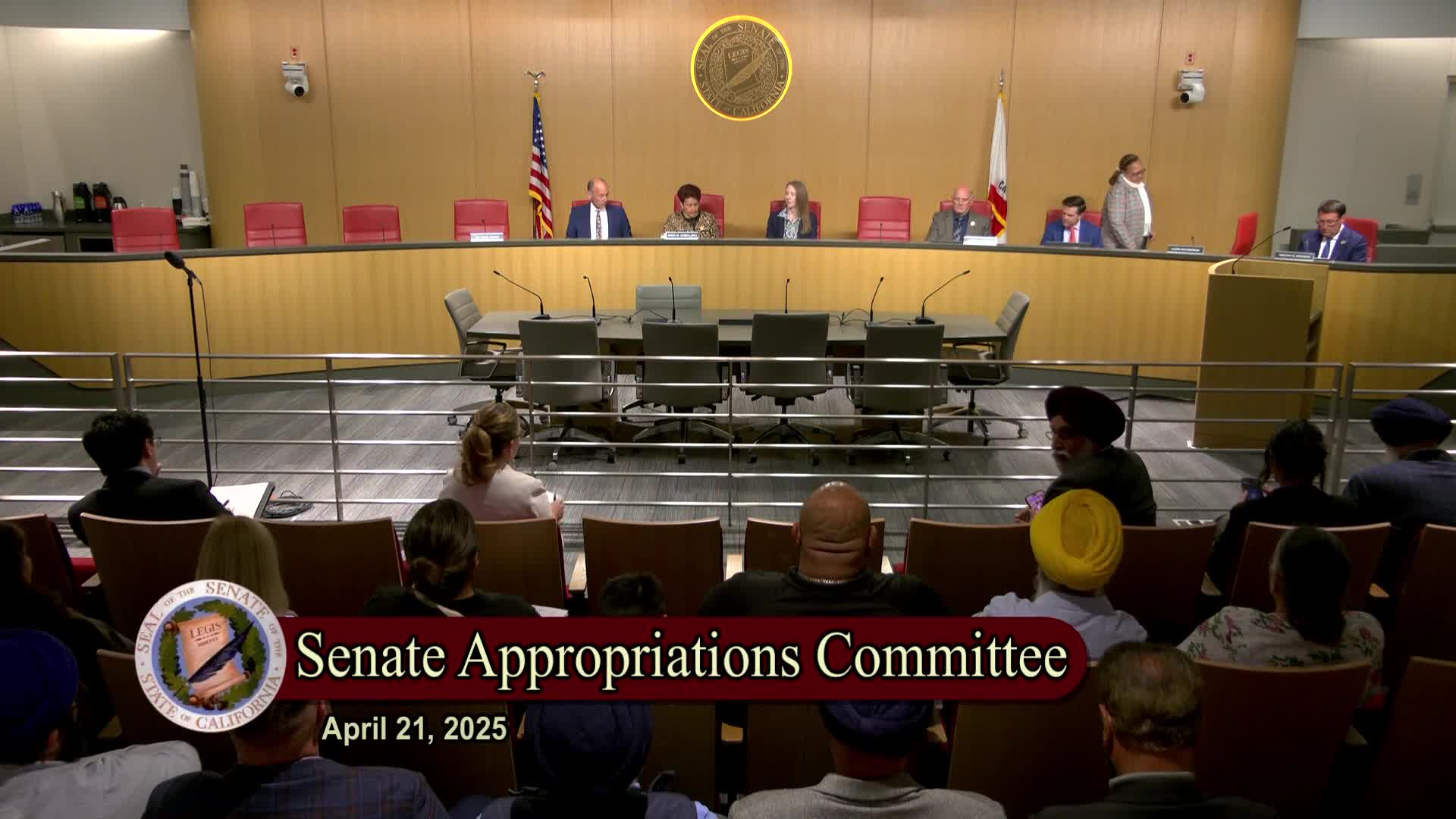
Summary
The Senate Appropriations Committee on Wednesday placed the bulk of its agenda on the suspense file for fiscal review, including dozens of bills from across policy areas. Four bills listed in the daily file were pulled from today's hearing and will be rescheduled.
The Senate Committee on Appropriations moved the majority of its agenda to the suspense file for fiscal review, placing dozens of bills — covering a range of policy areas — under further budget scrutiny.
Committee staff opened the hearing saying there were 63 measures on the agenda and that "all but one" were suspense-file candidates. The committee noted that four bills listed in the daily file were pulled from today's calendar and will be rescheduled: SB 432 (Sen. Sayardo), SB 544 (Sen. Laird), and SB 555 (Sen. Caballero) — as listed in the hearing record.
Committee Chair Senator Anna Caballero and members repeatedly announced that many authors had waived presentation and that public testimony would be limited to fiscal aspects. For each suspense-file candidate the committee asked for supporters and opponents, received any public testimony, and — when there were no questions or objections — moved the bills to the suspense file without further committee debate.
Examples of bills that the committee placed on the suspense file during the hearing (author presentation waived) include SB 10, SB 369, SB 461, SB 579, SB 20, SB 324, SB 450, SB 29, SB 391, SB 609, SB 40, SB 53, SB 42, SB 50, SB 478 and many others named on the record. In most cases witnesses who did speak were representatives of cities, nonprofit coalitions, or trade associations stating support; a few bills drew opposition testimony from industry groups (for example, SB 433/4 33 drew opposition from groups representing small residential care facilities and assisted living providers in the transcript).
Placing bills on the suspense file is a standard part of the appropriations process: the committee evaluates the projected fiscal impact of measures and prioritizes which bills will receive budgetary resources. Committee leaders emphasized that movement to suspense does not reflect final action on the bills themselves; it is a step to permit review alongside the state budget.
The hearing concluded with the committee adjourning after completing roll call and moving the remaining items to suspense.