
Prince George’s County panel questions DPIE’s capacity as FY2026 budget holds services steady
Get AI-powered insights, summaries, and transcripts
Subscribe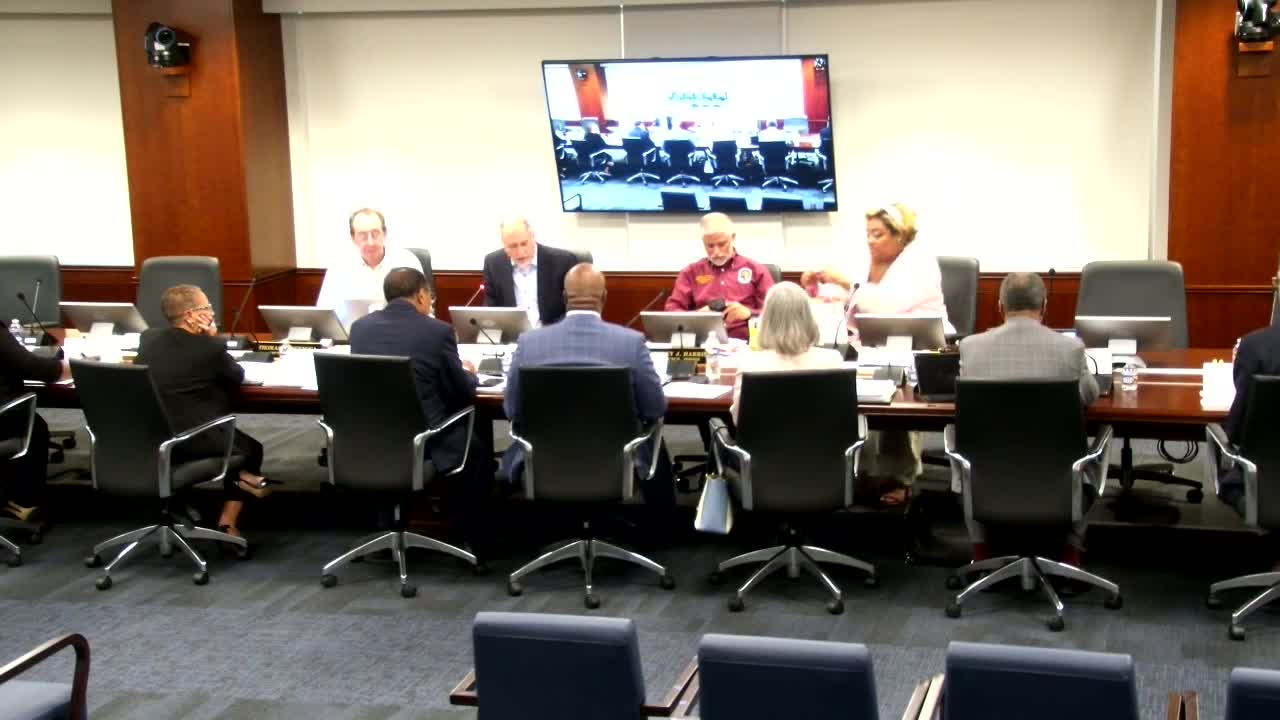
Summary
County budget analysts presented a proposed $32.3 million FY2026 budget for the Department of Permitting, Inspections and Enforcement (DPIE), prompting council members to press department leaders about staffing, unpaid fines, the paused clean-lot contracting program, and readiness to implement the new rent-stabilization law.
Prince George’s County officials reviewed the Department of Permitting, Inspections and Enforcement’s (DPIE) proposed fiscal 2026 budget during the Transportation, Infrastructure, Energy and Environment Committee meeting on April 21, 2025, and asked whether the department has the staff and systems to meet existing and new enforcement responsibilities.
Alex Hertel, the county’s legislative budget and policy analyst, told the committee the proposed DPIE budget is approximately $32,300,000, a decrease of about $45,300 (roughly 0.1%) from the prior year, and that the department requested a supplemental $2.2 million for merit and cost-of-living adjustments tied to an engineering classification study. “The proposed fiscal year 2026 budget for DPIE is approximately $32,300,000,” Hertel said.
The nut of the discussion centered on the department’s operational capacity. Hertel said DPIE has 321 authorized positions and 305 filled roles as of March 2025, with an annual attrition rate of about 3.62%. He also called out several stress points: suspension of the contracted clean-lot program in the proposed budget, continuing low collection rates on fines and liens, and the upcoming workload from the county’s permanent rent-stabilization law (CB 55-2024). Hertel noted DPIE included funds for Momentum, the county’s permitting and licensing system, and requested about $3.4 million for IT implementation and upgrades.
Director Abraham and deputy director Sarah Mount Hinton answered council members’ questions about daily operations and enforcement. Abraham said the department reported 14 vacancies as of March 2025 but argued that the current vacancy level “will not impair the department. I have enough resources to tackle problems.” Hinton described enforcement teams, saying, “We have a full‑fledged team of staff working,” and explained how DPIE divides enforcement across subtitle-based codes for property maintenance, zoning and permitting.
Council members probed two specific program areas. First, the permanent Rent Stabilization Act (CB 55-2024) will require investigative capacity and housing-analysis work that DPIE says is outside its core expertise. Hinton said Montgomery County implemented a comparable program over several years with a staffing complement of about 10. DPIE’s current FY26 proposal includes two investigators for rent stabilization, but Hinton told the committee the department estimates an additional roughly eight staff (managers, investigators, program analysts and administrative support) would be needed for full program operations and to produce regulations and guidance in time for January 2026 enforcement.
Second, the contracted clean‑lot program is proposed at $0 in the FY26 DPIE budget; the transcript shows a prior 2025 contract figure of about $1.77 million and an earlier two‑year estimate that was discussed at roughly $2.7 million. Committee members expressed concern that suspension of contractor funding will sharply reduce the number of contracted lot‑cleanup jobs and shift more of the work to internal partners such as the Department of Public Works and the Revenue Authority. DPIE officials said they will continue enforcement activities, but without contract dollars they expect far fewer contractor‑led cleanups.
Members also pressed DPIE on collections. Committee discussion cited substantial uncollected fines and liens tied to clean-lot work and unpermitted construction; DPIE reported roughly 46% of some cited amounts were uncollected. Councilmembers urged exploration of stronger collection mechanisms, including lien recording and collection contractors, and improved digital notification to encourage payment. Hertel and budget office staff said fee increases implemented recently (a 20% across‑the‑board fee increase plus a technology fee) will take time to affect revenues and that permit fee revenue can be volatile when building activity declines.
Short‑term rental enforcement and compliance drew questions about data and staffing. DPIE reported it works with a vendor, Host Compliance, which had identified roughly 16,000 listings representing about 800 unique properties; the county has about 380 short‑term rental licenses and is working to raise identification and licensing rates. DPIE said short‑term rental monitoring is supported by a single IT staffer and that more capacity is needed for ongoing compliance work.
Council members also requested better transparency on operational performance. DPIE leaders said the agency has created service‑level targets for initial 3‑1‑1 responses (often 3–5 days for initial field response), has significantly reduced historical vacancy counts from prior years, and that performance reporting quality has improved over the last two to three years. Several councilmembers urged DPIE to provide detailed lists of fines and liens (collected vs. uncollected) and permit volume trends by council district.
The committee concluded with members asking DPIE and the budget office for follow‑up information during the budget process: a projection of additional revenue from the recent fee increases over a two‑year cycle, a district‑level breakdown of permit volumes and trends, a detailed listing of outstanding clean‑lot and unpermitted‑construction fines and lien status, and an estimate of the staffing and IT costs required to operationalize the rent‑stabilization program. A motion to adjourn by Councilmember Fisher, seconded by Vice Chair Harrison, closed the meeting.